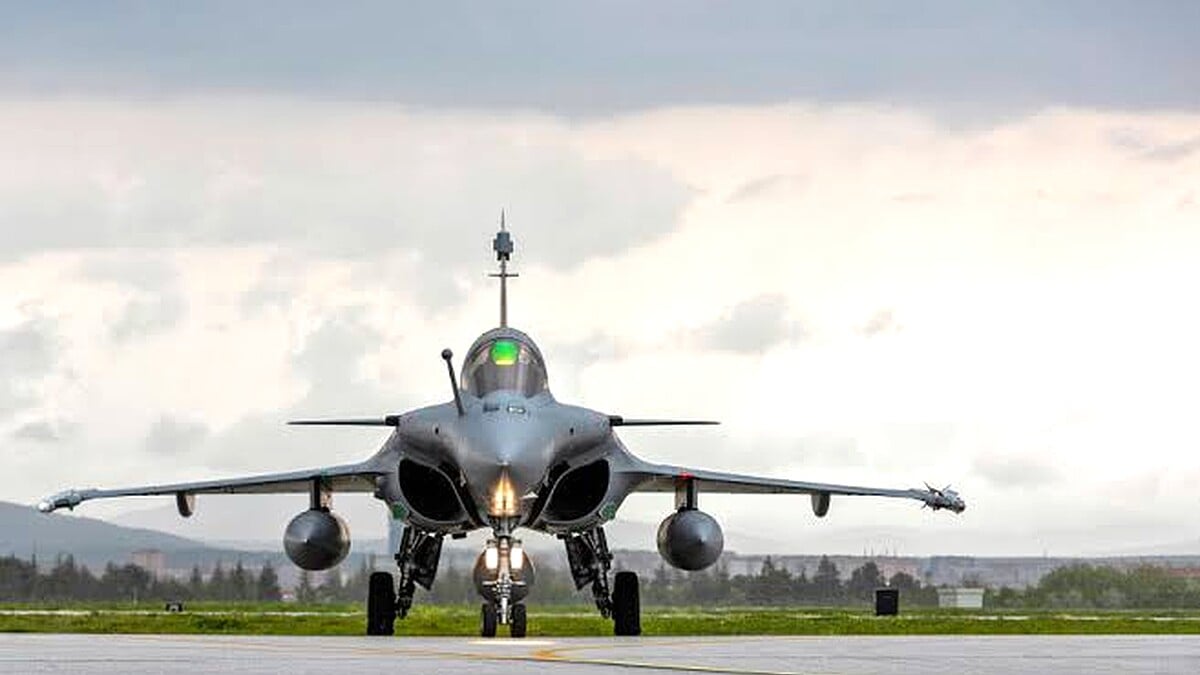




ISLAMABAD: India’s ambitious plan to acquire 114 additional Rafale fighter jets has hit a major roadblock with the landmark deal potentially facing indefinite delays or even derailment over French concerns regarding source code access and integration with Russian-origin systems.
The proposed $36 billion defence acquisition cleared by India’s Defence Acquisition Council in February 2026 stands as one of the largest single combat aircraft procurements in modern history.
Valued at Rs 3.25 lakh crore the package includes technology transfer for local production of up to 96 jets targeting 50 to 60 per cent indigenous content in partnership with an Indian firm.
French authorities have categorically refused to transfer sensitive source codes for the Rafale’s core systems including the Thales RBE2 AESA radar the SPECTRA electronic warfare suite and the MDPU mission computer.
This denial prevents India from independently modifying radar algorithms updating threat libraries or customising mission software without recurring approval from Dassault Aviation.
The core dispute centres on India’s extensive defence ties with Russia particularly the planned integration of the BrahMos supersonic cruise missile on the new Rafales.
BrahMos a joint Indo-Russian venture derived from the Russian P-800 Oniks missile would require deep access to Rafale’s avionics for seamless weapon fusion raising fears of technology leakage.
France fears that full source code sharing could expose proprietary French software to Russian hands through the BrahMos ecosystem and India’s operational S-400 Triumf air defence system acquired in a separate $5.4 billion deal.
Defence Express reporting from April 2026 explicitly states Paris is not against Indian weapon integration but insists Dassault retains full control over the process to prevent unintended exposure.
Regional outlets including Defence Security Asia and Kashmir Media Service corroborate that negotiations expected to conclude during French President Emmanuel Macron’s visit have stalled with no contract signed to date.
The impasse threatens India’s long-term operational sovereignty as the Indian Air Force currently fields only 36 Rafales and maintains just 31 operational squadrons against a sanctioned strength of 42.
Without source codes India risks four-decade dependency on France for software upgrades and modifications mirroring limitations in the 2016 deal for 36 jets that cost Rs 59,000 crore.
Analysts note the S-400 integration already complicates Western interoperability while BrahMos air-launched variants remain a priority for Rafale arming to counter regional threats.
This clash highlights broader Western reservations about mixing advanced European platforms with Russian-origin systems in India’s multi-vendor inventory.
Some experts warn persistent delays could tilt India towards Russian alternatives such as the Su-57 which reportedly offers fuller source code access and complete technology transfer.
The original 36 Rafale induction faced similar technology transfer hurdles yet the current MRFA programme was positioned as a strategic leap for air power modernisation amid border tensions.
Dassault Aviation has confirmed openness to localised manufacturing yet source code remains a non-negotiable red line for Paris to protect decades of investment in Rafale’s sensor fusion and electronic combat architecture.
Indian officials continue pushing for greater autonomy under the Atmanirbhar Bharat initiative but French concerns over Russian exposure via BrahMos and S-400 appear insurmountable in current talks.
The development has sparked intense debate in defence circles with limited mainstream international coverage but widespread reporting across specialised Asian and European outlets.
Resolution of the standoff will define the future of Indo-French strategic partnership and India’s ability to blend Western fighters with indigenous and Russian weaponry.
As the largest defence deal in India’s history hangs in balance the outcome carries profound implications for regional air power dynamics and New Delhi’s quest for self-reliant deterrence.