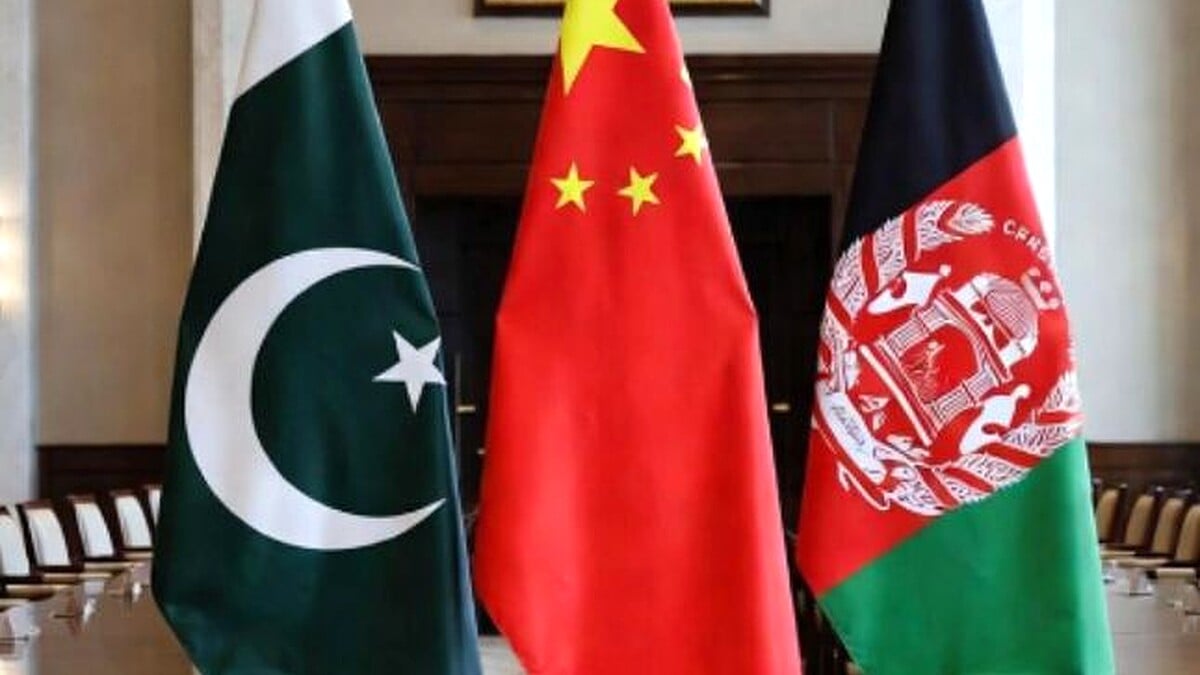




ISLAMABAD: China has announced that talks between Pakistan and Afghanistan are making steady progress under its mediation as both nations welcome renewed dialogue following deadly border clashes.
Chinese Foreign Ministry spokesperson Mao Ning stated on Friday that Pakistan and Afghanistan attach great importance to Beijing’s efforts and are willing to sit down again for negotiations.
This marks a positive development amid the worst fighting between the neighbours since the Taliban returned to power in 2021.
Recent escalations have claimed hundreds of lives with Pakistani airstrikes hitting targets inside Afghanistan including areas near Kabul in March 2026.
Defence reports indicate over 140 civilians were killed in some strikes while retaliatory fire from Afghan forces added to the toll.
The core dispute revolves around Pakistan’s repeated claims that Afghanistan provides sanctuary to Tehreek-e-Taliban Pakistan militants.
Armed Conflict Location and Event Data Project figures show the group carried out more than 1,000 attacks inside Pakistan throughout 2025 alone.
These incidents have strained bilateral relations to breaking point and forced repeated closures of key border crossings at Torkham and Chaman.
Bilateral trade collapsed by 40 percent dropping from 2.46 billion dollars in 2024 to just 1.77 billion dollars in 2025.
Pakistan’s exports to Afghanistan fell 56 percent in early 2026 causing average monthly losses of 177 million dollars when crossings remained shut.
Food prices surged dramatically in Pakistan with tomatoes rising over 400 percent at peak disruption periods.
Afghanistan bore an even heavier burden as the trade suspension accounted for nearly 10 percent of its total export losses.
China which shares a direct border with both countries has intensified mediation through multiple channels including telephone calls between foreign ministers.
Beijing’s special envoy on Afghan affairs conducted shuttle visits to Islamabad and Kabul earlier in March to push for a ceasefire.
The trilateral dialogue framework launched in 2017 has already held six foreign ministers’ meetings with the latest convened in Kabul in August 2025.
Pakistan Today and other regional outlets reported that both sides have reached consensus on operational modalities for future talks including news reporting arrangements.
Global Times noted that China is providing the necessary platform and conditions to sustain the process.
Experts highlight that successful resolution could restore trade flows worth billions annually and stabilise the region for potential extension of the China-Pakistan Economic Corridor projects into Afghanistan.
Failure to maintain momentum risks further escalation that could threaten Chinese investments and broader Belt and Road connectivity goals.
Mao Ning emphasised that Beijing remains in close contact with both capitals and will continue playing a constructive role.
The three countries plan to release additional details at an appropriate time once further progress is achieved.
This development comes as a ray of hope in a region long plagued by militancy and economic uncertainty.
Analysts suggest the talks could pave the way for lasting de-escalation if both sides commit to addressing security concerns through sustained dialogue.
Pakistan and Afghanistan have both signalled support for China’s impartial mediation efforts underscoring the strategic importance of trilateral cooperation.
The progress offers a critical window to rebuild trust and prevent further humanitarian and economic fallout from prolonged conflict.