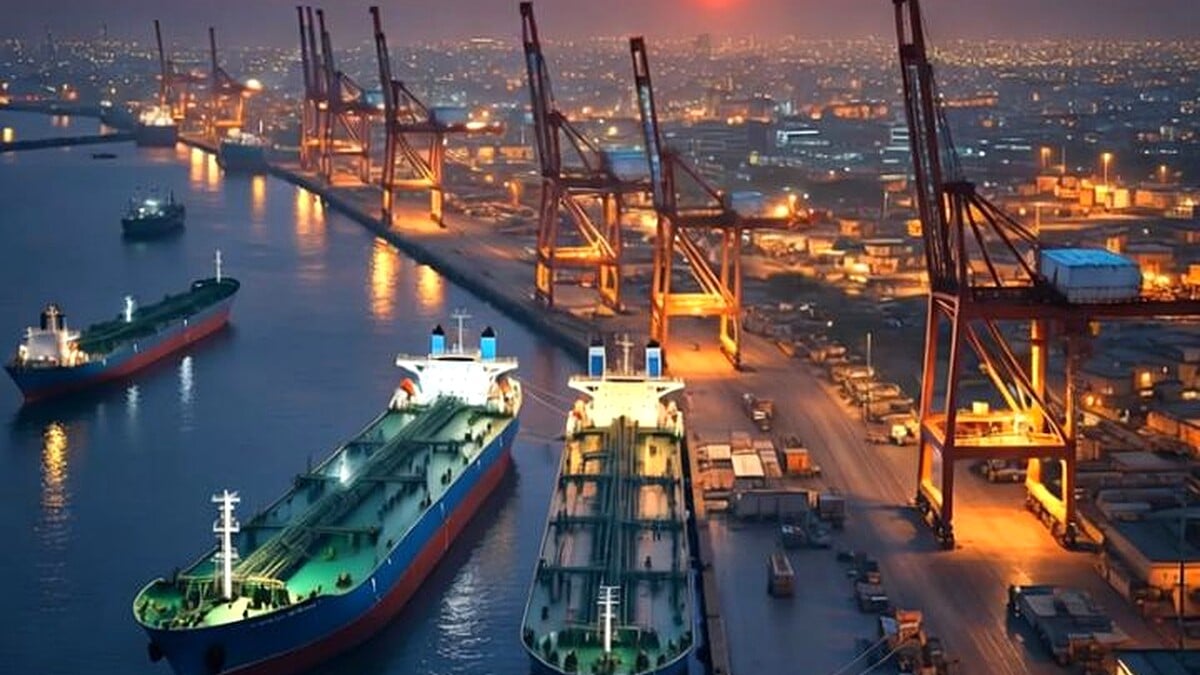




ISLAMABAD: Pakistan has unveiled a strategic masterstroke that turns regional turmoil into national triumph with the launch of the Pakistan Maritime Energy City.
Federal Minister for Maritime Affairs Muhammad Junaid Anwar Chaudhry announced the ambitious Pakistan Maritime Energy City on April 1 during a high-level meeting.
The initiative aims to establish state-of-the-art storage facilities for oil, liquefied natural gas and liquefied petroleum gas.
It will enable both domestic supply security and international re-exports to global markets.
The project integrates directly with Pakistan’s port infrastructure along the 990-kilometre coastline.
Planners are identifying sites for three to four new deep-sea ports to support the energy city.
This move comes as the Iran conflict disrupts the Strait of Hormuz, a critical chokepoint carrying nearly 20 million barrels of oil and petroleum products daily.
That volume represents about 20 percent of global petroleum liquids consumption according to recent energy data.
Global trade flows face severe rerouting and price volatility from the ongoing Middle East crisis.
Pakistan seizes this moment to position itself as a resilient regional energy logistics hub.
The energy city will prioritise meeting Pakistan’s own energy needs first while catering to worldwide demand.
Officials highlight that the facility will offer maximum incentives to attract foreign investors and partners.
Analysts project significant revenue generation through storage fees and re-export activities amid supply chain shifts.
Pakistan currently imports substantial volumes of LNG and crude oil to fuel its power sector and industries.
Recent LNG consumption averaged around 914 million cubic feet per day in fiscal year 2025 amid price pressures.
The new infrastructure promises to convert potential surpluses into export opportunities.
Integration with existing ports like Karachi and Port Qasim will enhance overall handling capacity.
Experts note Pakistan’s strategic location makes it a natural bridge between energy producers and Asian consumers.
The project forms part of a broader long-term vision for maritime development and economic resilience.
It aligns with efforts to expand the blue economy and reduce vulnerability to external shocks.
Creation of thousands of direct and indirect jobs is expected in coastal regions through construction and operations.
Foreign direct investment inflows could reach billions as global stakeholders seek alternative storage solutions.
The minister stressed that the energy city will feature modern digital port management and renewable energy integration.
This forward-looking approach ensures sustainability alongside commercial viability.
Regional media reports emphasise the initiative’s potential to strengthen Pakistan’s economic footprint.
International observers including Arab News have highlighted the timing as highly opportunistic.
Pakistan’s navy and maritime authorities are coordinating to secure shipping routes supporting the new hub.
The announcement builds on recent naval missions protecting energy supplies in the Arabian Sea.
Analysts view the Pakistan Maritime Energy City as a transformative step toward energy sovereignty.
It capitalises on disruptions that have forced rerouting of millions of barrels daily from traditional paths.
Domestic petroleum imports have historically strained foreign exchange reserves but now offer re-export leverage.
The government envisions the project contributing to a 100-year maritime and energy security blueprint.
Stakeholders from 45 countries participated in recent maritime expos showcasing Pakistan’s potential.
This latest development underscores Pakistan’s shift from energy importer to potential regional exporter hub.
Implementation will involve advanced cargo handling systems and future-ready technologies.
The energy city promises uninterrupted supply chains even during peak global volatility.
Pakistan’s coastline offers ideal deep-water access for large tankers and storage terminals.
Officials are reviewing multiple sites to optimise connectivity with national road and rail networks.
The project’s success could redefine Pakistan’s role in international energy trade dynamics.
It transforms geographic advantages into tangible economic gains amid unprecedented regional challenges.
Long-term benefits include reduced import dependency risks and enhanced foreign exchange earnings.
The Pakistan Maritime Energy City stands as a beacon of strategic foresight in turbulent times.