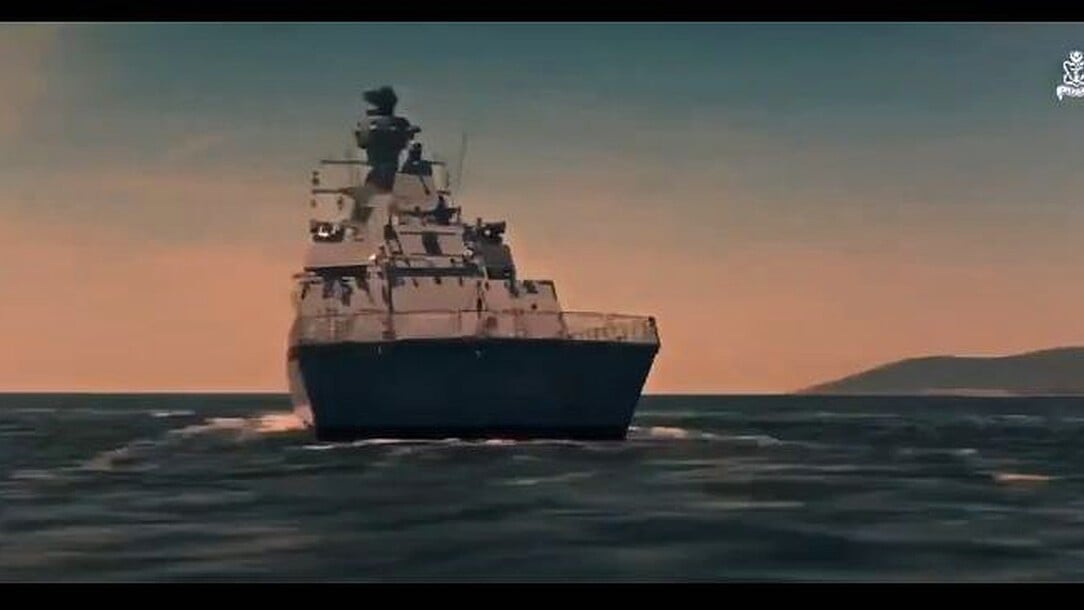




ISLAMABAD: Pakistan Navy has formally inducted PNS Khaibar (F-282), the second ship of the Babur-class corvettes, significantly strengthening its surface fleet capabilities in the strategically vital Indian Ocean Region.
This commissioning marks a pivotal advancement for Pakistan’s naval modernization drive at a time when maritime tensions are escalating across key sea lanes.
The vessel, built under the PN MILGEM project in collaboration with Türkiye, was commissioned on December 20, 2025, at the Istanbul Naval Shipyard. Turkish President Recep Tayyip Erdoğan attended the ceremony alongside Pakistan Navy Chief Admiral Naveed Ashraf, underscoring the deepening defence ties between the two nations.
PNS Khaibar measures 108.8 metres in length with a beam of 14.8 metres and a full load displacement of approximately 2,900 to 3,000 tonnes. Powered by a Combined Diesel and Gas (CODAG) propulsion system, it achieves a maximum speed of 31 knots and boasts a range of 3,500 nautical miles, enabling sustained operations far from home bases.
Its advanced stealth features, derived from the Turkish Ada-class design but customized for Pakistani requirements, include reduced radar cross-section and sophisticated electronic warfare suites that enhance survivability in contested environments.
The corvette is equipped with Harbah anti-ship and land-attack cruise missiles, Albatros NG surface-to-air missiles in vertical launch systems, a 76mm main gun, and torpedo launchers for multi-domain warfare. It integrates the Turkish ADVENT combat management system for seamless network-centric operations.
During live-fire trials earlier in 2025, PNS Khaibar successfully engaged 12 targets with pinpoint accuracy, demonstrating exceptional integration of sensors and weapons systems. This performance highlights its readiness for anti-surface, anti-air, and anti-submarine missions.
The induction comes as Pakistan Navy pursues an ambitious target of expanding its fleet to 50 warships, including 20 major surface combatants, to safeguard maritime interests spanning the Arabian Sea to broader Indian Ocean waters.
Regional media reports emphasize that the Babur-class vessels will play a crucial role in protecting sea lines of communication through which nearly 90 percent of Pakistan’s trade passes. With escalating activities by rival navies in the Indian Ocean, PNS Khaibar’s arrival provides a potent deterrent against potential threats to shipping lanes and exclusive economic zones.
PNS Babur (F-280), the lead ship of the class, was commissioned in September 2024 and has already participated in operational deployments. Two additional vessels, PNS Badr and PNS Tariq, are under construction at Karachi Shipyard and Engineering Works, with deliveries expected in 2026 and 2027 respectively. This technology transfer program builds indigenous shipbuilding capacity while incorporating cutting-edge Turkish expertise.
Defence analysts note that the Babur-class corvettes introduce heavy missile firepower and advanced command systems previously limited to larger frigates. Their ability to operate in littoral and blue-water environments positions Pakistan Navy to counter asymmetric threats, including submarine incursions and aerial attacks, more effectively.
The timing of the induction aligns with heightened geopolitical frictions in the Indian Ocean, where freedom of navigation faces multiple challenges. PNS Khaibar’s capabilities will support Pakistan’s contributions to multinational task forces while prioritizing national maritime security.
This development reflects Pakistan’s commitment to maintaining a credible defensive posture through indigenous growth and strategic partnerships. As the navy integrates these platforms, it enhances interoperability with allied forces and deters adventurism in vital maritime domains.
Further inductions in the series will amplify Pakistan’s ability to project power and secure economic lifelines amid an increasingly complex regional security landscape. The Babur-class program stands as a testament to successful defence diplomacy and technological advancement in naval warfare.