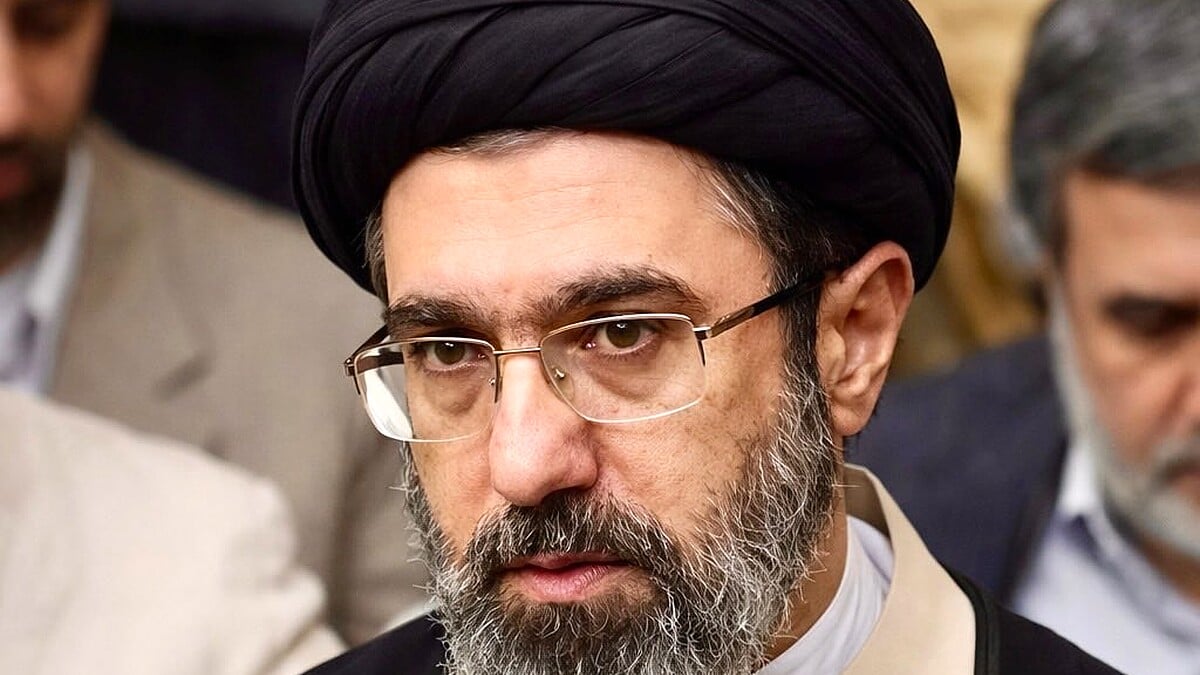




ISLAMABAD: Iran’s newly appointed Supreme Leader delivered his first national address with a message combining emotional resonance and strategic signaling, declaring that loyalty to the nation and its sacrifices would remain central to Iran’s future direction amid a sensitive leadership transition.
In remarks that quickly drew attention across the region, Mojtaba Khamenei invoked themes of patriotism and personal loss, stating that “those who gave everything for their homeland shaped the identity of this nation.” He further added a deeply personal reflection, saying his “martyred father loved Pakistan very much,” a line that analysts believe was intended to underscore regional connections and shared historical sentiment.
The speech comes at a pivotal moment following the era of , whose decades-long leadership defined Iran’s ideological and geopolitical trajectory. Mojtaba Khamenei’s tone suggested continuity in core principles, particularly adherence to the revolutionary framework established after the .
Observers note that the address carefully balanced emotional appeal with institutional reassurance. By emphasizing unity, sacrifice, and national dignity, the new Supreme Leader appeared to be consolidating internal support while signaling stability to key power centers, including the , which plays a central role in Iran’s security and regional policy.
At the same time, Mojtaba Khamenei introduced nuanced language that hinted at pragmatic considerations. References to “measured decisions” and “calculated engagement” were interpreted by analysts as indications that Tehran may remain open to diplomatic channels, even as it maintains a firm stance on sovereignty and resistance.
Regionally, the speech is being assessed for its implications on Iran’s involvement in ongoing conflicts and alliances across the Middle East. While no explicit policy shifts were announced, the emphasis on continuity suggests that Iran’s strategic posture in areas such as Syria, Iraq, and Yemen is unlikely to change abruptly in the near term.
Economic challenges also formed an implicit backdrop to the address. Iran continues to face pressure from sanctions, inflation, and currency instability. Mojtaba Khamenei acknowledged these realities indirectly, calling for resilience and self-reliance, themes that have long been part of Iran’s economic discourse but remain difficult to implement amid external constraints.
International reactions have been cautious, with policymakers in Western capitals closely analyzing the speech for signals regarding Iran’s nuclear policy and broader diplomatic approach. The absence of direct references to nuclear negotiations suggests a deliberate choice to avoid early commitments while maintaining strategic ambiguity.
Experts argue that leadership transitions in Iran are typically managed to ensure continuity rather than disruption. In this context, Mojtaba Khamenei’s first address appears consistent with established patterns, reinforcing ideological foundations while gradually introducing his own leadership style.
His reference to Pakistan, though brief, has drawn particular attention in regional discourse. Analysts suggest it may reflect an intention to maintain or strengthen ties with key neighboring countries, especially at a time when regional cooperation is increasingly linked to economic and security considerations.
As Iran enters this new phase, much will depend on how Mojtaba Khamenei translates his initial messaging into policy actions. His ability to navigate domestic expectations, economic pressures, and complex regional dynamics will be closely watched in the months ahead.
For now, the address has set a tone of cautious continuity, blending respect for the past with संकेत of measured adaptation. Whether this approach evolves into substantive policy shifts remains one of the most critical questions facing Iran’s leadership transition.