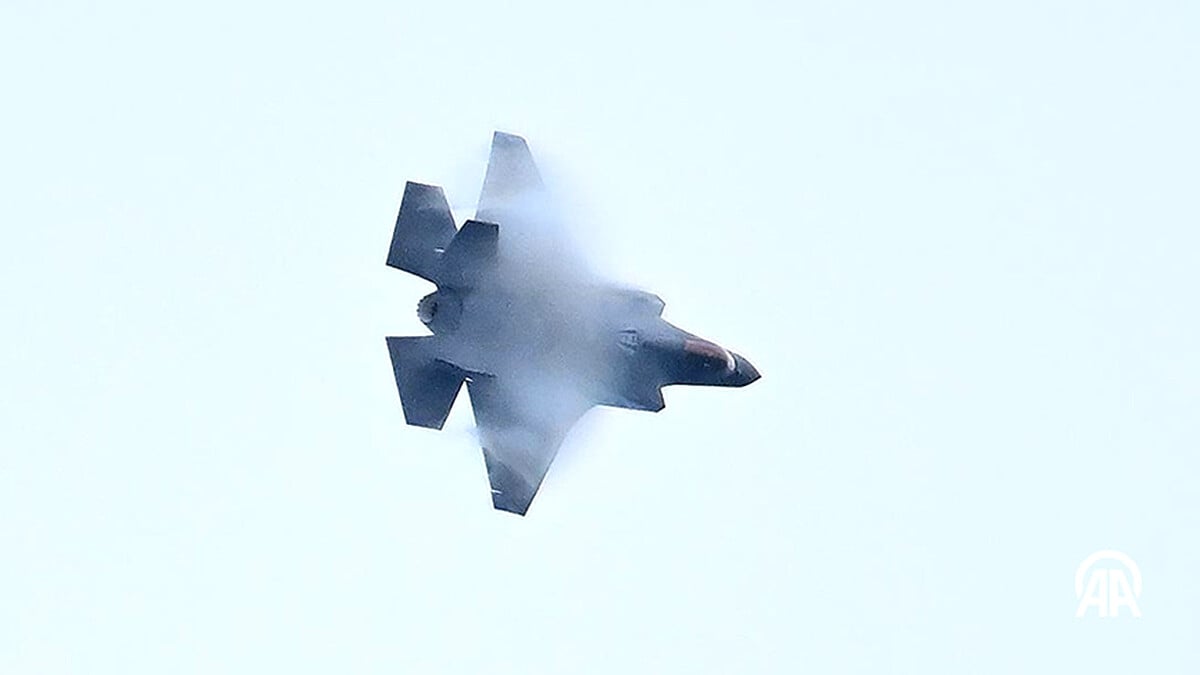




ISLAMABAD: A US F-35 fighter jet sustained damage from an Iranian projectile during a combat mission over Iran, forcing an emergency landing at a regional American air base and marking the first confirmed strike on a US stealth aircraft since the war escalated.
The incident occurred as the fifth-generation jet conducted operations in Iranian airspace, according to reports citing US Central Command sources. However, Turkish media report has claimed that the Aircraft my have crashed after severly damaged by the Iranian Air Defence.
The aircraft aborted its sortie after being hit and executed a safe emergency landing, with the pilot remaining in stable condition.
US officials have launched a full investigation into the event, describing it as a significant development in the ongoing hostilities.
Iran’s Islamic Revolutionary Guard Corps released thermal imaging footage purporting to show the projectile striking a silhouette matching the F-35.
The IRGC claimed the jet suffered heavy damage and stated the likelihood of its crash is very high, raising questions about the aircraft’s fate despite the US confirmation of a safe landing.
The projectile is believed to be Iran’s homegrown Missile 358, also known as the SA-67, a hybrid surface-to-air system introduced in the late 2010s that combines anti-aircraft and loitering munition capabilities.
This system has been credited with intercepting over 125 US and Israeli drones during the current conflict, demonstrating improved Iranian air defence precision.
The F-35 Lightning II, priced at approximately 100 million dollars per unit, represents the pinnacle of US stealth technology with advanced radar-evading features and multirole capabilities.
It has played a central role in recent strikes against Iranian targets, making this hit a notable challenge to its perceived invulnerability.
Previous Iranian claims of destroying F-35s, including unverified assertions during earlier exchanges in 2024 and 2025, were consistently dismissed by US and Israeli authorities as propaganda without supporting evidence.
This latest incident stands apart as the first verified case of an American F-35 being struck by Iranian fire, according to multiple international reports.
US Central Command spokesperson Capt Tim Hawkins confirmed the emergency landing but stopped short of explicitly acknowledging a direct hit in public statements.
Anonymous sources familiar with the matter told outlets the jet was indeed impacted by Iranian defences during the mission.
The event unfolds amid a broader escalation involving Israeli and US operations against Iran, where F-35 platforms from both nations have conducted extensive sorties.
Israeli F-35s have achieved their own milestones, including the first air-to-air kill of a manned Iranian aircraft earlier this month.
The damage to the US jet highlights evolving Iranian defensive strategies that appear to counter stealth advantages more effectively than in prior phases of the conflict.
Military analysts note that even partial damage to a stealth fighter can compromise its low-observable profile and sensor fusion systems, potentially requiring extensive repairs.
The safe landing suggests the aircraft retained sufficient control, yet the IRGC’s assertion of high crash probability indicates possible severe internal impairment not yet detailed publicly.
This development has prompted renewed scrutiny of F-35 operational protocols in high-threat environments.
Experts point to the need for enhanced electronic warfare support and revised mission planning to mitigate risks from advanced Iranian missiles.
The conflict’s impact extends beyond the battlefield, influencing energy markets and regional alliances across the Middle East.
Pakistan, sharing a border with Iran, continues to monitor such escalations closely given potential spillover effects on stability and trade routes.
The F-35 programme involves multiple US allies, and any proven vulnerability could affect confidence in the platform among operators worldwide.
Repair costs for battle-damaged stealth aircraft typically run into tens of millions, factoring in specialised composite materials and classified avionics.
The incident also revives debates on the balance between offensive air power and integrated air defence networks in modern warfare.
Iranian state media has amplified the video evidence, framing it as a strategic success against superior American technology.
US military sources maintain the jet’s safe recovery demonstrates the platform’s resilience despite the strike.
As investigations proceed, both sides are expected to release further assessments in coming days.
The episode underscores the fluid and unpredictable nature of aerial engagements in the current Iran-related hostilities.
Regional observers anticipate possible retaliatory measures or adjustments in US force posture following this unprecedented hit.
The F-35’s role remains critical, yet this event serves as a reminder of persistent threats from evolving adversary capabilities.
Further details on the exact nature of the damage and long-term implications for the aircraft are anticipated once the probe concludes.