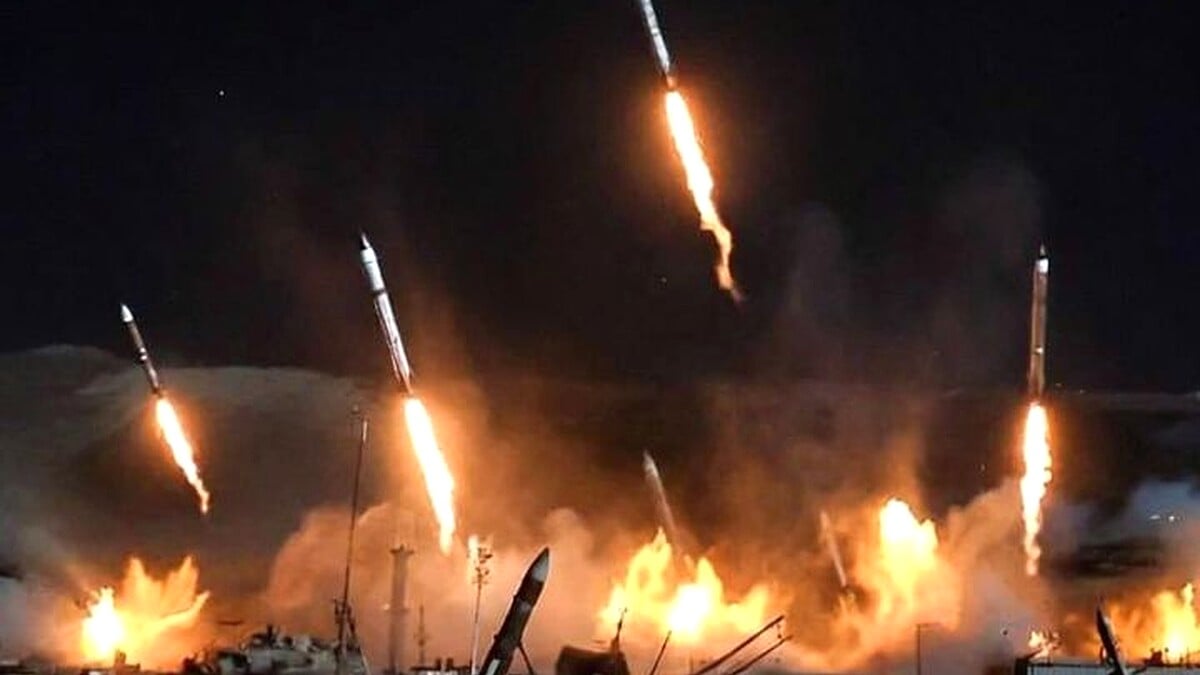




ISLAMABAD: Iran’s Islamic Revolutionary Guard Corps has launched the 61st wave of Operation True Promise 4, targeting over 100 military and security sites in Tel Aviv with more than 100 advanced ballistic missiles, marking a severe escalation in the ongoing conflict following the assassination of National Security Council Secretary Ali Larijani.
The strikes, described by Iranian state media as direct revenge for Larijani’s martyrdom, utilised cluster warhead-equipped missiles including Khorramshahr-4, Qadr, Emad, and Kheybar Shekan to maximise damage against Israeli targets.
Reports from Iranian official television indicate that the operation exploited weaknesses in Israel’s multilayered air defence systems, which have been degraded by prolonged exchanges, allowing many projectiles to reach their intended zones without significant interception.
The assault focused on central Israel, particularly Tel Aviv, where explosions triggered widespread fires, destroyed multiple vehicles, and inflicted heavy structural damage on buildings across residential and strategic areas, including the main Railway Station.
Among the most significant impacts was the near-total destruction of Tel Aviv’s main railway station, Savidor Central, a critical transportation hub handling millions of passengers annually.
Shrapnel and direct hits shattered platforms, collapsed sections of the roof, and scorched tracks, forcing a nationwide suspension of rail services and paralysing commuter movement in Israel’s economic heartland.
Emergency responders reported intense blazes erupting at multiple locations in Tel Aviv suburbs such as Ramat Gan and Holon, with thick smoke visible across the city skyline well into the night.
Israeli medics confirmed civilian casualties, including an elderly couple killed in Ramat Gan from missile debris, while dozens sustained injuries from falling shrapnel and secondary blasts.
The IRGC emphasised the use of multi-warhead configurations designed to disperse submunitions over wide areas, overwhelming defences and ensuring coverage of clustered military installations, command centres, and security facilities.
Iranian sources claimed the barrage achieved precision strikes on more than 200 fuzed military objectives, though independent verification remains limited amid blackout conditions and restricted access.
This wave follows a pattern of escalating retaliatory operations under Operation True Promise 4, which has seen dozens of prior phases since the broader conflict intensified.
The killing of Ali Larijani, widely regarded as Iran’s de facto leader after the supreme leader’s earlier demise, has galvanised hardline elements within the Revolutionary Guards.
Iran’s president issued a defiant statement asserting that Tehran would not yield to American threats and viewed self-defence as an inherent right.
He reiterated demands for the cessation of US base usage in regional strikes against Iran, warning that continued aggression would render de-escalation talks meaningless.
International wire services described scenes of chaos in Tel Aviv, with air raid sirens wailing repeatedly as additional missiles arrived in salvos late into the night.
Witness accounts detailed shattered windows, cratered streets, and emergency vehicles rushing through debris-strewn boulevards.
The destruction of key infrastructure like the central railway station underscores the strategic intent to disrupt Israel’s logistical backbone and civilian morale.
Analysts note that cluster munitions, prohibited under certain international conventions but employed here, amplify area effects by scattering bomblets that detonate on impact or delay.
Such tactics have reportedly caused extensive secondary fires and rendered large zones hazardous for immediate recovery efforts.
Iran’s Ja’fariya Alliance described Larijani’s sacrifice as a catalyst strengthening the Islamic Revolution, vowing sustained resistance.
The operation’s scale highlights Iran’s persistent missile inventory despite weeks of Israeli and allied airstrikes targeting launch sites.
Over 100 military targets struck in the heart of Tel Aviv represent one of the most concentrated barrages in the conflict to date.
Power outages affected parts of the city following hits near electrical substations, compounding disruptions from the crippled rail network.
Israeli authorities activated extensive emergency protocols, but the volume of incoming fire strained response capabilities.
This latest exchange deepens the regional crisis, with potential ramifications for energy markets, shipping routes, and diplomatic efforts to contain the war.
Iran maintains that such actions remain proportionate responses to assassinations and aggression, while pledging further waves if provocations continue.
The focus on maximum damage through advanced missile technology signals Tehran’s determination to impose heavy costs on its adversaries.
As dawn broke over the region, assessments of the full extent of destruction were ongoing, with smoke still rising from multiple impact sites in Tel Aviv.