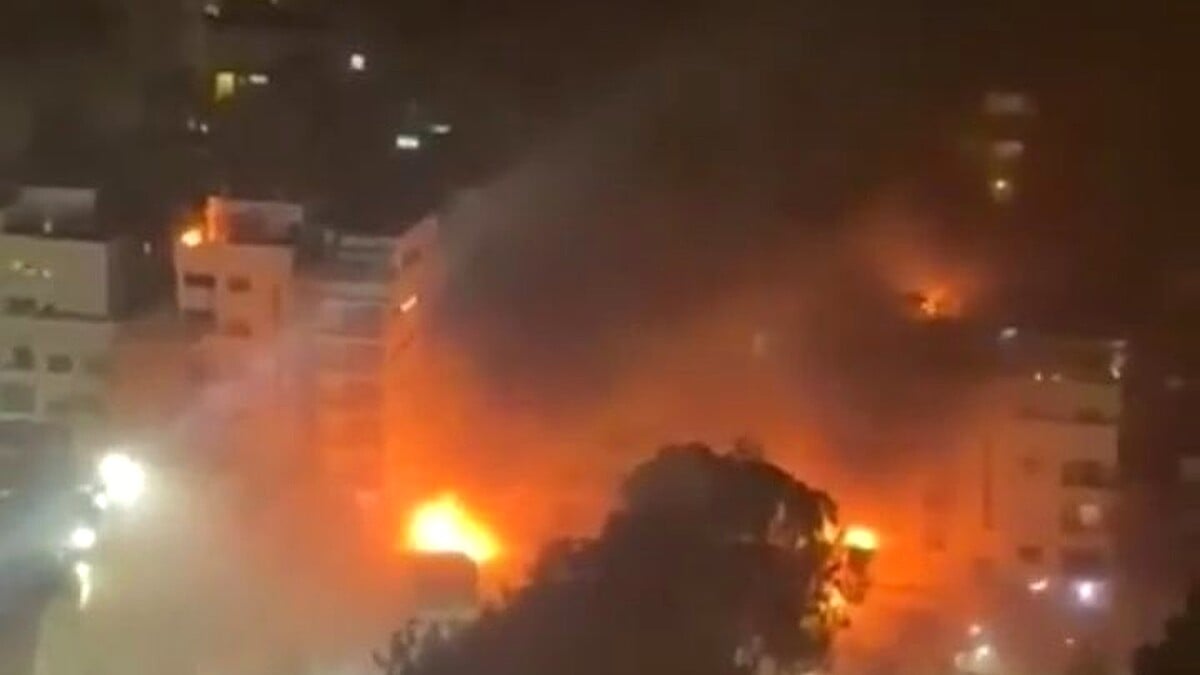




ISLAMABAD: Tel Aviv has been severely hit by a fresh wave of Iranian ballistic missile strikes, with fires breaking out in multiple districts and significant structural damage reported across the metropolitan area.
The latest barrage, launched overnight into March 15, targeted central Israel including Tel Aviv and surrounding cities such as Holon, Rishon Lezion and Ramla. Air raid sirens wailed repeatedly as residents rushed to shelters while explosions lit up the night sky.
Israeli military sources confirmed that several missiles evaded interception by multilayered defense systems including Iron Dome and Arrow. Debris from intercepted projectiles and direct impacts caused widespread disruption.
Emergency services reported fires erupting in residential and commercial zones. In one Tel Aviv district cars were burned and overturned by shrapnel. Eyewitness accounts described thick plumes of smoke rising from impact sites.
Magen David Adom ambulance crews treated multiple casualties. In Holon two elderly individuals sustained injuries one from flying glass and another from smoke inhalation while others received care for shock.
CCTV footage released by Israeli police captured the moment a missile struck a street in Tel Aviv destroying several vehicles and injuring at least three people. Additional reports indicated moderate injuries including a child affected by falling debris in nearby areas.
The strikes form part of Iran’s ongoing retaliation following joint US-Israeli operations that began on February 28. Those initial attacks targeted Iranian military infrastructure leadership and nuclear-related sites killing Supreme Leader Ali Khamenei and numerous senior officials.
Iran has since launched hundreds of ballistic missiles and drones at Israel and US-linked targets across the region. The conflict now in its third week has seen missile volumes decrease but precision strikes continue to penetrate defenses.
Israeli Defense Forces noted impacts on residential buildings with 28 confirmed hits since late February. Cluster munitions reportedly used in some barrages caused scattered damage including to apartment blocks in suburbs north of Tel Aviv.
Fires and structural collapses have been documented in at least three locations around Greater Tel Aviv. Witnesses described major material losses with buildings heavily damaged and vehicles set ablaze.
The escalation stems from broader US-Israeli campaign dubbed Operation Epic Fury aimed at degrading Iran’s missile capabilities air defenses and regime infrastructure. Strikes have expanded to western and central Iran including the Natanz facility.
Iranian responses have targeted not only Israel but also US bases in Iraq Kuwait and other Gulf states though many projectiles were intercepted by regional defenses. The war has disrupted airspace causing thousands of flight cancellations and stranding travelers.
In Tel Aviv small anti-war protests emerged criticizing Israel’s strikes on Iran as civilian casualties mount on both sides. Demonstrators called for de-escalation amid fears of further widening conflict.
Israeli officials stated that air superiority over parts of Iran has been achieved allowing sustained operations. Missile defense systems remain under pressure from repeated barrages though interception rates stay high for most incoming threats.
Damage assessments continue with emergency teams clearing debris and evaluating structural integrity in affected neighborhoods. Authorities urged residents to remain vigilant as additional waves cannot be ruled out.
The conflict has already claimed thousands of lives across the region with significant humanitarian implications. International calls for restraint have intensified but no immediate ceasefire appears forthcoming.
Military analysts observe that Iran’s retaliatory strategy seeks to impose costs on Israel and its allies forcing a pause in operations. However sustained Israeli-US strikes continue to target regime assets.
Tel Aviv’s resilience faces a severe test as the city absorbs repeated hits. Reconstruction efforts will likely demand substantial resources once hostilities subside.
The broader Middle East remains on edge with potential for further escalation involving proxies in Lebanon and elsewhere. Hezbollah has conducted complementary rocket attacks adding to the strain on northern Israel.
As the war progresses global attention focuses on pathways to diplomacy. Yet with core objectives unmet on both sides the cycle of strikes persists.