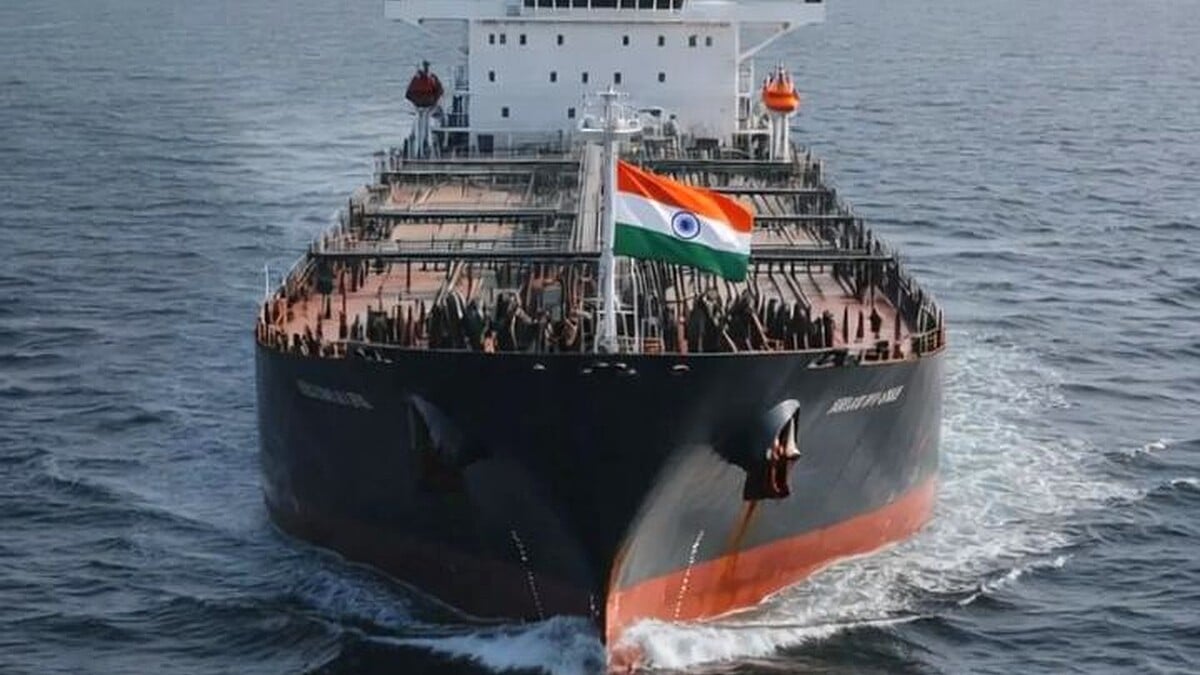




ISLAMABAD: Iran has firmly rejected claims circulated in Indian media that it has granted special permission for India-flagged ships to pass through the Strait of Hormuz.
The denial comes amid heightened tensions in West Asia following recent military developments involving the United States and Israel against Iran, which have severely disrupted maritime traffic in the strategic waterway.
Indian reports earlier suggested that Tehran had allowed vessels such as the tankers Pushpak and Parimal to transit safely, while ships linked to Western countries faced restrictions.
A source in Tehran explicitly told international outlets that such assertions were inaccurate, stating no special arrangement exists for Indian-flagged vessels.
The Strait of Hormuz remains a critical global chokepoint, handling approximately one-fifth of the world’s oil supply and a significant portion of liquefied natural gas exports.
For India, the third-largest oil consumer globally, the strait is vital, with around 40 percent of its crude imports transiting through this narrow passage connecting the Persian Gulf to the open sea.
Recent disruptions have raised alarms over energy security, as maritime traffic has slowed dramatically since late February attacks escalated the conflict.
Reports indicated that a Liberian-flagged tanker, captained by an Indian and carrying Saudi crude, successfully reached Mumbai port after clearing the strait, marking one of the few successful transits amid the crisis.
However, Iranian officials have maintained that no formal deal grants preferential treatment to any nation, including India.
Diplomatic exchanges between the two countries have focused on shipping safety, with India’s External Affairs Minister S Jaishankar holding multiple conversations with his Iranian counterpart Abbas Araghchi in recent days.
The latest discussion addressed concerns over energy supplies and the security of vessels amid the ongoing instability.
Despite these talks, Iranian sources have clarified that no agreement was reached to exempt Indian ships from general requirements.
Iran’s Islamic Revolutionary Guard Corps Navy has repeatedly warned that all vessels intending to pass through the strait must obtain prior approval from Tehran.
Rear Admiral Alireza Tangsiri, commander of the IRGC naval forces, emphasized this stance, citing incidents where ships ignoring warnings were targeted.
He referenced two vessels struck after failing to comply, underscoring Tehran’s enforcement of controls over the waterway.
This position aligns with Iran’s broader messaging that it does not block all shipping indiscriminately but maintains strict oversight during the conflict.
Indian authorities have monitored the situation closely, noting that 28 India-flagged vessels were operating in areas west and east of the strait, with hundreds of Indian sailors aboard.
Efforts to diversify oil sourcing have intensified, with supplies now drawn from a wider range of countries to mitigate risks from the Hormuz disruptions.
The conflicting narratives highlight the challenges of verifying information in a tense geopolitical environment.
Indian media outlets initially reported assurances of safe passage following ministerial talks, portraying it as a diplomatic success for New Delhi’s energy interests.
Tehran’s swift rebuttal, however, has cast doubt on those claims, suggesting no preferential policy exists.
Analysts note that while some ships bound for India have transited successfully, this may reflect case-by-case assessments rather than a blanket exemption.
The incident underscores the fragility of global energy routes amid regional conflicts.
The Strait of Hormuz has long been a flashpoint, with past tensions leading to threats of closure that rattled oil markets.
Current developments have contributed to volatility in crude prices, as traders weigh the risks of prolonged disruptions.
Iran has blamed external aggressions for the insecure environment in the Persian Gulf, calling for accountability from the United States.
Tehran maintains that its actions aim to protect national interests without unnecessarily halting legitimate commerce.
For India, balancing relations with Iran while securing energy flows remains a delicate priority.
The rejection of special passage claims may prompt further diplomatic engagement to ensure uninterrupted supplies.
Observers anticipate continued uncertainty in the waterway until broader de-escalation occurs.
The episode illustrates how media reports can amplify perceptions of diplomatic breakthroughs that official channels later contradict.
As the situation evolves, stakeholders in global energy markets will watch closely for any shifts in Iran’s transit policies.