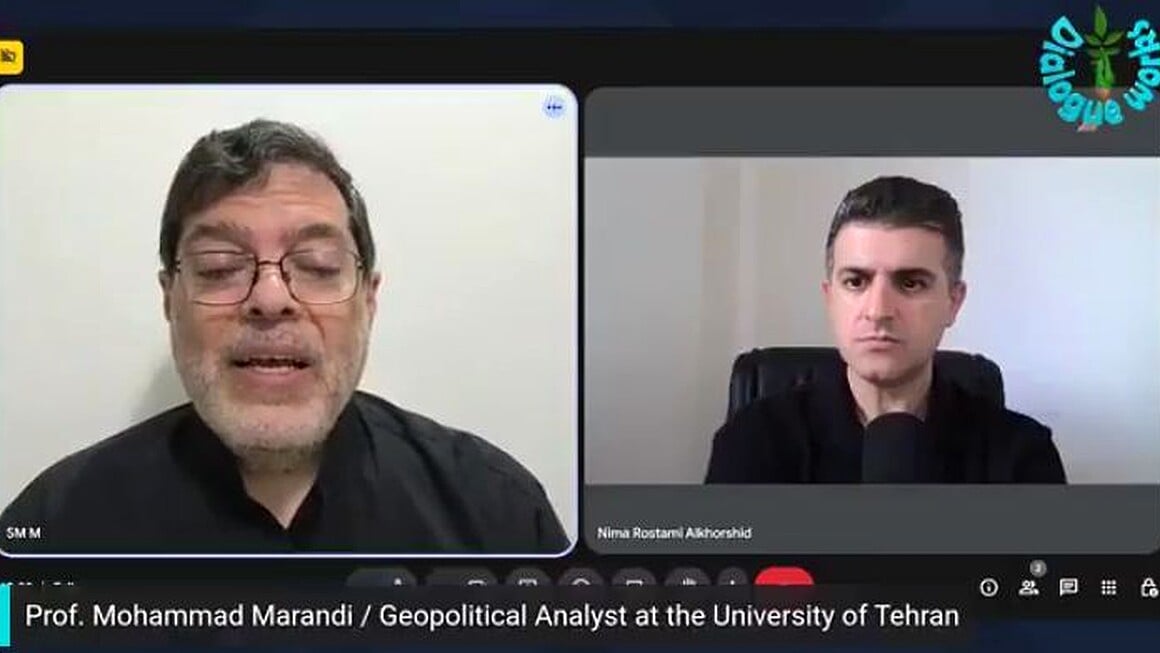




ISLAMABAD: Iranian official at the government university of Tehran and renowned geopolitical analyst has sharply criticised Indian Prime Minister Narendra Modi’s alignment with Israeli Prime Minister Benjamin Netanyahu, warning that the decision could expose India to severe strategic and economic consequences at a time of escalating tensions across the Middle East.
According to the analyst, the Indian prime minister has made what he described as a “foolish miscalculation” by politically aligning New Delhi with Israel during a volatile regional confrontation that increasingly involves Iran and its allies. He argued that India’s decision may carry heavy costs because the country remains deeply dependent on imported energy and lacks sufficient strategic reserves to absorb a prolonged disruption.
“They don’t have oil reserves. They don’t have strategic reserves. India is going to be hit very hard because of Narendra Modi,” the Tehran University professor said while commenting on the geopolitical implications of India’s current foreign policy posture.
The warning comes as tensions across the Middle East have intensified following a series of military exchanges involving Israel and regional actors, raising fears that the crisis could expand and threaten global oil supply routes. The Persian Gulf remains the world’s most critical energy corridor, and any disruption there immediately sends shockwaves across international markets.
India is widely considered one of the most energy-dependent major economies in the world. Government and industry data show that the country imports around 85 percent of its crude oil consumption, leaving it highly vulnerable to supply disruptions and price volatility originating in the Gulf region.
Energy analysts say this dependence places India in a precarious position if regional conflict escalates. A closure or partial disruption of shipping lanes such as the Strait of Hormuz — through which nearly one-fifth of the world’s oil passes — could sharply increase energy prices and strain economies that rely heavily on imported fuel.
The Tehran-based academic argued that India’s strategic position is particularly fragile because it lacks large-scale petroleum reserves capable of sustaining domestic demand during a prolonged supply crisis. Although India has built limited underground storage facilities, their capacity covers only a small portion of national consumption.
In contrast, several major economies have invested heavily in strategic stockpiles designed to protect their economies during global energy shocks. Countries such as the United States and China maintain far larger emergency reserves that can be released into markets during periods of severe disruption.
According to the analyst, India’s vulnerability is not simply an economic issue but also a strategic one. He suggested that India’s current alignment could complicate its relationships with several key Middle Eastern states that historically served as vital partners in energy supply.
For decades, India maintained a careful diplomatic balance across the region. New Delhi cultivated strong relations with Israel while simultaneously preserving strategic partnerships with Iran and Arab Gulf states. That balancing strategy allowed India to secure energy supplies while avoiding direct involvement in regional rivalries.
However, critics say that overt political alignment during periods of conflict risks undermining that delicate equilibrium. If tensions between Israel and Iran escalate further, countries seen as politically aligned with one side could face diplomatic or economic consequences from the other.
Beyond energy security, India’s economic exposure to the Middle East extends to shipping routes, trade flows and remittances from millions of Indian workers employed in Gulf economies. Any regional instability that disrupts maritime transport or labour markets could therefore have wider economic implications for New Delhi.
Global markets are already showing signs of nervousness as the regional crisis unfolds. Oil prices tend to react quickly to geopolitical developments in the Middle East, and traders closely monitor any threats to production facilities, pipelines or maritime transport routes.
Economists warn that sustained increases in oil prices could significantly affect India’s economy. Higher energy costs typically translate into rising transportation and manufacturing expenses, which in turn fuel inflation and weaken consumer purchasing power.
The Tehran University professor argued that India’s leadership may have underestimated these risks while pursuing political alignment with Israel. In his assessment, such a move fails to account for the broader strategic reality that energy security remains one of the most decisive factors shaping national resilience during global crises.
He concluded that the geopolitical landscape of the Middle East remains highly unpredictable, and countries heavily reliant on imported energy must exercise extreme caution in their diplomatic positioning.
“If tensions expand further in the region, those without reserves or strategic depth will feel the shock first,” the analyst warned, adding that India’s economic exposure could become increasingly evident if the conflict intensifies.
As global powers watch the evolving crisis, the debate over energy security, diplomatic alignment and strategic foresight continues to grow. For India, analysts say the coming months could reveal whether its current geopolitical choices strengthen its international standing — or expose critical vulnerabilities in an increasingly unstable world.