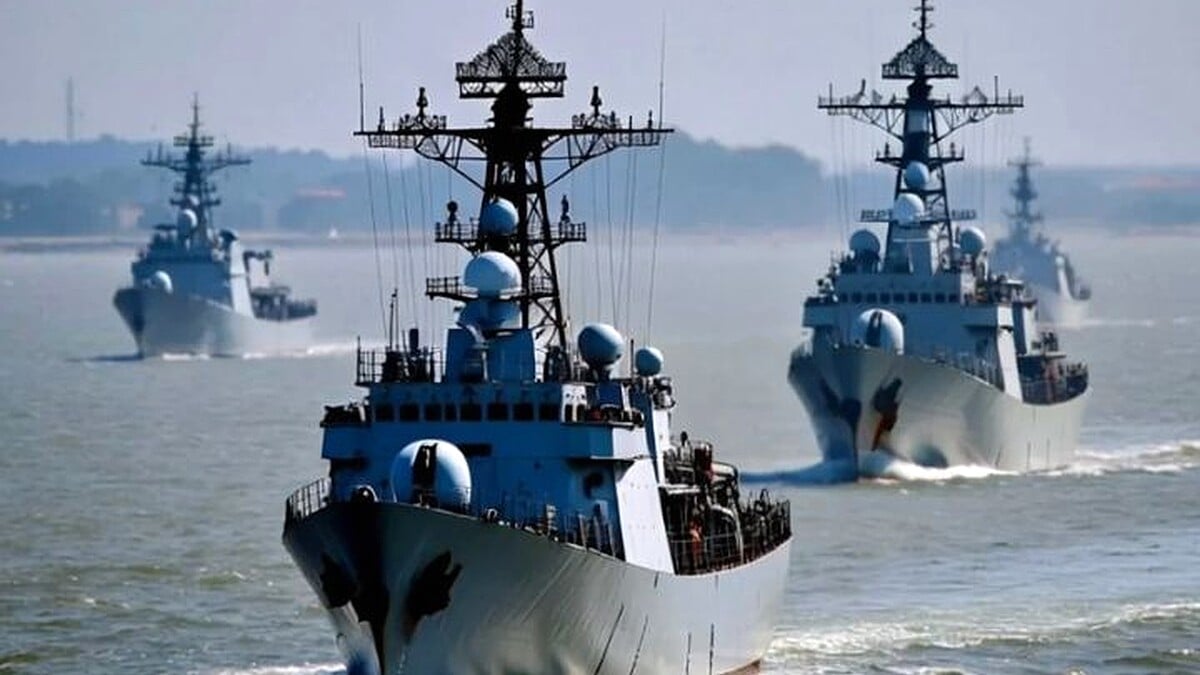




ISLAMABAD: The Pakistan Navy has launched Operation Muhafiz-ul-Bahr, deploying warships into the increasingly volatile Persian Gulf to escort merchant vessels carrying the nation’s lifeblood of oil and trade amid rising fears of an all-out regional war.
The Inter-Services Public Relations (ISPR) confirmed the operation on March 9, 2026, stating that Pakistani naval assets are now actively shadowing and protecting national-flagged tankers and cargo ships transiting high-risk waters.
This move comes against the backdrop of escalating military confrontations across the Middle East that analysts warn could spiral into a broader conflict involving major powers and proxy forces.
Pakistan depends on sea routes for survival. Over 95 percent of the country’s total trade volume moves by ship, while roughly 80 percent of its energy needs — including crude oil and liquefied natural gas — arrive via vulnerable maritime corridors.
The Strait of Hormuz remains the most critical and dangerous chokepoint. This 21-mile-wide passage funnels approximately 21 percent of global petroleum liquids and one-fifth of the world’s LNG trade every day.
Pakistan imports the bulk of its LNG from Qatar and significant volumes of crude from Saudi Arabia, the UAE, Kuwait, and Iraq — nearly all of which must pass through the Strait of Hormuz.
Any closure, mining, or sustained attack on shipping in this waterway would trigger immediate fuel shortages, skyrocketing domestic prices, halted industrial activity, and potential blackouts across Pakistan.
Recent months have seen repeated threats to close the Strait in retaliation for strikes on energy infrastructure, drone attacks on tankers, and naval skirmishes involving state and non-state actors.
Defense experts view the deployment as a direct response to these multiplying dangers. Rear Admiral (Retd.) Faisal Shah, a noted maritime security analyst, described the operation as an urgent defensive necessity.
“The stakes could not be higher,” Shah stated. “With regional powers exchanging fire and commercial shipping already targeted, Pakistan cannot afford to wait for disruption before acting.”
He emphasized that the escorts are limited to protecting Pakistani vessels and interests, insisting the mission is not provocative but purely self-preservation in a rapidly deteriorating environment.
Yet the presence of Pakistani warships in waters where multiple navies — American, British, French, Iranian, and others — already operate raises the risk of miscalculation.
A single incident involving a Pakistani naval vessel could draw the country into an unwanted confrontation at a time when its economy remains fragile and military resources stretched.
The Pakistan National Shipping Corporation (PNSC) is coordinating closely with the navy. At launch, two merchant ships were under active escort, with more expected to join the protected convoys in coming days.
Energy security has become an existential question for Pakistan. Domestic production meets less than 20 percent of oil demand, leaving the nation exposed to even short interruptions in Gulf supplies.
Freight rates and war-risk insurance premiums for tankers heading to South Asia have already surged in response to heightened threats, adding billions to import costs.
The operation signals Islamabad’s determination to defend its economic arteries even as the shadow of wider war lengthens over the Gulf.
Naval spokespersons have stressed readiness for escalation while reiterating that Pakistan seeks no quarrel with any neighbor or extra-regional power.
Still, military planners privately acknowledge the razor-thin margin for error in these congested and heavily militarized waters.
As missile exchanges, cyber-attacks on energy facilities, and naval shadow-boxing continue unabated, Operation Muhafiz-ul-Bahr places Pakistani sailors on the front line of a potential energy war with global repercussions.
The coming weeks will test whether these protective measures can shield the country’s economy — or whether missteps at sea could pull Pakistan deeper into the regional maelstrom.