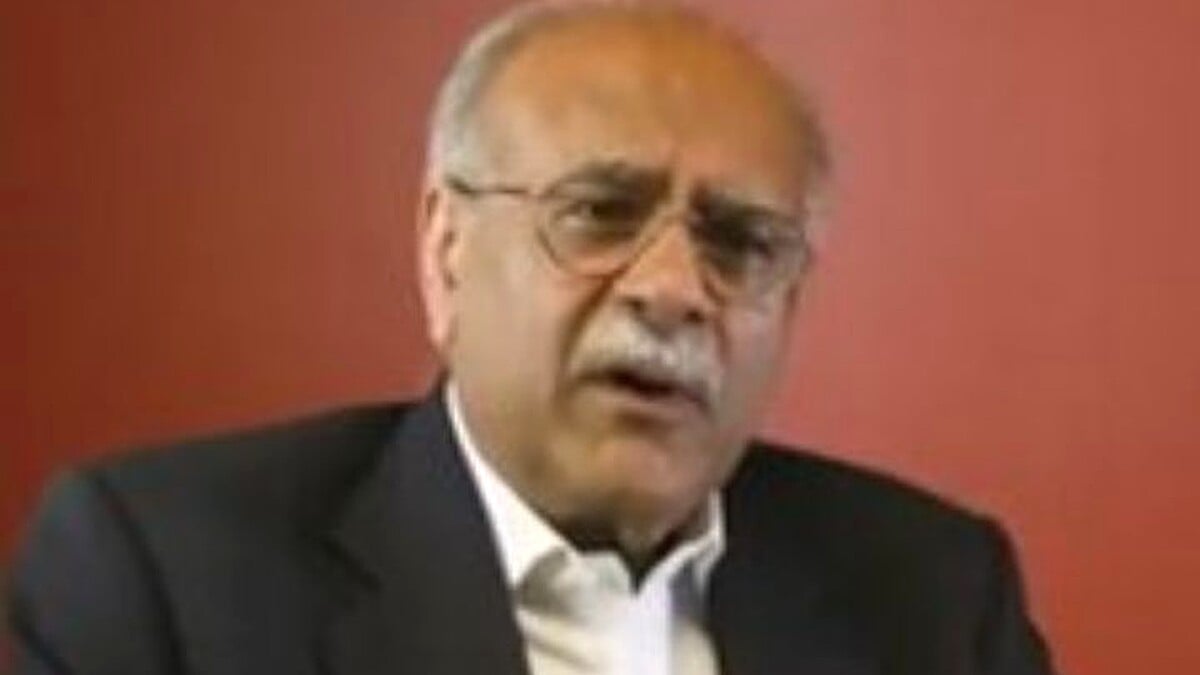




ISLAMABAD: Renowned Pakistani political analyst and journalist Najam Sethi has issued a stark warning about the possibility of military action by India against Pakistan, highlighting deep concerns over diplomatic isolation and the absence of reliable external support.
In a recent episode of his program Pakistan Untold, Sethi reportedly stated that India appeared poised to launch an attack on Pakistan. He emphasized that no country would come to Pakistan’s aid in such a scenario, explicitly noting that even longstanding ally China would not intervene.
The analyst drew a direct parallel between Pakistan’s current position and that of Iran in its ongoing regional confrontations. He suggested that Pakistan risked being perceived internationally as “the next Iran,” facing similar levels of isolation and vulnerability amid heightened tensions.
Sethi’s comments come against the backdrop of persistent India-Pakistan rivalry, which has seen multiple crises in recent years. A notable de-escalation occurred in May 2025 following a reported intervention by the United States President, which helped avert further conflict after an earlier escalation.
Observers note that the current regional environment has grown more volatile due to spillover effects from Middle East developments, particularly the Israel-Iran conflict. Sethi referenced these dynamics, arguing that any future crisis between India and Pakistan could spiral to dangerous levels without similar external mediation.
Pakistan’s strategic calculus has long relied on alliances, including its close partnership with China through economic and military cooperation. The China-Pakistan Economic Corridor remains a cornerstone of bilateral ties, yet Sethi’s remarks suggest doubts about Beijing’s willingness to engage militarily in a direct India-Pakistan confrontation.
Analysts point out that China has historically adopted a cautious approach in South Asian disputes, prioritizing economic interests and avoiding entanglement in nuclear flashpoints. Recent global shifts, including evolving US-China relations and distractions in other theaters, may further limit external guarantees for Pakistan.
India, meanwhile, has maintained a firm stance on issues such as cross-border terrorism and Kashmir. New Delhi has repeatedly accused Pakistan of supporting militant groups, a charge Islamabad denies. Diplomatic channels between the two neighbors remain strained, with limited high-level engagement in recent months.
Sethi’s warning also reflects broader anxieties within Pakistani discourse about strategic loneliness. The analyst has previously critiqued aspects of Pakistan’s foreign policy, urging greater realism in assessing alliances and regional power balances.
No official confirmation of imminent military action has emerged from either side. Indian authorities have not commented on Sethi’s specific statement, while Pakistani officials continue to emphasize defensive preparedness and diplomatic efforts to manage tensions.
The nuclear dimension adds significant gravity to any potential escalation. Both nations possess established arsenals, and past crises have underscored the risks of miscalculation in a hair-trigger environment.
Sethi, a former editor and prominent commentator, is known for candid assessments of Pakistan’s security challenges. His views often spark debate, as they blend insider perspectives with warnings about over-reliance on external patrons.
Regional experts stress the importance of dialogue mechanisms to prevent inadvertent conflict. Confidence-building measures, including hotlines and crisis communication protocols, have helped manage past standoffs but face testing amid current rhetoric.
Pakistan’s leadership has focused on internal stability and economic recovery while navigating complex geopolitics. Balancing relations with major powers remains a priority, even as voices like Sethi’s highlight perceived vulnerabilities.
The statement has circulated widely on social media and niche news platforms since March 9, 2026, amplifying concerns in public discourse. It underscores the fragile nature of South Asian security dynamics in an era of multiple global flashpoints.
While Sethi’s remarks represent a personal analysis rather than official policy, they serve as a reminder of the high stakes involved. Sustained diplomacy and restraint from all parties will be essential to avert worst-case scenarios in the region.