



ISLAMABAD: Iran’s Islamic Revolutionary Guard Corps has claimed responsibility for a precision strike on Al Dhafra Air Base in the United Arab Emirates, a major hub hosting United States Air Force personnel and assets. The attack, executed with drones and precision-guided missiles, marks a significant escalation in the ongoing regional conflict, reportedly in direct response to an earlier incident involving a girls’ elementary school in Minab, Iran.
The IRGC described the operation as targeting “American terrorists in the region,” asserting that Al Dhafra served as a launch platform for the alleged prior strike. Iranian state media, including Tasnim News Agency, reported that the assault successfully hit critical infrastructure, including satellite communication facilities, early-warning radar systems, and fire-control radars essential to US operations.
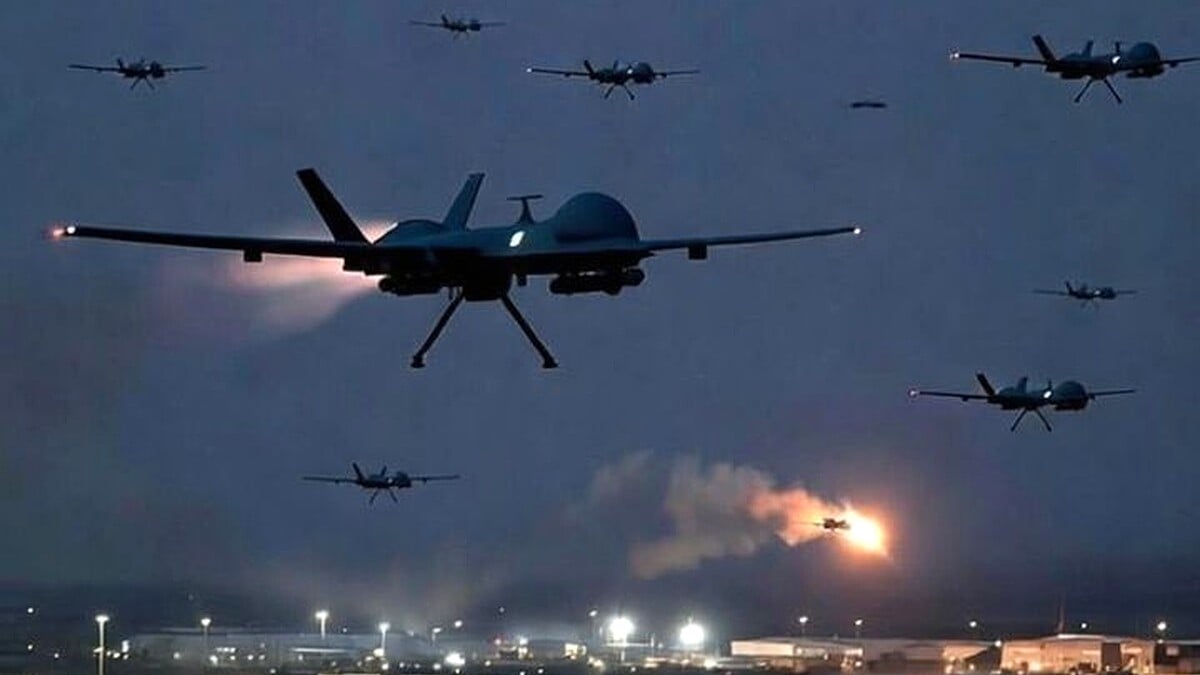
Al Dhafra Air Base, located south of Abu Dhabi, functions as one of the most strategic US military installations in the Middle East. It houses the 380th Air Expeditionary Wing, supporting reconnaissance missions, aerial refueling, combat aircraft, and unmanned systems such as MQ-9 Reaper drones. The base has played a pivotal role in operations against groups like ISIS and in broader intelligence gathering across the Gulf.
Witness accounts from Abu Dhabi described smoke rising near the base following explosions, with air defense systems activated in response. The UAE Ministry of Defense confirmed intercepting multiple incoming threats, including ballistic missiles and drones, though some debris impacted civilian areas, causing limited property damage.
The strike forms part of a broader Iranian retaliation campaign against US and allied positions following reported joint US-Israeli military actions against Iranian targets earlier in the year. Iranian officials linked the Al Dhafra attack specifically to the Minab incident, where over 150 civilians, predominantly children, were reportedly killed in a bombing. Tehran has accused US forces at the base of facilitating that operation, though Washington has denied targeting civilians and stated it is investigating the claims.
Regional air defenses, including the Terminal High Altitude Area Defense (THAAD) system deployed in the UAE, intercepted several projectiles aimed at Abu Dhabi and surrounding areas. Despite these efforts, Iranian sources claimed damage to US reconnaissance infrastructure, including facilities linked to U-2 surveillance aircraft and drone maintenance hangars.
The incident has heightened alerts across Gulf states, with airspace restrictions and temporary flight suspensions affecting major hubs like Dubai International Airport. Emirates Airlines and other carriers resumed operations after brief interruptions, but the attacks have disrupted regional travel and commerce.
Military analysts note that Al Dhafra’s strategic importance stems from its proximity to the Strait of Hormuz, a vital chokepoint for global oil shipments. Any sustained threat to the base could impact US power projection in the Persian Gulf and influence security dynamics involving Iran, the UAE, and their allies.
The UAE has condemned the attacks as unjustified aggression, emphasizing its interception success and minimal casualties. No American fatalities have been officially reported from the Al Dhafra strike, though the Pentagon continues assessments of potential damage to equipment and systems.
This development occurs against a backdrop of intensified exchanges, with Iran launching similar operations against other US bases in Qatar, Kuwait, and Bahrain. The IRGC has framed these actions as part of “Operation True Promise,” aimed at deterring further perceived aggressions.
Observers warn that continued tit-for-tat strikes risk drawing in additional regional actors, potentially destabilizing energy markets and maritime security. Diplomatic channels remain strained, with calls from Gulf nations for de-escalation amid fears of broader confrontation.
The full extent of damage at Al Dhafra remains under verification, as both sides present conflicting narratives. Iranian media highlights successful hits on high-value targets, while US and UAE statements focus on defensive resilience and limited impact.
As tensions persist, the international community monitors closely for signs of further military activity in this volatile theater. The strike underscores the fragile balance of power in the Middle East, where military bases like Al Dhafra serve as flashpoints in larger geopolitical rivalries.