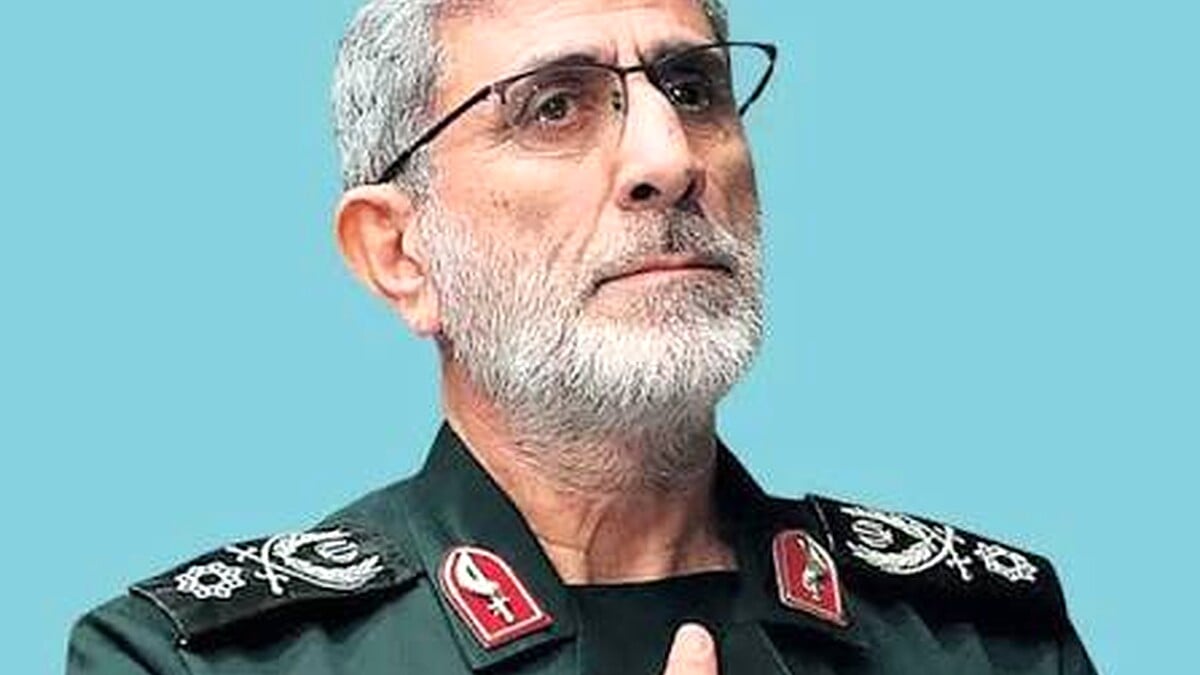




ISLAMABAD: Reports originating from UAE-based media have claimed that Brigadier General Esmail Qaani, the commander of Iran’s elite Quds Force, was executed by the Islamic Revolutionary Guard Corps on suspicion of espionage for Israel.
The allegation surfaced amid heightened regional tensions following recent military confrontations involving Iran, the United States, and Israel.
Sources close to Arab media outlets, including The National newspaper in the UAE, cited circulating online claims and unconfirmed intelligence suggesting Qaani’s detention and subsequent execution by elements within the IRGC.
These reports highlighted Qaani’s repeated survival of assassination attempts and strikes attributed to Israel and the US as a factor fueling internal suspicions.
Qaani, who assumed leadership of the Quds Force in January 2020 after the US drone strike that killed his predecessor Qasem Soleimani, has long been a shadowy figure in Iran’s extraterritorial operations.
His low public profile contrasted with Soleimani’s charismatic presence, leading some analysts to question his effectiveness in managing proxy networks across the Middle East.
Recent escalations, including reported Israeli pre-emptive actions against Iranian targets and broader conflict dynamics, have intensified scrutiny on senior IRGC figures.
Social media posts and viral accounts amplified the execution narrative, with some claiming Qaani was present near Supreme Leader Ayatollah Ali Khamenei during bombings yet escaped unharmed.
Such survival patterns reportedly prompted paranoia within hardline circles, where loyalty is paramount and perceived breaches invite severe repercussions.
Iranian officials have categorically denied the claims, dismissing them as disinformation campaigns likely orchestrated by adversaries.
State-linked media and IRGC-affiliated channels have maintained that Qaani remains active in his duties, though no recent public appearances have been independently verified to counter the rumors.
The Quds Force, responsible for overseas operations and support to groups like Hezbollah, Hamas, and various militias in Iraq and Yemen, plays a critical role in Iran’s regional strategy.
Any instability in its leadership could signal deeper fractures within the IRGC, especially amid ongoing pressures from sanctions, military losses, and internal purges.
Historical precedents exist for executions of high-ranking officials accused of espionage, though typically involving lower-profile figures or those linked to nuclear programs.
For instance, several nuclear scientists and engineers have faced similar fates in recent years on Mossad-related charges, as documented by human rights groups.
Qaani’s case, if substantiated, would represent an unprecedented blow to the IRGC’s top echelon during a period of acute external threat.
Observers note that Mossad has occasionally issued tongue-in-cheek denials regarding alleged agents, including a statement brushing aside claims about Qaani.
Such responses aim to sow confusion rather than confirm or refute intelligence ties.
The timing of these reports coincides with Iran’s reported setbacks in proxy fronts and direct confrontations, raising questions about intelligence vulnerabilities.
Analysts suggest that internal suspicions may stem from leaks enabling precise targeting of Iranian assets, though no concrete evidence has linked Qaani to such breaches.
Previous rumors about Qaani’s fate, including detention or injury during interrogations in late 2024, were later countered by appearances or official statements.
Similar patterns have recurred, with speculation often peaking during heightened conflict phases before being walked back.
The absence of official Iranian commentary beyond blanket denials leaves room for continued speculation in regional media circles.
UAE-based outlets, frequently critical of Iranian policies, have amplified these narratives, reflecting broader Gulf Arab concerns over Tehran’s influence.
Meanwhile, the IRGC’s opacity makes independent verification challenging, with information warfare playing a significant role in the shadow conflict.
Qaani’s survival through multiple crises has paradoxically become a liability in an environment where loyalty is tested ruthlessly.
Whether the execution claims prove accurate or represent another layer of psychological operations remains unclear.
What is evident is the deepening mystery surrounding one of Iran’s most powerful military figures at a pivotal moment.
The outcome could influence the trajectory of Iran’s axis of resistance and its confrontation with Israel.
Until corroborated by reliable sources, the reports should be treated with caution amid the fog of ongoing hostilities.