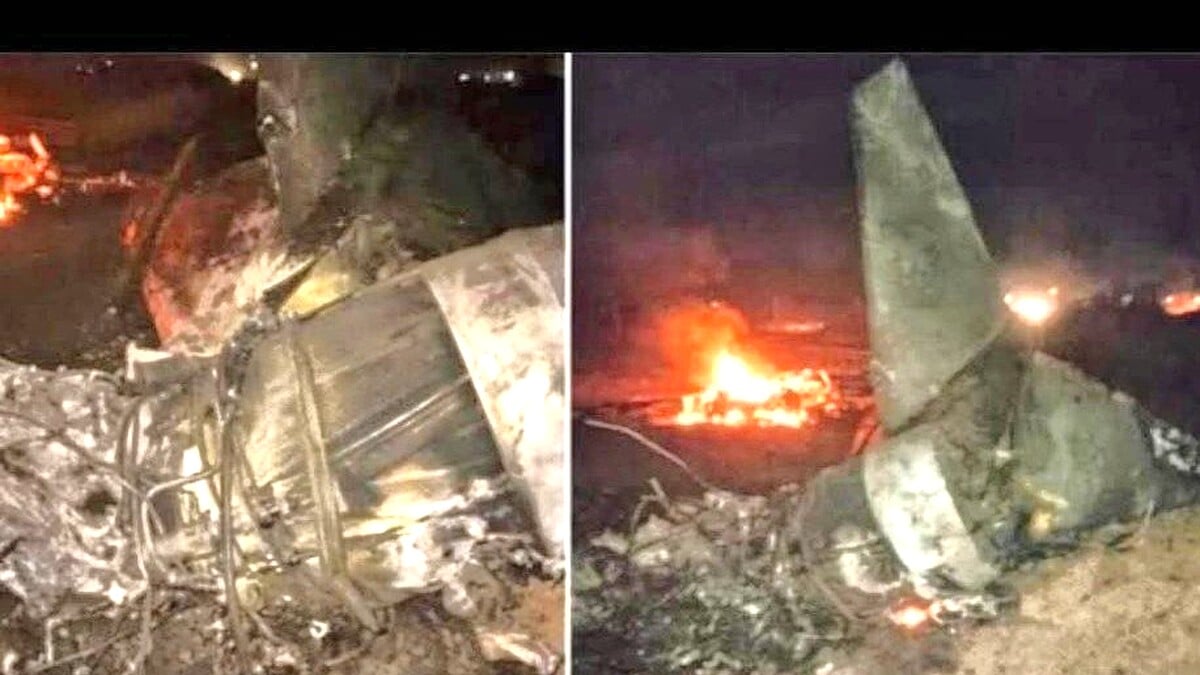




ISLAMABAD: Initial investigations into the sudden disappearance of an Indian Air Force Sukhoi Su-30MKI fighter jet over Assam suggest the incident may involve deliberate electronic disruption rather than a routine accident, raising serious concerns about vulnerabilities in military aviation systems.
The aircraft lost radar contact abruptly shortly after takeoff from Jorhat air base on Thursday evening, with the last confirmed communication recorded at 7:42 pm. Search and rescue teams were immediately deployed across the Karbi Anglong district’s hilly and forested terrain, where locals reported hearing a loud explosion consistent with a high-impact crash.
Indian media outlets have highlighted spectrum monitoring data that detected brief but significant GPS anomalies in the vicinity of the flight path. These irregularities aligned with patterns of localized jamming, forcing the jet’s onboard systems to switch to inertial navigation backup. At the same time, radio communications between the aircraft and ground control were severed without warning.
Such electronic interference tactics, known as GPS spoofing and jamming, have surged in South Asia amid heightened regional tensions. Official records from India’s Ministry of Civil Aviation indicate over 1,900 incidents of GPS spoofing and interference targeting civilian aircraft between 2023 and late 2025, affecting major airports including Delhi, Mumbai, and Amritsar.
Military analysts note that modern fighter jets like the Su-30MKI rely heavily on satellite-based navigation for precision operations, especially in complex terrains such as Assam’s northeastern region near international borders. When primary GPS signals are disrupted, the aircraft reverts to less accurate inertial systems, increasing risks during low-altitude or high-speed maneuvers.
The Su-30MKI, a twin-engine multirole fighter jointly developed by Russia and India, forms the backbone of the Indian Air Force’s combat fleet with over 260 units in service. However, the type has faced scrutiny over its safety record, with at least 12 aircraft lost in various incidents since induction in the early 2000s, though most prior cases were attributed to technical malfunctions or pilot error rather than external interference.
This latest event occurs against a backdrop of growing electronic warfare threats in the region. Reports from aviation authorities have repeatedly flagged jamming activities, often linked to border areas where advanced electronic countermeasures are deployed by neighboring states. While no official confirmation has tied the Assam incident directly to foreign actors, unverified social media speculation has pointed to possible involvement from across disputed frontiers.
Experts emphasize that successful jamming requires proximity and sophisticated equipment capable of overpowering military-grade signals, which are typically more resilient than civilian ones. The brief duration of the detected anomalies suggests a targeted, short-burst attack designed to exploit a critical phase of flight, such as transition or approach.
The Indian Air Force has maintained operational silence on the cause pending a formal inquiry, but the rapid launch of search operations underscores the urgency. Recovery of the flight data recorder and wreckage analysis will be crucial in determining whether the interference was accidental, environmental, or intentional subversion.
Broader implications extend beyond this single aircraft. Repeated GPS disruptions could erode confidence in satellite-dependent systems across both military and civilian aviation sectors. India’s response has included calls for enhanced anti-jamming technologies and diversification of navigation aids, including ground-based alternatives.
As rescue efforts continue in the challenging Assam terrain, the incident highlights the evolving nature of aerial threats in contested regions. Whether confirmed as subversion or not, it serves as a stark reminder of the fragility of modern air power in an era of electronic dominance.
The loss or severe damage to a frontline fighter represents not only material cost but also strategic exposure at a time when readiness remains paramount. Further updates from defense authorities are awaited as the investigation unfolds.