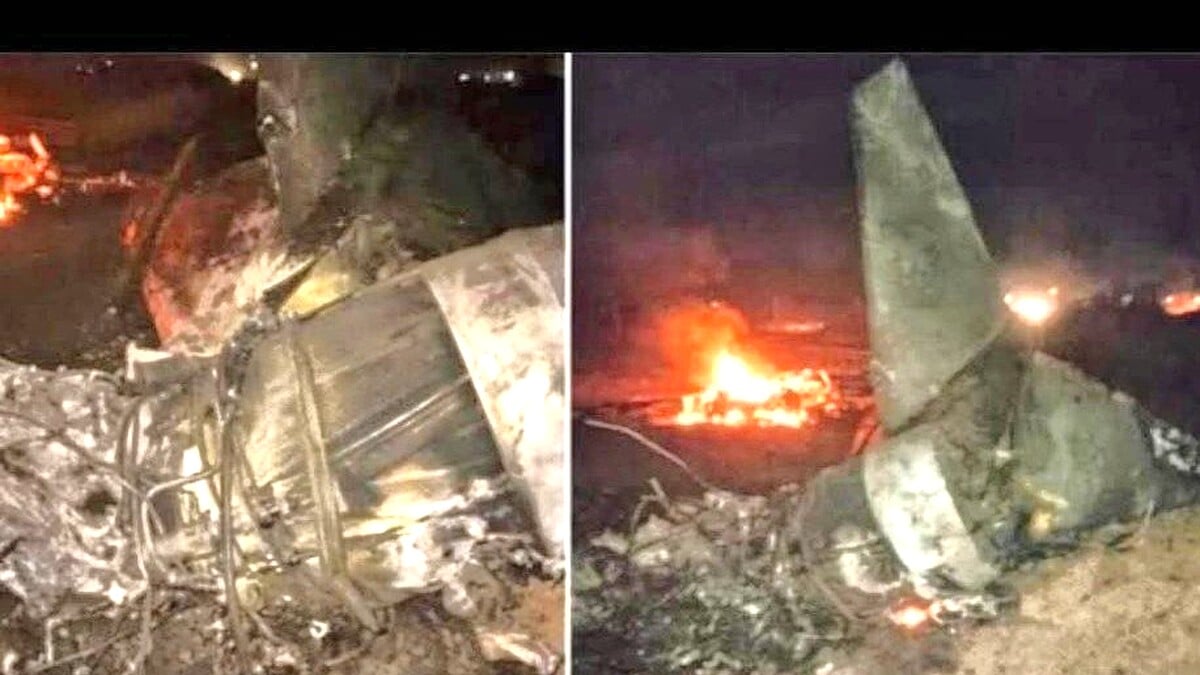




ISLAMABAD: An Indian Air Force Sukhoi Su-30MKI fighter aircraft lost radar contact during a routine sortie over Assam on Wednesday evening, with reports indicating a crash in the hilly terrain of Karbi Anglong district.
Local residents in the area heard a loud explosion around 7 pm local time, followed by sightings of smoke rising from the hills near Chokihola village. This prompted immediate concern among nearby communities and triggered a large-scale search and rescue operation by the Indian Air Force.
The aircraft, a twin-engine multirole fighter and mainstay of the IAF fleet, took off from a base in the region for what defence sources described as a training mission. It disappeared from radar screens shortly after, prompting the deployment of helicopters, ground teams and local authorities to the remote location.
Defence officials confirmed that one pilot is missing, though details on the crew configuration remain limited at this stage. The Su-30MKI typically operates with a two-member crew, a pilot and a weapons systems officer, raising questions about the status of both personnel.
The crash site lies in northeastern India, a strategically sensitive zone close to the Line of Actual Control with China. Assam shares proximity with Arunachal Pradesh, where border disputes have long persisted between the two nuclear-armed neighbours.
Karbi Anglong district, though not directly on the disputed frontier, falls within the broader eastern theatre overseen by the IAF’s Eastern Air Command. This region hosts several Su-30MKI squadrons, positioned to provide rapid response capabilities amid ongoing tensions along the Himalayan border.
The Indian Air Force has yet to release an official statement on the cause of the incident. Past accidents involving the Su-30MKI have often been attributed to technical malfunctions, human error or environmental factors, following courts of inquiry.
Since its induction in the early 2000s, the Su-30MKI has experienced multiple crashes, including several in Assam and nearby states. Notable incidents include a 2015 crash near Tezpur where pilots ejected safely, a 2017 loss in Arunachal Pradesh with fatal outcomes, and a 2019 mishap in a paddy field near Tezpur.
These events have occasionally led to temporary grounding or fleet-wide inspections, though the platform remains central to India’s air combat strength with over 250 units in service.
Speculation has circulated on social media platforms linking the latest incident to possible electronic warfare interference from external sources. Some unverified posts claimed Chinese involvement through jamming or spoofing of navigation systems.
However, no credible defence or media reports have substantiated such assertions. Official channels and mainstream Indian outlets have focused solely on the loss of contact, search efforts and pilot safety, without mentioning foreign interference.
Electronic warfare capabilities exist in the region, with both India and China deploying advanced systems along the border. Yet attributing a training sortie accident to such factors without evidence risks escalation in an already tense environment.
The timing coincides with heightened regional alertness, including recent IAF demonstrations of highway operations in Assam using Su-30MKI aircraft. Such exercises underscore the platform’s role in dispersed operations and rapid deployment.
Search operations continued into the night, with teams navigating difficult hilly and forested terrain. Locals assisted by providing information on the explosion and smoke, aiding in narrowing the search area.
The incident highlights persistent challenges for the IAF in maintaining its ageing yet upgraded fleet amid demanding operational tempos. The Su-30MKI, licence-built by Hindustan Aeronautics Limited, has undergone upgrades to enhance avionics, engines and weapons integration.
Defence analysts note that routine sorties in challenging weather and terrain contribute to higher accident rates in the northeast compared to other sectors.
As details emerge, the focus remains on locating the missing pilot or crew and recovering any flight data recorders. A formal court of inquiry is expected once initial recovery efforts conclude.
The development has drawn attention across South Asia, given the strategic implications of air assets in border regions. For now, prayers and hopes centre on the safe recovery of IAF personnel involved.