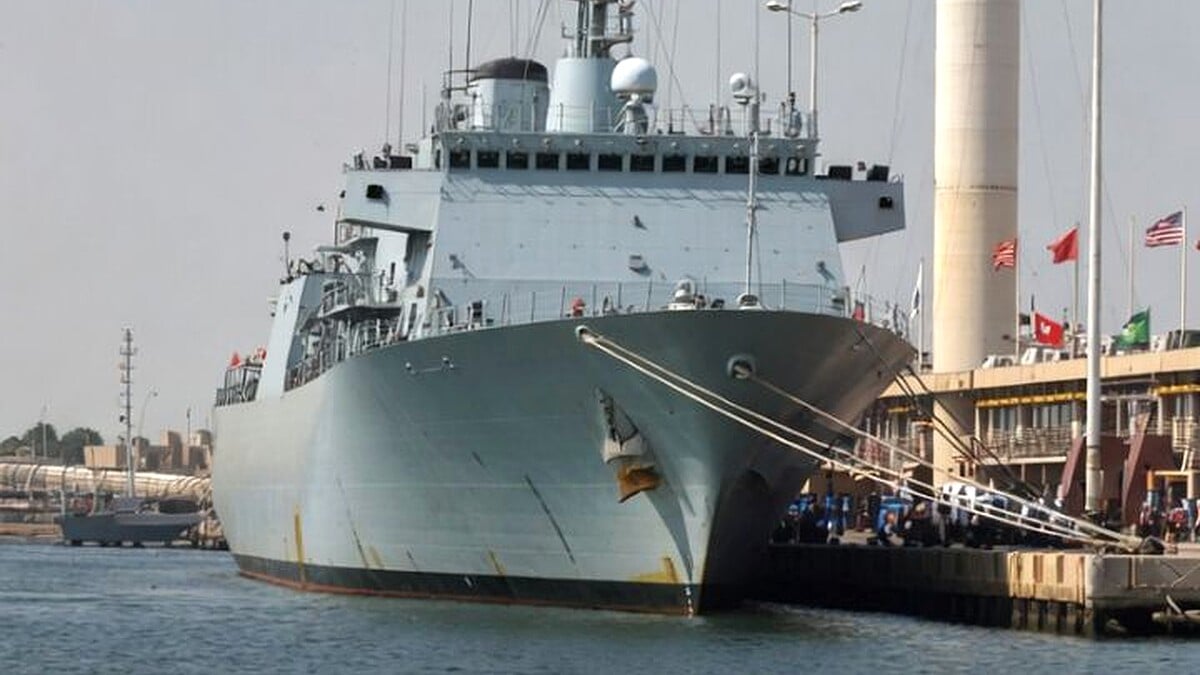




ISLAMABAD: India has categorically rejected claims that the United States is utilizing its ports or naval bases to conduct military operations against Iran in the ongoing conflict in West Asia.
The Ministry of External Affairs swiftly issued a fact-check statement dismissing the allegations as fake and false, emphasizing that such reports lack any foundation in reality.
The controversy originated from remarks made by retired US Army Colonel Douglas Macgregor during an interview on the US-based conservative channel One America News Network.
In the broadcast, Macgregor, a former advisor to the US Secretary of Defense, asserted that American naval installations and bases had suffered significant damage in the conflict with Iran.
He further claimed that the US Navy was compelled to fall back on Indian ports and facilities as an alternative, describing the situation as less than ideal according to naval assessments.
These statements quickly circulated on social media and news platforms, sparking speculation about India’s potential involvement in the regional escalation.
Responding promptly, the Ministry of External Affairs’ fact-check account on social media platform X labeled the claims as fabricated and baseless.
The official post stated that assertions appearing on the One America News Network regarding US use of Indian ports were entirely incorrect.
It urged the public to exercise caution against sharing or amplifying such unfounded and manufactured narratives, particularly in the context of heightened tensions in West Asia.
India’s clarification underscores its longstanding policy of strategic autonomy and non-alignment in international conflicts.
New Delhi has consistently maintained a neutral stance in the Middle East crisis, advocating for de-escalation and diplomatic resolutions.
The government has refrained from endorsing military actions by any party and has called for restraint to prevent broader regional instability.
The denial comes at a time when the Iran-US confrontation has intensified, involving missile exchanges, naval engagements, and strikes that have raised global concerns over energy security and maritime routes.
Reports indicate that Iranian forces have targeted US assets in the Gulf, prompting retaliatory measures that have disrupted traditional basing arrangements for American forces.
Despite these developments, India has not altered its position on providing logistical or military support to belligerents.
Official sources reaffirm that no agreements exist allowing foreign powers to use Indian territory for offensive operations against third countries.
This position aligns with India’s broader foreign policy framework, which prioritizes peaceful coexistence and multilateral dialogue.
The episode highlights the challenges of misinformation in an era of rapid information dissemination across digital platforms.
False claims can exacerbate diplomatic sensitivities and create unnecessary speculation about sovereign decisions.
India’s response serves as a reminder of the importance of verifying information from credible official channels before drawing conclusions.
Domestic political reactions have also emerged in the wake of the controversy.
Congress spokesperson Supriya Shrinate questioned whether the government was permitting US and Israeli forces to utilize Indian naval infrastructure in a conflict resulting in civilian casualties.
Her remarks reflected opposition concerns over potential covert alignments and their implications for parliamentary oversight and public accountability.
Such queries underscore the domestic scrutiny that foreign policy issues attract, especially during periods of international volatility.
However, the government’s firm rebuttal has aimed to dispel any ambiguity and reinforce India’s independent foreign policy posture.
Analysts note that India’s strategic partnerships, including defense cooperation with the US, do not extend to granting basing rights for offensive actions.
Agreements like the Logistics Exchange Memorandum of Agreement facilitate mutual support in humanitarian and disaster scenarios but explicitly avoid combat-related provisions.
The current denial reinforces this distinction amid the fluid dynamics of the West Asia situation.
As the conflict continues to evolve, India’s approach remains focused on safeguarding national interests while promoting stability in the region.
Observers anticipate that New Delhi will continue to monitor developments closely and engage diplomatically where appropriate.
The swift fact-check by the Ministry of External Affairs has effectively contained the spread of the misleading narrative.
It also demonstrates proactive communication strategies to counter disinformation in real time.
In the broader context, the incident illustrates how unverified statements from foreign commentators can inadvertently implicate neutral parties in geopolitical disputes.
India’s response prioritizes clarity and factual accuracy to maintain its reputation as a responsible global actor.
The episode may prompt greater vigilance regarding commentary on sensitive military matters from unofficial sources.
As tensions persist in West Asia, India’s commitment to non-involvement in offensive operations remains unequivocal.