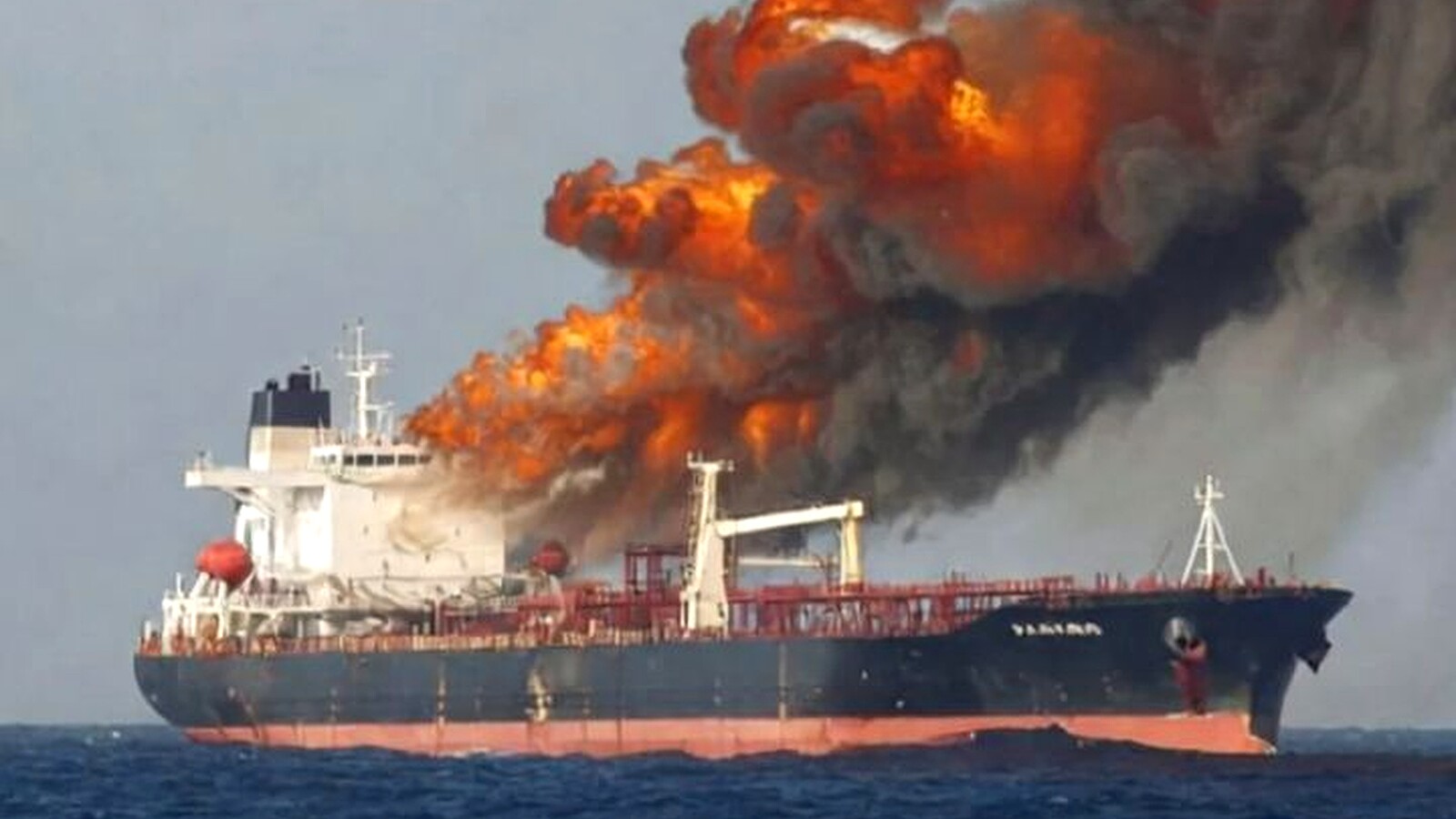




ISLAMABAD: An oil tanker was struck and is now sinking in the Strait of Hormuz after attempting to pass through the strategic waterway in defiance of Iranian warnings, according to Iranian state television on Sunday.
The Islamic Republic of Iran Broadcasting reported that the vessel, described as an “offending oil tanker,” was hit while illegally trying to transit the narrow passage. State TV broadcast footage showing thick black smoke rising from the burning ship at sea, underscoring the severity of the incident.
Iranian authorities confirmed the attack, stating it occurred because the tanker ignored orders not to cross amid heightened regional tensions. The Islamic Revolutionary Guard Corps had earlier declared the Strait unsafe for navigation, effectively halting traffic following recent military exchanges involving Iran, the United States and Israel.
The targeted vessel has been identified in multiple reports as the Palau-flagged oil tanker Skylight. Omani maritime authorities confirmed the incident occurred about five nautical miles north of Khasab Port in Musandam, near the Strait’s entrance. Four crew members sustained injuries during the strike, and all 20 personnel onboard—including 15 Indian nationals—were evacuated successfully.
The UK Maritime Trade Operations agency reported a vessel struck by an unknown projectile in the area, with a fire in the engine room brought under control in one account, though Iranian media insisted the ship was sinking. Social media footage circulated by activists depicted heavy plumes of smoke, aligning with state television imagery.
This marks the first confirmed attack on commercial shipping in the Strait since the latest escalation in the broader conflict. Iran positioned the action as enforcement of its declared restrictions on passage, warning that continued attempts to breach the closure would face similar consequences.
The Strait of Hormuz remains one of the world’s most critical maritime chokepoints. It handles approximately one-quarter of global seaborne oil trade and one-fifth of liquefied natural gas shipments. Daily flows through the narrow 21-mile-wide channel average around 21 million barrels of oil, equivalent to about 20 percent of global petroleum consumption.
Disruptions here have immediate ripple effects on energy markets. Shipping data indicates that tanker traffic in the main lanes has halted, with more than 200 vessels—including crude carriers and LNG tankers—now anchored in surrounding waters off the United Arab Emirates, Oman and elsewhere to avoid the risks.
Analysts note that over 150 tankers have dropped anchor since the closure announcement, representing a 40-50 percent drop in transit activity. Major oil companies and trading houses have suspended shipments through the Strait, rerouting where possible or delaying loadings.
The incident follows Iranian retaliatory strikes on targets in the Gulf region, including in the UAE, Bahrain, Qatar and Oman, amid ongoing hostilities. Iranian forces enforced the navigation ban through radio broadcasts prohibiting passage, as confirmed by the European naval mission Aspides.
Global oil prices face upward pressure from the uncertainty. War risk insurance premiums for vessels in the Gulf are expected to surge, further deterring operators. Experts warn that prolonged closure could trigger supply shortages, particularly for Asian markets reliant on Middle Eastern crude.
Iraq convened an emergency oil ministry meeting to explore alternatives for exports, as the country depends heavily on the Strait for shipments. Similar concerns echo across Gulf producers, where maritime security has become a paramount issue.
The attack highlights the vulnerability of commercial shipping in contested waters. While Iranian sources framed it as a response to defiance, international observers express alarm over the targeting of civilian vessels and the potential for wider economic fallout.
Maritime security agencies continue monitoring the area for additional incidents. Reports of other vessels struck nearby suggest the risks may extend beyond a single event, with multiple tankers affected in the Gulf vicinity.
As tensions persist, the international community watches closely for any de-escalation signals. The fate of the Strait’s navigation remains uncertain, with implications for energy security and global trade stability.