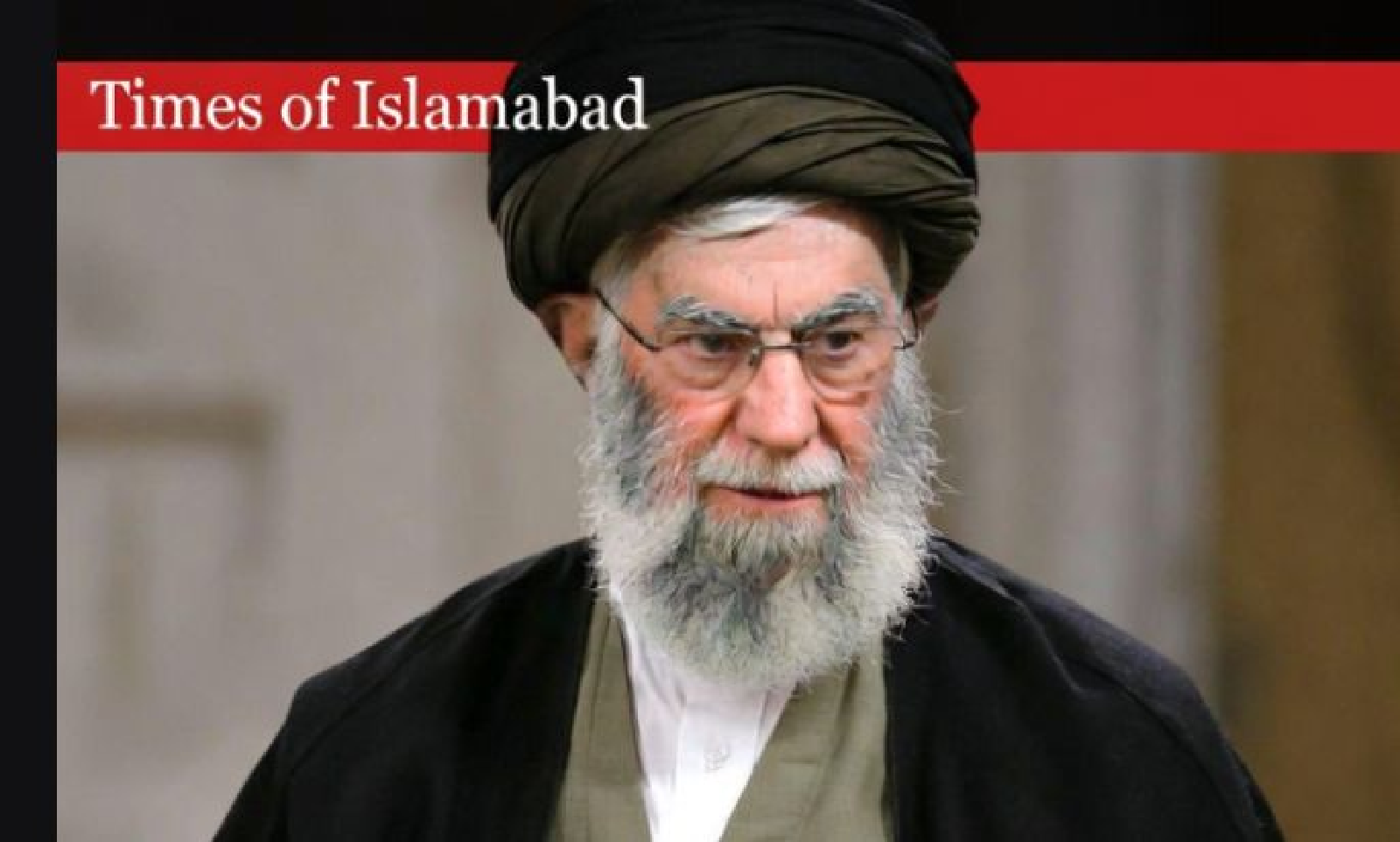




ISLAMABAD: A groundbreaking report by The New York Times has disclosed that United States Central Intelligence Agency provided critical intelligence enabling the strike that eliminated Iran’s Supreme Leader Ayatollah Ali Khamenei.
The revelation highlights unprecedented intelligence cooperation between Washington and Tel Aviv amid escalating regional conflict.
According to sources familiar with the operation cited in the report, the CIA tracked Ayatollah Khamenei for several months.
This surveillance built detailed profiles of his movements, locations and daily patterns.
The agency gained increasing confidence in pinpointing his whereabouts over time.
The pivotal breakthrough occurred when intelligence indicated a rare high-level meeting of top Iranian officials.
This gathering was scheduled for Saturday morning at a secure leadership compound in central Tehran.
Most significantly, the supreme leader himself would attend the session.
This information created a narrow but decisive window of opportunity.
Originally, US and Israeli planners intended nighttime strikes for cover of darkness.
However, officials adjusted the timeline to exploit the daytime assembly.
The CIA described its data as offering “high fidelity” on Khamenei’s exact position.
Washington promptly shared this intelligence with Israeli counterparts.
Israel then executed the operation it had prepared for months.
Israeli airstrikes targeted the compound, resulting in the deaths of Ayatollah Khamenei and several senior figures.
Iranian state media confirmed the supreme leader’s death in the attacks.
The compound housed key offices including those of the supreme leader, presidency and Supreme National Security Council.
The strike achieved what sources termed a “critical and early victory” in the broader campaign.
It eliminated top leadership in one coordinated blow.
Ayatollah Ali Khamenei, aged 86, had ruled Iran since 1989.
His tenure transformed the Islamic Republic into a regional power through hard-line policies.
He oversaw expansion of proxy militias and maintained staunch opposition to the United States and Israel.
His death marks the most significant leadership upheaval since the 1979 revolution.
Iranian authorities announced an interim committee to manage affairs.
Officials vowed severe retaliation against American and Israeli targets.
Retaliatory strikes from Iran targeted Israel and Gulf allies on Sunday.
The conflict entered its second day with ongoing exchanges.
Analysts warn of risks including prolonged war and regional instability.
The operation underscores deepening US-Israeli intelligence sharing.
Such collaboration intensified in recent years against mutual threats.
The CIA’s role demonstrates advanced human and technical surveillance capabilities.
Months of monitoring allowed real-time adaptation of military plans.
This precision minimized collateral while maximizing impact on command structure.
Iran’s failure to detect or disrupt the tracking raises questions about internal security.
The supreme leader’s attendance at the meeting exposed vulnerabilities.
Normally cautious, his presence in a group setting proved fatal.
The New York Times report draws from people briefed on the intelligence and operation.
It aligns with statements from US officials on regime change objectives.
President Trump announced Khamenei’s death shortly after the strikes.
The development has sparked global reactions ranging from condemnation to cautious support.
Russia described the killing as a violation of international norms.
Other nations urged de-escalation to prevent wider war.
In Tehran, mourning periods of 40 days commenced.
Succession questions loom as factions vie for influence.
Hard-line elements within the Revolutionary Guards may seek greater control.
The power vacuum could lead to internal instability.
The strikes form part of a larger US-Israeli military campaign against Iran.
Ongoing operations target remaining infrastructure and leadership.
Iran’s responses include missile barrages on regional targets.
Casualties continue to mount on multiple fronts.
The episode represents a turning point in Middle East dynamics.
Ayatollah Khamenei’s elimination removes a central figure of resistance.
It may accelerate shifts in Iran’s domestic and foreign policies.
Yet immediate fallout points to heightened confrontation.
Observers monitor closely for signs of broader escalation.
The intelligence-driven strike sets a precedent for future operations.
It illustrates how precise data can decisively alter strategic outcomes.
The full implications of Khamenei’s death remain unfolding.
Regional stability hangs in delicate balance amid continuing hostilities.