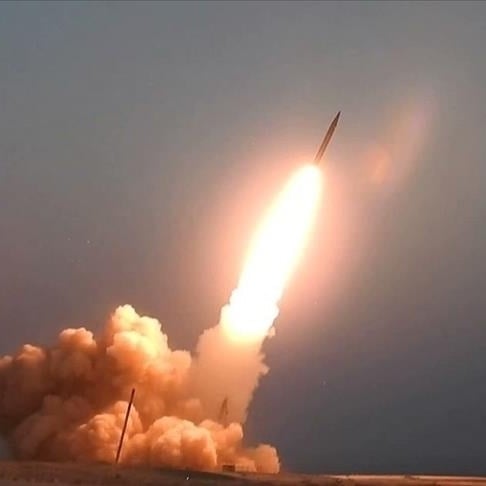




ISLAMABAD: Iran launched a series of ballistic missile strikes on Friday targeting multiple United States military bases across the Middle East, marking a sharp escalation in the ongoing regional conflict.
The retaliatory attacks came hours after joint United States and Israeli strikes hit several locations inside Iran, including areas near Tehran and other major cities.
Iranian state television reported that the Islamic Revolutionary Guard Corps carried out heavy missile barrages against four key US facilities simultaneously.
The targeted sites included Al Udeid Air Base in Qatar, which serves as the largest American military installation in the region and hosts thousands of US troops.
Also struck was the US Navy’s Fifth Fleet headquarters in Bahrain, where explosions were reported and air-raid sirens sounded across the capital Manama.
Kuwait’s Ali Al Salem Air Base faced incoming missiles, prompting defensive intercepts and widespread alerts in the country.
The Al Dhafra Air Base in the United Arab Emirates was another primary target, with reports of shrapnel causing at least one fatality in Abu Dhabi from falling debris.
Iran’s Foreign Ministry described the action as a direct and proportional response to what it called unprovoked aggression by the United States and Israel.
Tehran had repeatedly warned that any attack on its territory would trigger strikes on all American bases and interests throughout the Middle East.
The Islamic Revolutionary Guard Corps announced the launch of the first wave of extensive missile and drone operations aimed at both Israel and US-hosted facilities.
Israeli air defences intercepted multiple incoming projectiles, while sirens blared in Tel Aviv and other areas as the country declared a state of emergency.
United States President Donald Trump confirmed that major combat operations against Iran were underway, stating the goal was to neutralise threats from Iran’s missile programme and nuclear ambitions.
Trump urged Iranians to seize the opportunity to overthrow their government, framing the strikes as a pathway to regime change.
Military analysts noted that Iran’s ballistic missile arsenal, one of the largest in the region, enabled rapid and widespread retaliation.
Previous incidents, such as the 2020 missile strikes on US bases in Iraq following the killing of General Qassem Soleimani, demonstrated Tehran’s capability for calibrated yet forceful responses.
In that case, over a dozen missiles wounded more than 100 American personnel without fatalities.
The current barrage appears larger in scope, involving simultaneous hits across Qatar, Bahrain, Kuwait and the UAE.
Gulf Arab states expressed alarm over the spillover, with oil markets reacting sharply amid fears of disrupted shipping through the Strait of Hormuz.
Bahrain’s government confirmed the attack on its territory, highlighting risks to civilian areas near military installations.
Qatar reported successful interceptions of at least two missiles, while Kuwait and the UAE activated air defences amid ongoing explosions.
The United Nations Security Council convened an emergency session as diplomats warned of the potential for a broader regional war.
Iran’s Supreme Leader was reportedly moved to a secure location earlier in the day as strikes intensified.
Experts estimate Iran’s missile stockpile includes short-range and medium-range systems capable of reaching all US bases within 2,000 kilometres.
The Al Udeid base alone houses over 10,000 US personnel and serves as a hub for air operations across the CENTCOM area.
The Fifth Fleet in Bahrain oversees naval operations in the Persian Gulf, Arabian Sea and Red Sea.
Such targets underscore Iran’s strategy to impose costs on American presence without directly engaging ground forces.
Regional observers point to the failure of recent nuclear negotiations as a key trigger for the current cycle of violence.
The United States accused Iran of advancing long-range missile development that could threaten Europe and potentially the American homeland.
Iran maintains its missile programme is defensive and essential for deterrence against perceived threats.
Casualties from the Iranian strikes remained limited in initial reports, largely due to advance warnings or effective intercepts.
However, the psychological and strategic impact rippled through allied capitals, with heightened alerts issued across the Gulf.
The conflict risks drawing in other actors, including proxy groups in Iraq, Yemen and Lebanon aligned with Tehran.
As explosions echoed across multiple countries, the Middle East appeared on the brink of a wider confrontation.
Diplomatic channels remained open but strained, with calls for de-escalation competing against vows of continued retaliation.
The coming hours will likely determine whether this exchange remains contained or spirals into prolonged hostilities.