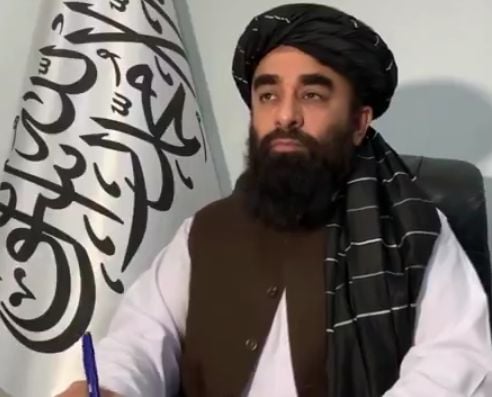




ISLAMABAD: Taliban chief spokesperson Zabihullah Mujahid has categorically denied allegations that Afghanistan has become a proxy or colony for India, stating that bilateral relations with New Delhi remain cordial but are not directed against Pakistan.
This statement emerges against the backdrop of severe cross-border military exchanges between Pakistan and Afghanistan, which have escalated to levels described by Pakistani officials as open war.
Mujahid’s remarks directly address repeated claims from Islamabad that the Taliban administration facilitates Indian influence to undermine Pakistani security interests.
In recent public addresses, Mujahid described Pakistan’s assertions as baseless and illogical, insisting that Afghanistan pursues independent foreign policy without acting under any external power.
The spokesperson highlighted that ties with India focus on areas such as trade, health, and humanitarian cooperation, reflecting pragmatic engagement rather than strategic alignment against neighbors.
Recent diplomatic developments underscore this position, including the appointment of Afghanistan’s first envoy to India in nearly five years and high-level discussions on economic corridors and infrastructure projects.
Mujahid emphasized that Afghanistan seeks expanded cooperation with India in healthcare and commerce, noting significant progress in bilateral relations over the past months.
He reiterated that such engagements do not imply subordination or hostility toward Pakistan, affirming the Taliban’s commitment to sovereign decision-making.
Pakistan’s defense minister has accused the Taliban of transforming Afghanistan into an Indian colony while harboring militants and exporting terrorism, claims strongly refuted by Kabul.
These accusations coincide with intensified airstrikes and ground clashes along the Durand Line, resulting in reported casualties on both sides.
Afghan authorities have confirmed Pakistani strikes on Kabul, Kandahar, Paktia, and other provinces, with Mujahid reporting civilian harm in some instances.
In response, Taliban forces have conducted what they term large-scale offensive operations targeting Pakistani military positions, claiming to have inflicted heavy losses.
Mujahid has expressed readiness for dialogue, urging Pakistan to engage in negotiations to de-escalate the conflict and resolve underlying issues through peaceful means.
He has dismissed demands for evidence-sharing on militant activities, arguing that no credible proof has been provided by Islamabad regarding threats originating from Afghan soil.
The Taliban maintains that border fencing and internal measures effectively prevent unauthorized crossings, countering Pakistani narratives on groups like the Tehreek-e-Taliban Pakistan.
India has consistently condemned Pakistani airstrikes on Afghan territory, highlighting civilian casualties during sensitive periods and calling for restraint.
New Delhi’s statements describe such actions as attempts to externalize internal challenges, while affirming support for Afghan sovereignty.
This stance aligns with growing diplomatic outreach, including visits by Taliban officials to India and joint statements on mutual interests.
Analysts observe that warming Kabul-New Delhi ties stem from shared concerns over regional stability and economic opportunities, independent of anti-Pakistan intent.
Pakistan views these developments with alarm, interpreting them as encirclement amid longstanding rivalry with India.
The current escalation follows months of deteriorating relations, marked by mutual accusations of supporting insurgent activities.
Border incidents have increased in frequency, with both sides reporting retaliatory actions and significant military mobilization.
Mujahid’s assurance that relations with India are not antagonistic aims to defuse Pakistan’s concerns while defending Afghanistan’s right to diverse international partnerships.
He has stressed that the Islamic Emirate pursues balanced diplomacy, seeking constructive ties with all neighbors without compromising independence.
The spokesperson’s comments also serve to project unity and resolve domestically, amid external pressures and internal governance challenges.
International observers note the risk of broader regional instability if hostilities persist, potentially affecting trade routes and humanitarian access.
Calls for mediation through multilateral channels have surfaced, though direct bilateral talks remain the preferred path advocated by Kabul.
Mujahid has warned that continued aggression could destabilize the entire region, urging de-escalation to prioritize dialogue.
This episode highlights the complex interplay of historical grievances, security perceptions, and geopolitical alignments along the Afghanistan-Pakistan frontier.
As tensions persist, statements like Mujahid’s underscore efforts to clarify positions and prevent miscalculations in an already volatile environment.