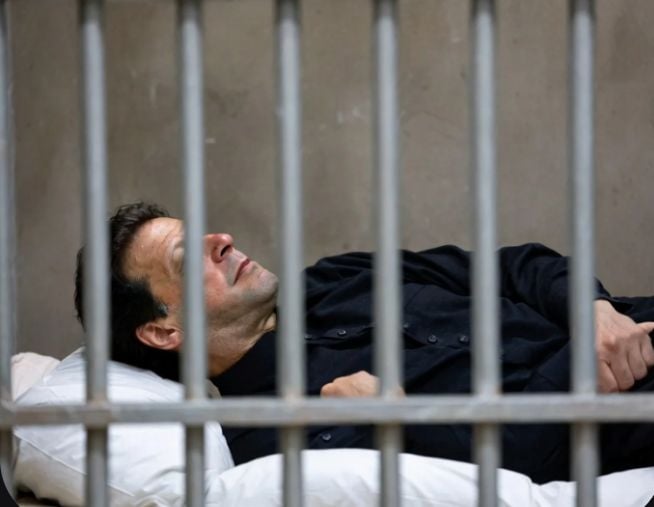




ISLAMABAD: Kasim Khan, son of former prime minister Imran Khan, has revealed in a media appearance that family members twice received alarming information suggesting his father had died in prison, heightening deep concerns over the ex-premier’s safety and well-being while in custody at Adiala Jail.
The revelation has intensified debates surrounding the conditions of Imran Khan’s imprisonment, now extending beyond two years since his initial detention in August 2023 on multiple charges that his supporters describe as politically motivated.
Kasim Khan shared that the family was informed on two separate occasions that Imran Khan had passed away inside the facility, triggering immediate panic and underscoring the precarious situation.
He emphasized that such false or unverified reports placed immense emotional strain on relatives, who remain profoundly worried about potential threats to the former leader’s life amid restricted access and communication.
Imran Khan, aged 73, has been held primarily in solitary confinement, with his sons describing the designated cell as a “death cell” featuring severe restrictions and substandard amenities.
Family accounts detail that the confined space allows minimal daylight exposure, with the ex-premier reportedly spending up to 23 hours daily inside, isolated from meaningful human interaction.
Access to clean drinking water has been highlighted as a persistent issue, with claims that only contaminated or murky supplies are provided, raising serious health risks in an already vulnerable environment.
Reports indicate proximity to other inmates suffering from serious illnesses such as hepatitis, further compounding hygiene and medical concerns within the prison setting.
The Pakistan Tehreek-e-Insaf founder has faced numerous legal cases, resulting in convictions that his party insists stem from vendetta rather than evidence-based proceedings.
International observers and human rights groups have repeatedly called for transparent handling of high-profile detainees, stressing adherence to fair trial standards and humane treatment protocols.
Kasim Khan’s statements emerged against a backdrop of denied family visits despite court directives permitting meetings, fueling accusations of deliberate obstruction.
PTI leaders and supporters have staged prolonged demonstrations outside Adiala Jail, demanding immediate improvements in detention conditions and unrestricted access for relatives and legal counsel.
Authorities have occasionally dispersed such gatherings using water cannons, with opposition figures alleging the use of chemical-laced substances during operations.
Imran Khan’s sons, including Kasim and Sulaiman, have publicly expressed fears that prolonged isolation and harsh circumstances could endanger their father’s health irreversibly.
They have appealed for global attention, urging interventions to ensure compliance with international detention norms and safeguards against mistreatment.
The family has pursued visa applications to visit Pakistan, intending to assess the situation firsthand and advocate directly for better provisions.
Concerns extend to medical care, with assertions that Imran Khan has been denied consultations with his personal physician for extended periods, limiting oversight of age-related and stress-induced ailments.
PTI officials maintain that the imprisonment serves primarily to suppress political opposition, pointing to the former prime minister’s enduring popularity as evidenced in public sentiment surveys and social media engagement.
Government representatives have countered such narratives by stating that prison protocols are followed uniformly and that multiple interaction opportunities have occurred under supervision.
Official figures cite hundreds of permitted meetings or communications over the detention period, rejecting blanket claims of total isolation.
Independent verification of prison conditions remains challenging due to limited external monitoring access in sensitive facilities.
The case continues to draw scrutiny from foreign media outlets and diplomatic circles, with calls for impartial reviews to address allegations of psychological pressure tactics.
Human rights advocates argue that prolonged solitary confinement contravenes established guidelines on prisoner welfare, particularly for elderly individuals.
Imran Khan himself has drawn strength from faith during incarceration, according to family descriptions, refusing alleged compromise offers to secure release.
The ongoing saga underscores broader tensions in Pakistan’s political landscape, where judicial processes involving prominent figures often face polarized interpretations.
As the detention stretches further, pressure mounts for resolution through legal avenues or policy shifts to restore confidence in institutional fairness.
The family’s anguish, amplified by repeated distress signals like the reported death misinformation, highlights the human cost embedded in high-stakes political confrontations.