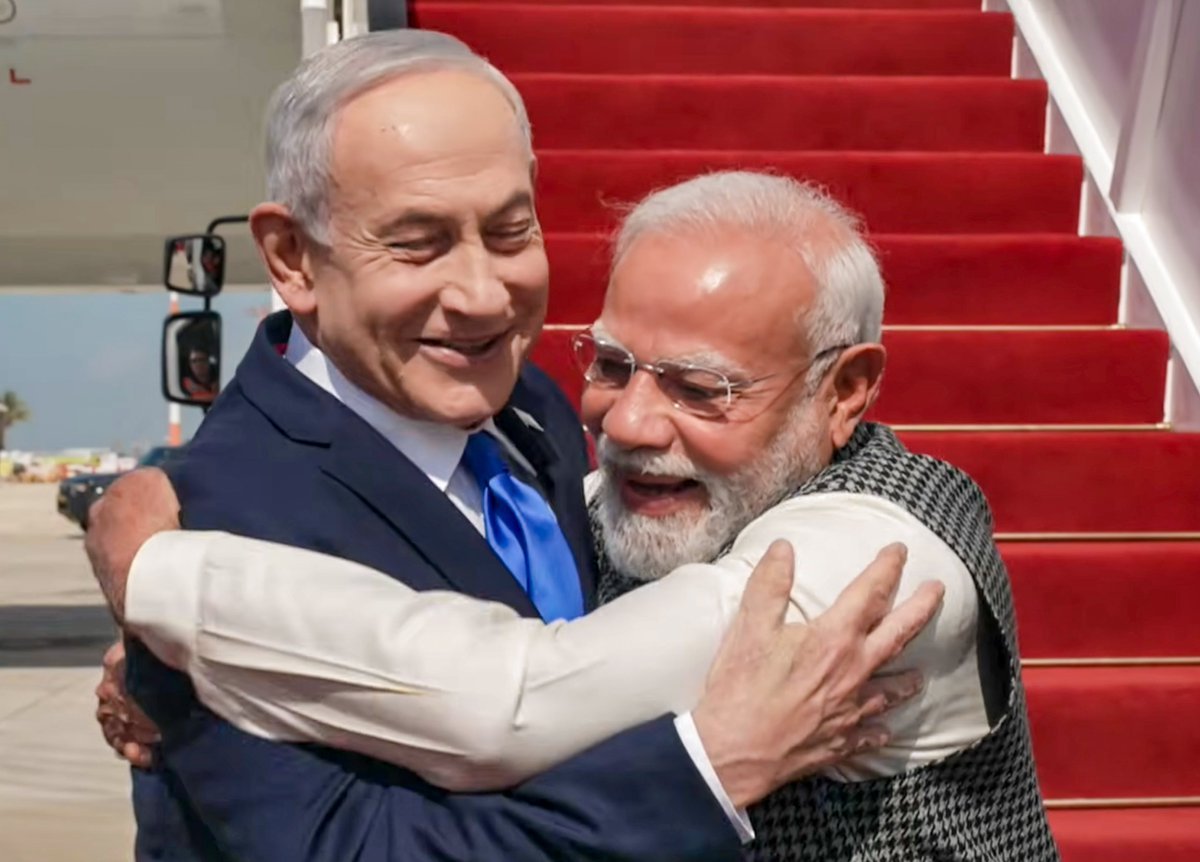




ISLAMABAD: A sophisticated deepfake video featuring Israeli Prime Minister Benjamin Netanyahu has gone viral on social media platforms, falsely claiming that he announced cooperation between India and Israel with the Afghan Taliban during Indian Prime Minister Narendra Modi’s recent visit to Israel.
The clip, which surfaced amid heightened Pakistan-Afghanistan border frictions, attributes statements to Netanyahu suggesting full support for the Taliban regime, including a special aid package at Modi’s request.
Social media users and some journalists amplified the video, interpreting it as evidence of an alleged India-Israel-Taliban nexus aimed against Pakistan.
The fabricated content shows Netanyahu purportedly speaking at a joint news conference with Modi, declaring that both nations would extend every possible assistance to the Afghan Taliban.
In the altered footage, Netanyahu allegedly mentions a dedicated aid package for Taliban-led Afghanistan, framing it as a response to Modi’s appeal.
This narrative gained traction in the context of ongoing Pakistan-Taliban animosity, including recent cross-border incidents and accusations of harboring militants.
However, fact-checks by multiple credible sources have confirmed the video as AI-manipulated and entirely false.
Independent verifications reveal no joint press conference occurred between Modi and Netanyahu during the February 2025 visit.
Modi addressed Israel’s Knesset parliament separately on February 25, 2026, focusing on bilateral ties, shared civilizational values, and India’s firm support for Israel following the October 7, 2023 attacks.
Netanyahu also spoke at the Knesset event, praising the India-Israel partnership and welcoming Modi as a close ally.
Official transcripts and videos from reliable outlets, including Israel’s Jerusalem Post and India’s Ministry of External Affairs, show no references to Afghanistan, the Taliban, or any related cooperation in either leader’s remarks.
Modi’s Knesset speech emphasized defense collaboration, technological partnerships, and mutual condemnation of terrorism, without mentioning regional actors like the Taliban.
Netanyahu reciprocated by highlighting strategic alignment but avoided any commentary on Afghanistan or Pakistan-related issues.
The viral clip’s origins appear linked to coordinated disinformation efforts, with some analyses pointing to manipulated audio overlaid on original footage from the Knesset session.
Fact-checking organizations, including India Today and NewsMeter, dissected the video frame-by-frame, identifying digital alterations in lip movements, voice synthesis, and contextual mismatches.
They concluded it was produced using advanced AI tools to fabricate statements never uttered.
This incident highlights the growing menace of deepfake technology in geopolitical propaganda.
Such manipulations exploit existing tensions, particularly Pakistan’s strained relations with the Taliban regime over border security and militant safe havens.
Recent events, including alleged unprovoked firing along the Pak-Afghan border, have fueled speculation and misinformation campaigns.
The fake video’s spread coincides with Modi’s historic Knesset address, the first by an Indian prime minister, underscoring deepening India-Israel defense and economic ties.
Bilateral agreements discussed during the visit focused on military hardware, innovation, and counter-terrorism, without involving third parties like Afghanistan.
Experts warn that AI-generated content can rapidly inflame public opinion and diplomatic mistrust in South Asia and the Middle East.
The absence of any official Taliban-related statement from either leader during the visit debunks the core claim.
Modi and Netanyahu held delegation-level talks separately from the parliamentary addresses, concentrating on trade, agriculture, and security cooperation.
No evidence exists of discussions on Afghan aid or Taliban engagement.
This case underscores the need for media literacy and swift verification in an era of synthetic media.
Platforms hosting the video faced calls to remove it, though dissemination continued through private shares and partisan accounts.
The episode reflects broader patterns of disinformation targeting India-Israel relations amid regional rivalries.
As deepfake tools become more accessible, governments and tech companies face mounting pressure to develop detection mechanisms.
For now, the viral clip stands exposed as a fabrication designed to provoke rather than inform.