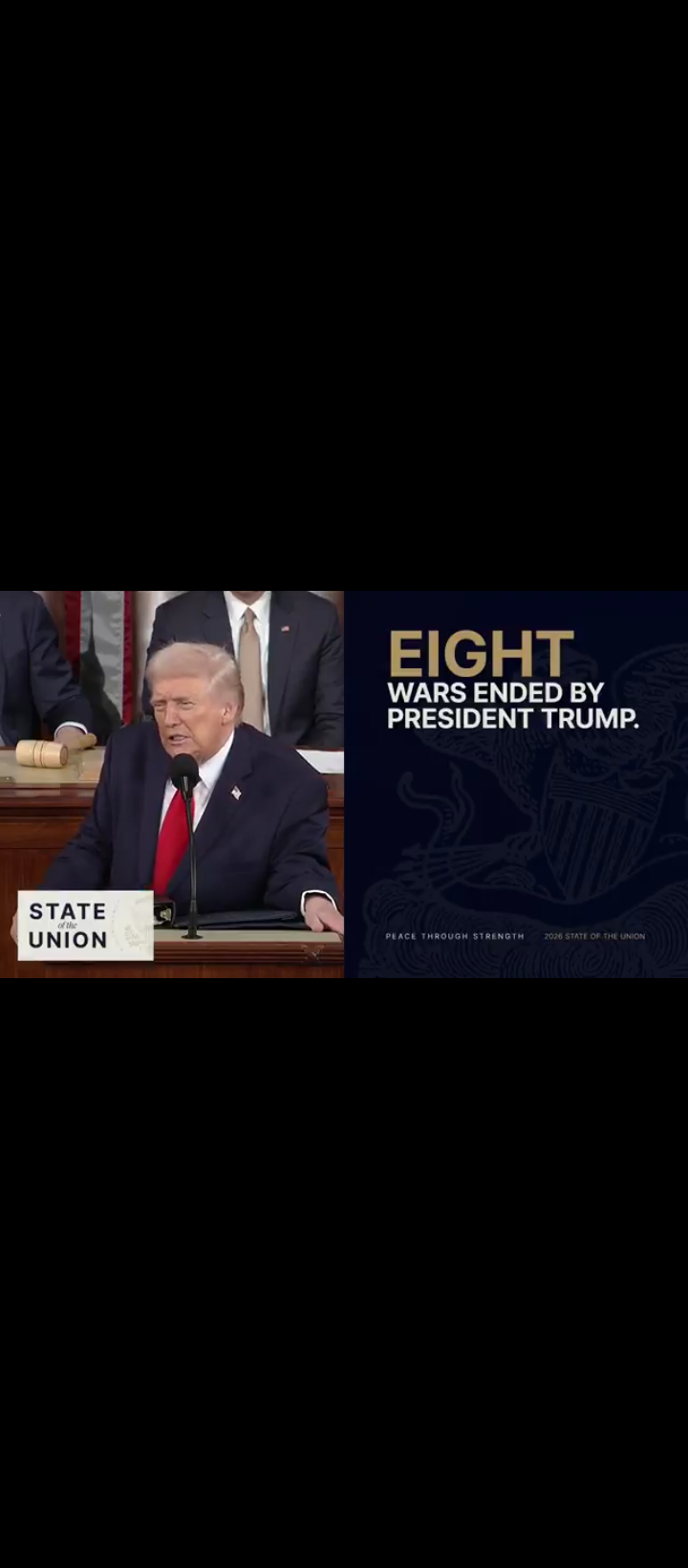




ISLAMABAD: United States President Donald J. Trump, in his recent State of the Union address, claimed that his direct involvement prevented a potential nuclear war between Pakistan and India, which he said could have resulted in the deaths of 35 million people according to statements attributed to Pakistan’s Prime Minister.
The remark, delivered during a lengthy speech emphasizing national strength and foreign policy achievements, referenced a military confrontation between the two South Asian nations in May 2025. Trump listed the Pakistan-India episode among eight conflicts he asserted his administration had ended or de-escalated in his first ten months back in office.
He specifically quoted the Prime Minister of Pakistan as stating that 35 million lives would have been lost without American intervention. The US Embassy in Islamabad shared excerpts of the speech on social media, underscoring the president’s narrative of decisive diplomacy in averting catastrophe in a volatile region.
The 2025 tensions stemmed from heightened military exchanges following an incident in disputed Kashmir, escalating to airstrikes and reported losses of fighter jets on both sides. Reports indicate up to 11 expensive aircraft were downed during the brief but intense clashes, marking one of the most serious confrontations between the nuclear powers in over two decades.
A US-brokered ceasefire was announced in May 2025, with Secretary of State Marco Rubio engaging senior officials from both capitals to facilitate de-escalation and initiate talks at a neutral venue. The agreement led to an immediate halt in hostilities and commitments to broader discussions on underlying issues.
Trump has repeatedly credited his approach, including threats of steep tariffs—up to 200 percent on trade with both countries—as instrumental in compelling the parties to stand down. He described phone conversations with leaders in Islamabad and New Delhi, highlighting economic leverage as a powerful tool for peace.
Pakistan’s leadership, including Prime Minister Shehbaz Sharif, has been cited in various accounts as appreciating US efforts in preventing further escalation. The quoted figure of 35 million potential casualties appears to reference estimates of devastation in a full-scale nuclear exchange between the densely populated neighbors.
Independent analyses of nuclear scenarios in South Asia have long warned of catastrophic human and environmental tolls from even limited use of atomic weapons. Studies by international think tanks project millions of immediate deaths from blasts, radiation, and subsequent famine due to disrupted agriculture and global climate effects.
India has consistently rejected claims of third-party mediation or external pressure forcing its de-escalation decisions. New Delhi maintains that any ceasefire resulted from bilateral restraint and strategic calculations rather than foreign coercion or tariff threats.
The misinterpretation in some Indian media outlets suggested Trump implied the Pakistani Prime Minister faced personal threats from India and sought US help to save his life. Fact-checks and speech transcripts clarify that Trump referred to the Prime Minister’s alleged statement about mass casualties in a nuclear scenario, not individual peril.
The phrasing in the address led to momentary confusion, with the structure “35 million people, said the Prime Minister of Pakistan, would have died” parsed differently by listeners and reporters. Clarifications from multiple sources confirm the intent was to highlight averted civilian losses, not personal threats to leadership.
This is not the first time Trump has invoked the Pakistan-India case to illustrate his foreign policy successes. Similar assertions appeared in earlier remarks, including events tied to his informal “Board of Peace” initiative, where he praised both Sharif and Pakistan’s military leadership while reiterating tariff diplomacy’s role.
The episode underscores ongoing complexities in US-South Asia relations, where Washington balances strategic partnerships with India against efforts to maintain influence in Pakistan amid counterterrorism and regional stability concerns.
Observers note that while the ceasefire held, underlying disputes over Kashmir and cross-border militancy remain unresolved. Diplomatic channels between Islamabad and New Delhi have seen limited progress since the 2025 truce.
Trump’s State of the Union comments, amplified by the US Embassy, reflect a broader narrative of America as a global stabilizer under his leadership. The address positioned such interventions as evidence of restored US strength on the world stage.
In South Asia, reactions vary, with some viewing the claims as exaggerated while others see value in sustained US engagement to prevent future crises between nuclear rivals. The episode continues to fuel debate on the efficacy of economic pressure in resolving entrenched geopolitical conflicts.