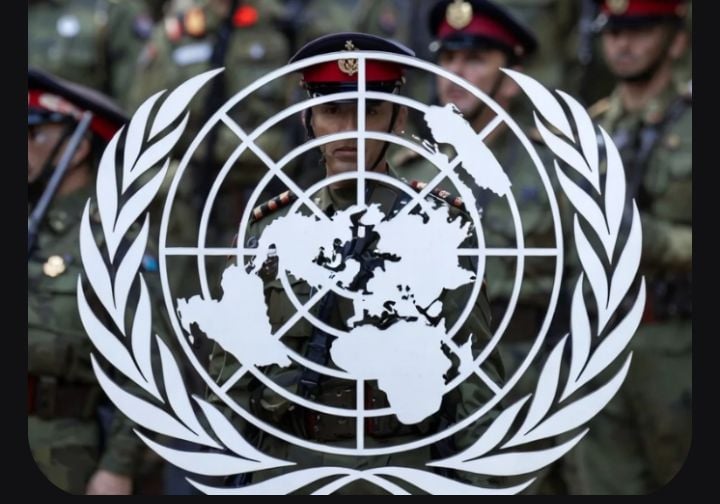




ISLAMABAD: Indonesia has emerged as the first major contributor to the International Stabilization Force in Gaza, committing up to 8,000 troops under President Donald Trump’s Comprehensive Plan, yet emerging concerns suggest Jakarta may reconsider its strategy as deployment timelines approach.
The Indonesian National Armed Forces confirmed readiness for an advance team of around 1,000 personnel potentially by April, with the full contingent prepared by June, focusing on humanitarian, engineering, and medical support in the US-led force commanded by Major General Jasper Jeffers.
President Prabowo Subianto pledged this contribution at the inaugural Board of Peace meeting in Washington, securing Indonesia’s role as deputy commander amid commitments from Morocco, Kazakhstan, Kosovo, and Albania.
This positions Indonesia prominently in the UN-endorsed framework under Resolution 2803, aimed at securing borders, facilitating demilitarization, protecting civilians, and enabling reconstruction in Gaza following over 72,000 reported Palestinian deaths since October 2023.
However, analysts indicate Jakarta may rethink aspects of the deployment amid domestic debates and operational uncertainties.
Islamic organizations and civil groups have raised alarms over risks of entanglement in combat, particularly given Hamas’s reliance on extensive underground tunnel networks for mobility, storage, and operations against perceived threats.
Hamas and Palestinian Islamic Jihad have openly acknowledged these tunnels as central to their strategy, creating persistent hazards in southern areas like Rafah and Khan Younis.
Rafah remains Gaza’s vital lifeline to Egypt for aid and movement, with other crossings closed, making any foreign presence there highly vulnerable to militant actions if viewed as enforcing disarmament.
Indonesian officials insist troops will avoid combat, disarmament, or direct confrontation, using force only in self-defense under strict rules of engagement aligned with international law.
Yet public skepticism persists, with some leaders softening opposition after palace meetings but warning of political fallout if the mission deviates from pure humanitarian aims.
Budget strains, legal questions over the Board of Peace’s non-UN structure in parts, and potential exposure to asymmetric threats have fueled calls for caution.
Experts note that without clearer mandates excluding enforcement against Hamas, Indonesia risks compromising its non-aligned foreign policy and facing casualties that could erode domestic support.
As advance assessments loom, Jakarta’s leadership may adjust scale, timeline, or conditions to mitigate these perils while upholding commitments to Palestinian aid.
Pakistan’s trajectory toward potential involvement carries even graver implications, with Washington intensifying pressure for contributions amid discussions between Trump and military chief Field Marshal Asim Munir.
Pakistan has joined the Board of Peace, eyeing reconstruction support and possible security aid, but Defense Minister Khawaja Asif has ruled out participation in Hamas disarmament, emphasizing red lines on mandate clarity.
Prime Minister Shehbaz Sharif seeks assurances during US engagements that any role remains peacekeeping, not anti-Hamas enforcement.
The force’s demilitarization focus, including weapon decommissioning and buy-back programs, heightens clash prospects with Hamas, which rejects full disarmament and retains influence via tunnels despite the ceasefire.
Pakistani troops in Rafah or Khan Younis could encounter ambushes, IEDs from underground networks, or rocket fire, leading to casualties in an asymmetric environment.
Such losses would trigger fierce domestic backlash in Pakistan, where strong public sympathy for Palestinian resistance views the mission as alignment with US-Israeli goals.
Islamist parties and civil society signal potential widespread protests, risking political instability in an already fragile context.
Constitutional non-alignment principles would face strain, diverting resources from internal security and border issues while damaging ties with Muslim-world allies.
A US-led structure lacking full Palestinian consent amplifies perceptions of partisanship, transforming humanitarian intent into politically explosive involvement.
Proponents see opportunities to boost Pakistan’s peacekeeping profile and deliver aid, consistent with UN mission history.
Yet unresolved militant capabilities and enforcement mandates make neutral operations improbable, with risks of escalation into direct confrontations.
Pakistan conditions any deployment on explicit exclusions of disarmament, Palestinian approval, and no Israel normalization.
As Washington pushes ahead, Islamabad navigates a delicate balance between strategic incentives and principled stances, where joining could entangle forces in prolonged hazards from Hamas tunnels and militant responses.
The Gaza theater’s volatility underscores that peacekeeping here demands exceptional caution to avoid turning stabilization into confrontation.