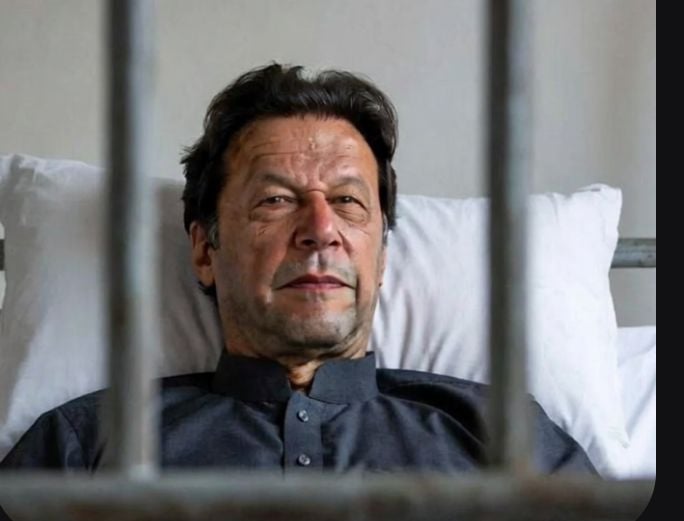




ISLAMABAD: The federal government and Pakistan Tehreek-e-Insaf have reached a significant agreement to form a panel of neutral medical experts for the re-examination of former prime minister and PTI founder Imran Khan’s eyes. This development aims to address persistent concerns regarding his vision impairment reported in recent weeks.
The agreement follows weeks of contention surrounding Khan’s eye condition, which emerged prominently in early 2026. Reports indicated that Khan experienced partial vision loss in his right eye, attributed to central retinal vein occlusion, a serious condition involving blood clot-related damage to the retina.
Initial concerns escalated when Khan’s court-appointed lawyer, Barrister Salman Safdar, informed the Supreme Court that the former premier had suffered approximately 85 percent vision loss in the affected eye. This claim, based on Khan’s own account during a jail visit, highlighted delays in addressing complaints of blurred vision dating back to late 2025.
The Supreme Court intervened swiftly, directing authorities to constitute a medical board for a comprehensive assessment. The court set a deadline for the examination and required a detailed report submission, emphasizing the need for timely medical intervention in custody.
In response, a government-formed medical board, comprising senior ophthalmologists such as Prof Nadeem Qureshi from Al-Shifa Trust Eye Hospital and Prof M Arif from Pakistan Institute of Medical Sciences, examined Khan at Adiala Jail. Their report documented unaided vision in the right eye at 6/24 partial and in the left at 6/9, improving to 6/9 partial and 6/6 respectively with corrective glasses.
The board noted clear corneas, normal anterior segments, and signs of improvement following initial treatment, including reduced swelling and partial recovery from earlier impairment. Officials described the findings as indicating progress, with no recommendation for immediate hospital transfer.
However, PTI rejected the report’s validity, citing the absence of Khan’s family members and personal physicians during the process. The party described the examination as lacking transparency and demanded independent verification by trusted medical professionals.
Khan’s personal physician, Dr Asim Yusuf, stated that he could neither confirm nor deny the reported improvements due to restricted access. He emphasized the need for direct evaluation to assess the condition accurately.
Amid ongoing disputes, negotiations between government representatives and PTI leadership focused on establishing a mutually acceptable mechanism. Sources indicate that both sides have now consented to a panel composed of neutral, independent eye specialists unaffiliated with prior examinations.
This panel will conduct a fresh, thorough re-examination to dispel remaining doubts about the diagnosis, treatment efficacy, and current status of Khan’s eyesight. The agreement prioritizes impartiality to ensure credibility and public confidence in the process.
The condition central retinal vein occlusion typically requires prompt intervention, such as anti-VEGF injections or laser therapy, to mitigate risks of permanent damage or complications like glaucoma. Medical literature underscores that early and consistent care significantly influences outcomes in such cases.
PTI has maintained that Khan’s health deteriorated due to prolonged inattention in custody, while government officials have countered that appropriate treatment commenced following diagnosis, leading to observable stabilization.
The consensus on a neutral panel represents a rare point of convergence amid heightened political tensions. It reflects efforts to de-escalate the controversy surrounding Khan’s incarceration and medical welfare.
Observers note that this step could facilitate resolution of related legal petitions before the Supreme Court, which has monitored developments closely. The panel’s forthcoming findings are anticipated to provide definitive clarity on Khan’s ocular health.
Stakeholders from both sides have expressed cautious optimism that the re-examination will eliminate speculations and uphold principles of fair medical oversight for high-profile detainees. The process underscores the intersection of health rights and political dynamics in Pakistan’s current landscape.