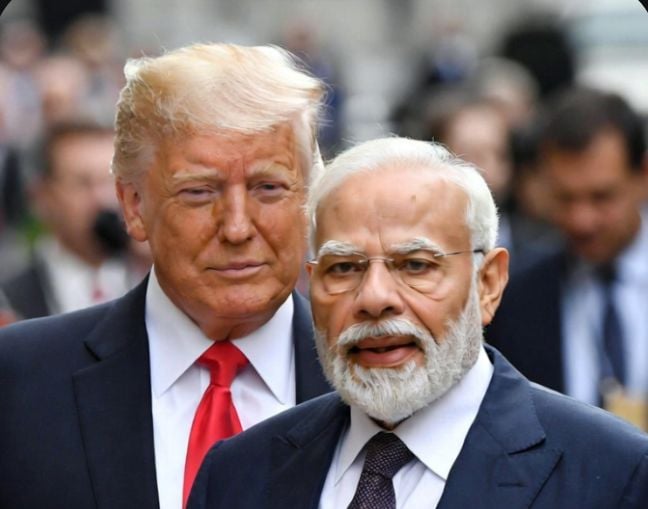




ISLAMABAD: India has postponed its planned trade delegation to Washington following a landmark ruling by the United States Supreme Court that invalidated key tariffs imposed by President Donald Trump, creating significant uncertainty in bilateral trade negotiations.
The decision to defer the visit, originally scheduled for this week to finalize an interim trade pact, stems from the need to assess the implications of the court’s judgment and subsequent policy shifts in Washington. Sources in India’s commerce ministry indicated that the deferral occurred after consultations between officials of both countries, with no new date yet established.
The Supreme Court struck down Trump’s sweeping tariffs, which had been enacted under emergency powers, deeming them an overreach of presidential authority. This ruling, issued on Friday, disrupted the foundation of recent trade frameworks, including the proposed India-US interim agreement.
In response, President Trump promptly imposed a temporary 10 percent global tariff on imports from all countries under Section 122 of the Trade Act of 1974. He later raised this rate to 15 percent, the maximum permissible under the statute, for a limited period of up to 150 days unless extended by Congress.
The interim pact under discussion had envisioned substantial concessions. The United States had agreed to reduce tariffs on Indian goods from levels as high as 50 percent to 18 percent. In exchange, India had committed to purchasing significant volumes of American products over the next five years, including energy resources, aircraft, precious metals, and advanced technology items, with estimates suggesting a total value approaching $500 billion.
This framework represented a key step in strengthening economic ties between the two nations amid broader global trade tensions. However, the court’s decision introduced legal ambiguity regarding the sustainability of tariff reductions tied to the invalidated regime.
The postponement reflects a cautious approach by New Delhi to ensure any finalized deal aligns with the evolving US trade policy landscape. Analysts suggest the ruling may ultimately provide India with greater leverage in negotiations, as it removes certain constraints imposed by the previous tariff structure and allows for potential renegotiation of more favorable terms.
Indian opposition parties, including the Congress, have called for a complete pause and fresh talks on the agreement. They argue that the changed circumstances necessitate a reevaluation to protect national interests and avoid commitments based on an unstable policy environment.
The development marks one of the earliest concrete responses from Asian trading partners to the Supreme Court’s verdict. Other nations are similarly monitoring the situation, as Trump’s administration has signaled intent to pursue alternative legal avenues for maintaining protective trade measures.
Despite the setback, US trade officials have emphasized continuity in existing bilateral arrangements, asserting that negotiated deals remain intact unless explicitly altered. Nevertheless, the temporary 15 percent global tariff introduces immediate challenges for exporters worldwide, including those from India, potentially affecting sectors such as textiles, pharmaceuticals, and information technology.
Experts note that while the emergency tariffs were invalidated, the new surcharges under different authority remain in effect temporarily. This shift has prompted businesses to seek clarity on potential refunds for previously collected duties, though the ruling left such questions unresolved.
The bilateral trade relationship between India and the United States has grown steadily in recent years, with both sides viewing enhanced cooperation as mutually beneficial. The proposed interim deal was seen as a bridge toward a more comprehensive agreement, addressing longstanding issues like market access and non-tariff barriers.
Current uncertainties highlight the volatility introduced by domestic legal challenges in the United States. India’s decision to delay underscores a strategic preference for measured progress over hasty commitments in an unpredictable context.
As discussions resume at a future date, both governments will likely prioritize stabilizing the framework to support long-term economic objectives. The outcome could influence not only India-US ties but also broader multilateral trade dynamics in the region.