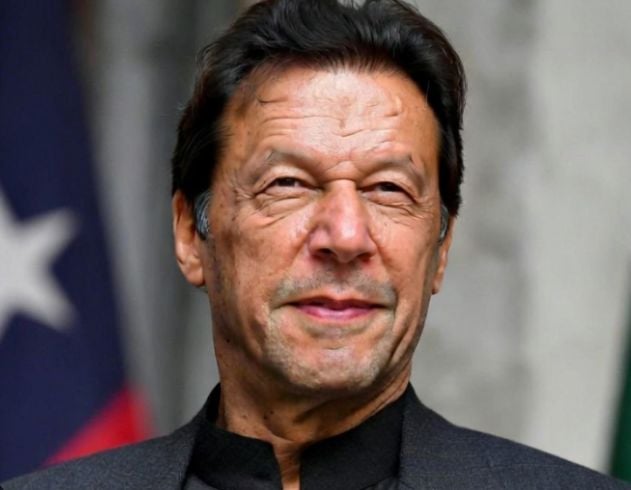




ISLAMABAD: An opposition member of parliament in Sri Lanka has formally submitted an adjournment motion expressing serious concerns over the health and wellbeing of former Pakistani prime minister Imran Khan, who remains in detention.
The motion, tabled by Ajith P. Perera from the main opposition on February 19, 2026, calls on the Sri Lankan government to make a humanitarian appeal to Pakistani authorities regarding Khan’s condition.
Credible reports cited in the motion highlight growing worries about the detained leader’s health while in custody, particularly related to his vision.
Khan, aged 73 and incarcerated since August 2023 at Adiala Jail in Rawalpindi, has reportedly suffered significant vision loss in his right eye.
A court-appointed lawyer informed Pakistan’s Supreme Court on February 12, 2026, that Khan retains only 15 percent vision in his right eye due to delayed medical intervention.
The condition has been diagnosed as central retinal vein occlusion, a serious issue that risks permanent damage if not treated promptly.
Khan’s legal team has alleged that prison authorities ignored repeated complaints for months, leading to rapid deterioration over the past three months under previous jail administration.
This development has intensified domestic pressure in Pakistan, with his party Pakistan Tehreek-e-Insaf staging protests and sit-ins demanding immediate and independent medical access.
Opposition figures and civil society groups have criticised the handling of his case as neglectful, raising questions about adherence to human rights standards in detention.
Internationally, the issue has drawn attention from former cricketers and public figures who have called for fair treatment, citing Khan’s contributions as a sportsman and statesman.
The Sri Lankan motion specifically urges Colombo to engage Pakistani authorities through diplomatic and parliamentary channels.
It seeks assurances that Khan receives adequate, independent, and timely medical care while detained.
The proposal further advocates for a humanitarian appeal aimed at his possible release or other relief consistent with due process and internationally recognised human rights norms.
Perera emphasised that the appeal rests purely on humanitarian grounds, detached from political motivations.
Multiple Sri Lankan media outlets, including Newswire, Hiru News, Daily FT, The Morning, and Ceylon Today, have reported the tabling of the motion.
These sources confirm the motion requests a parliamentary debate to address the matter urgently.
No immediate response from the Sri Lankan government has been reported on the motion, which remains pending discussion in the house.
In Pakistan, the government has indicated steps such as shifting Khan to a facility with better medical provisions and forming a medical board for evaluation.
A team of doctors examined him in jail recently, though his party rejected the process for lacking family or personal physician involvement.
The Supreme Court has ordered urgent medical reviews amid these concerns.
Khan’s prolonged detention involves multiple legal cases, with his supporters viewing them as politically motivated.
The Sri Lankan initiative marks an unusual expression of cross-border humanitarian concern from an opposition bench.
It underscores how Khan’s health situation has begun to resonate beyond Pakistan’s borders.
Observers note that such parliamentary interventions, though non-binding, can amplify international scrutiny on detention conditions.
The motion aligns with broader calls for transparency and humane treatment in high-profile cases.
As debates potentially unfold in Colombo, the development adds another layer to the ongoing narrative surrounding Imran Khan’s imprisonment and health.
Human rights advocates continue to monitor the situation closely for any signs of progress or further deterioration.
The international community may watch how governments respond to such appeals in an interconnected diplomatic landscape.