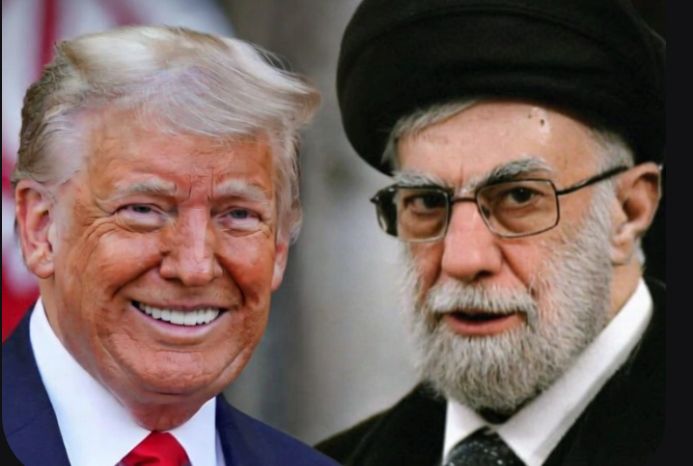




ISLAMABAD: The White House has warned that Iran would be very wise to reach a deal with the United States, as President Donald Trump renewed hints of potential military action against Tehran.
White House Press Secretary Karoline Leavitt delivered the stark message on Wednesday, emphasising that diplomacy remains President Trump’s preferred path but that Iran risks severe consequences without agreement.
Leavitt stated that President Trump has consistently prioritised diplomatic resolutions in dealings with Iran and other nations, yet the window for peaceful negotiation appears narrowing amid escalating tensions.
The comments follow recent resumption of indirect talks between Washington and Tehran, mediated by Oman, which aim to address Iran’s nuclear programme and related security concerns.
The two sides held a second round of these discussions in Geneva on Tuesday, where Iranian Foreign Minister Abbas Araghchi reported good progress and agreement on guiding principles, though no major breakthrough emerged.
Omani Foreign Minister Badr al-Busaidi described the talks as concluding with positive steps and clear next actions, indicating both parties recognise the need for further engagement.
Despite these developments, the United States maintains a significant military presence in the Middle East, with reports indicating preparations for possible strikes as early as this weekend if diplomacy fails.
President Trump posted on his Truth Social platform, suggesting the US might employ assets including bases in the Indian Ocean to counter threats from what he described as an unstable regime.
This rhetoric echoes earlier threats linked to Iran’s deadly crackdown on nationwide protests in January, which saw thousands killed in what human rights groups describe as one of the most severe episodes of repression in recent decades.
Protests erupted late last year over longstanding grievances, leading to mass demonstrations demanding fundamental political change and respect for human rights.
Iranian authorities responded with widespread use of force, including firearms and prohibited weapons, resulting in mass casualties and injuries, alongside a near-total internet blackout to limit information flow.
Estimates from monitoring groups suggest death tolls exceeding several thousand civilians during the January peak, with ongoing commemorations facing further security interventions.
The current diplomatic push follows a collapse of prior negotiations last year, triggered by Israel’s surprise strikes on Iran in June, which initiated a 12-day conflict.
Israel targeted Iranian nuclear facilities, military sites and key personnel, including assassinations of scientists and leaders, prompting Iranian missile retaliation.
The United States briefly joined the operation, conducting airstrikes on three major nuclear sites — Fordow, Natanz and Isfahan — using advanced weaponry such as bunker-buster bombs delivered by B-2 bombers.
President Trump described the June strikes as highly successful in setting back Iran’s nuclear capabilities, though intelligence assessments indicated the programme was delayed by months rather than permanently eliminated.
Post-conflict, Iran has undertaken reconstruction efforts, including fortifying tunnel entrances and rebuilding damaged infrastructure at affected sites, as observed through satellite imagery.
The resumed talks, which began in Oman earlier this month and continued in Geneva, involve US envoys including Special Envoy Steve Witkoff and Jared Kushner, engaging indirectly with Iranian counterparts.
While progress on technical issues has been noted, core demands persist, with the US insisting on complete curbs to Iran’s uranium enrichment and ballistic missile activities.
Iran maintains its nuclear programme is peaceful and has accused the US of aggression, while emphasising readiness to defend its interests if attacked.
Regional dynamics add complexity, with Iran and Russia announcing joint naval drills in the Sea of Oman, seen as a deterrent signal against unilateral actions.
The White House continues to frame the situation as one where Iran holds the choice between diplomatic agreement and potential escalation.
Analysts observe that President Trump’s approach combines maximum pressure through military posturing with offers of negotiation, a strategy aimed at compelling concessions.
The outcome remains uncertain, with both sides indicating willingness for further rounds while military assets remain positioned for rapid response.
Failure to secure a deal could lead to renewed conflict, potentially involving broader regional actors and impacting global energy markets.
For now, the focus stays on the indirect channels, where Oman plays a pivotal role in facilitating communication between adversaries.
The international community watches closely, as the trajectory of US-Iran relations holds significant implications for Middle East stability and nuclear non-proliferation efforts.