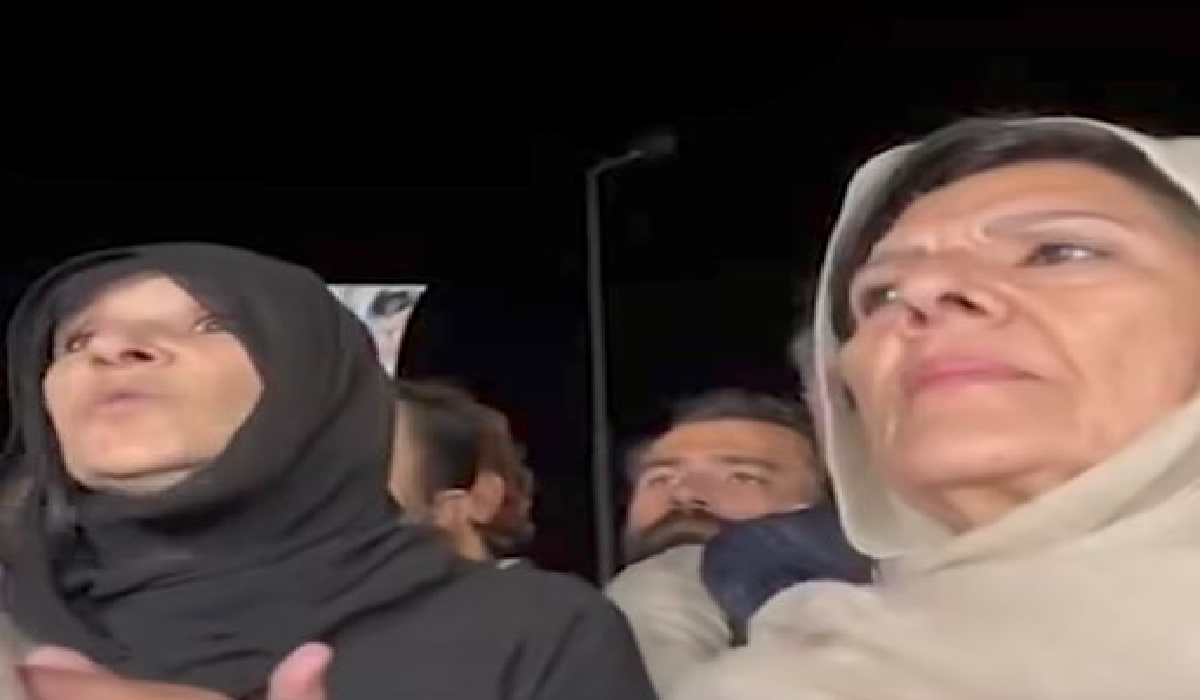




ISLAMABAD: Dr Uzma Khan, sister of incarcerated former prime minister Imran Khan, has raised serious concerns over an injection administered to him for his eye condition, questioning whether it contained poisonous substances and alleging secrecy surrounding the treatment.
The controversy emerged after government sources and medical reports indicated improvement in Imran Khan’s eyesight following medical intervention at Adiala Jail. Dr Uzma Khan addressed the media, expressing deep apprehension about the undisclosed nature of the injection and the exclusion of family members and personal physicians from the process.
Imran Khan, the founder of Pakistan Tehreek-e-Insaf, has been detained in Adiala Jail since August 2023 on various charges. His health, particularly vision in the right eye, deteriorated significantly in recent months. Reports submitted to the Supreme Court in early February 2026 revealed that Khan experienced sudden vision loss, attributed to central retinal vein occlusion caused by a blood clot.
Khan informed his lawyer during a court-mandated visit that until October 2025, he maintained normal 6/6 vision in both eyes. However, blurred vision began in November 2025, escalating to severe impairment. He claimed only 15 per cent vision remained in the right eye despite treatment, including an injection, leaving him with approximately 85 per cent loss.
The Supreme Court responded by forming a medical board to examine Khan. A team of specialists, including professors from Al-Shifa Trust Eye Hospital and Pakistan Institute of Medical Sciences, conducted an assessment at the jail on February 15, 2026. Their report documented improvement: right eye vision advanced from 6/36 to 6/9 partial with glasses, retinal thickness reduced from 550 to 350 microns, and macular edema showed resolution.
Government officials described the condition as stable, recommending continued anti-VEGF therapy, such as Eylea injections, with follow-ups. Plans emerged to administer another dose between February 21 and 26, potentially at Al-Shifa Eye Trust Hospital, though initial treatments occurred in jail or nearby facilities under precaution.
Dr Uzma Khan contested these developments vigorously. She stated that reports of restored or improved eyesight were kept secret from the family and Khan’s personal doctors. She questioned the injection’s composition, asking what substance was administered and suggesting it might be poison, given the lack of transparency.
Family members, including sisters Aleema Khan and Noreen Niazi, echoed these concerns in press conferences. They rejected government medical boards’ findings, insisting on examination by personal physician Dr Asim Yusuf and family representatives. Authorities reportedly denied requests for family-nominated individuals, including Dr Uzma Khan herself, to attend.
The family accused officials of deliberate negligence or worse, alleging broader conspiracy amid ongoing solitary confinement and restricted access. PTI supporters and opposition figures amplified claims of slow poisoning or intentional harm, linking the eye issue to prolonged poor jail conditions.
Medical experts note that central retinal vein occlusion can stem from various factors, including vascular issues, but delayed treatment exacerbates damage. Anti-VEGF injections like Eylea are standard for reducing swelling and preserving vision in such cases, often requiring multiple doses.
Khan’s physician, Dr Asim Yusuf, stated he could not independently verify improvement claims due to denied access. He briefed on reported progress but emphasized the need for transparent, independent oversight.
The episode highlights tensions between government authorities and Khan’s family amid his incarceration. Supreme Court interventions underscore judicial scrutiny of prisoner health rights. As preparations for further treatment continue, demands for full disclosure and family involvement persist.
This situation reflects broader debates on medical care in custody, political motivations in health reporting, and accountability in high-profile detentions.