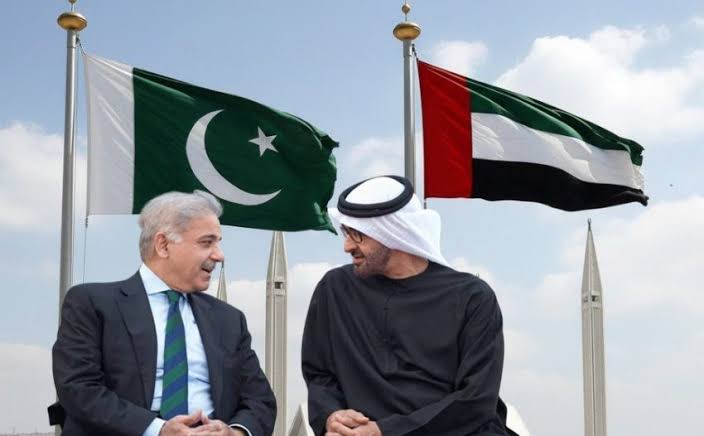




ISLAMABAD: Prime Minister Shehbaz Sharif on Friday reaffirmed Pakistan’s steadfast commitment to further enhance mutually beneficial cooperation with the United Arab Emirates during a warm telephone conversation with UAE President Sheikh Mohamed bin Zayed Al Nahyan. The leaders fondly recalled their recent in-person meetings in Islamabad and Rahim Yar Khan last month, which marked the UAE President’s first official visit to Pakistan. The prime minister praised the UAE’s consistent and unwavering support, which has been crucial in helping Pakistan navigate economic and other challenges. This exchange underscores the deepening strategic partnership between the two nations amid ongoing efforts to boost trade, investment, and people-to-people links.
The conversation highlighted the deep-rooted historical, cultural, and fraternal ties that bind Pakistan and the UAE. Millions of Pakistanis reside and work in the Emirates, forming a vibrant community that contributes substantially to the UAE’s development across various sectors. These expatriates not only strengthen bilateral relations but also serve as a bridge for cultural exchange and mutual understanding. The UAE has long been a reliable partner, extending support during difficult periods, including financial assistance and developmental initiatives that have bolstered Pakistan’s stability and growth prospects.
Remittances from Pakistani workers in the UAE remain a cornerstone of Pakistan’s foreign exchange earnings. In recent data, inflows from the UAE have been significant, with over $4 billion received in the first half of the current fiscal year alone. Annually, remittances from the UAE have hovered around $7.8 billion in previous years, ranking it as one of Pakistan’s top sources after Saudi Arabia. These funds play a vital role in supporting household incomes, stabilizing the balance of payments, and contributing to overall macroeconomic resilience amid global uncertainties.
Bilateral trade between Pakistan and the UAE has shown steady progress, though both sides acknowledge substantial untapped potential. Current trade volume stands at approximately $8 to $10 billion annually, with Pakistan exporting goods worth around $1.76 billion to the UAE in recent figures, including refined petroleum, bovine meat, and rice. Imports from the UAE, primarily crude and refined petroleum along with other commodities, reach about $5.66 billion. Recent surges in Pakistani exports to the UAE, up 22 percent to $1 billion in the past six months, reflect improved diplomatic facilitation, such as visa support for traders, signaling positive momentum.
The UAE has emerged as a major investor in Pakistan, with commitments spanning key sectors like infrastructure, ports, aviation, agriculture, minerals, and railways. Ongoing projects and discussions aim to expand this footprint, including potential developments in energy and logistics. The UAE’s rollover of financial deposits, such as a $2 billion facility extended recently, provides critical short-term support to Pakistan’s economy ahead of international reviews. These investments align with broader goals of sustainable development and regional connectivity.
Both leaders expressed optimism about finalizing a Comprehensive Economic Partnership Agreement, which is in its advanced stages. This pact is expected to eliminate trade barriers, harmonize standards, and unlock significant growth by potentially doubling bilateral trade volumes in the coming years. Such an agreement would facilitate greater market access, encourage joint ventures, and create new opportunities for businesses on both sides, further solidifying economic interdependence.
The telephone call also reflected on the positive trajectory of relations following high-level engagements. The UAE President’s visit in December reinforced commitments to collaboration in economic, energy, technology, and development domains. Prime Minister Sharif commended the UAE’s developmental initiatives in Pakistan, which have included support for infrastructure reconstruction and other priority areas. These efforts demonstrate a shared vision for prosperity and stability in the region.
People-to-people contacts continue to flourish, with over 1.5 million to 1.8 million Pakistanis contributing to the UAE’s workforce. This diaspora not only remits funds but also fosters goodwill and cultural affinity. Easier visa processes and bilateral agreements are enhancing mobility, benefiting families and promoting long-term ties. Such measures are seen as essential for sustaining the momentum in bilateral relations.
Looking ahead, both countries are poised to explore new avenues in renewable energy, information technology, and regional diplomacy. The reaffirmed commitment during the call signals intent to translate historical goodwill into concrete, multifaceted cooperation. As global challenges persist, the Pakistan-UAE partnership stands as a model of mutual support and strategic alignment, promising benefits for citizens of both nations.
(Word count: 782)
A formal diplomatic scene showing Prime Minister Shehbaz Sharif and UAE President Sheikh Mohamed bin Zayed Al Nahyan engaged in a cordial telephone conversation, with national flags of Pakistan and UAE in the background, symbolizing strengthened bilateral ties.