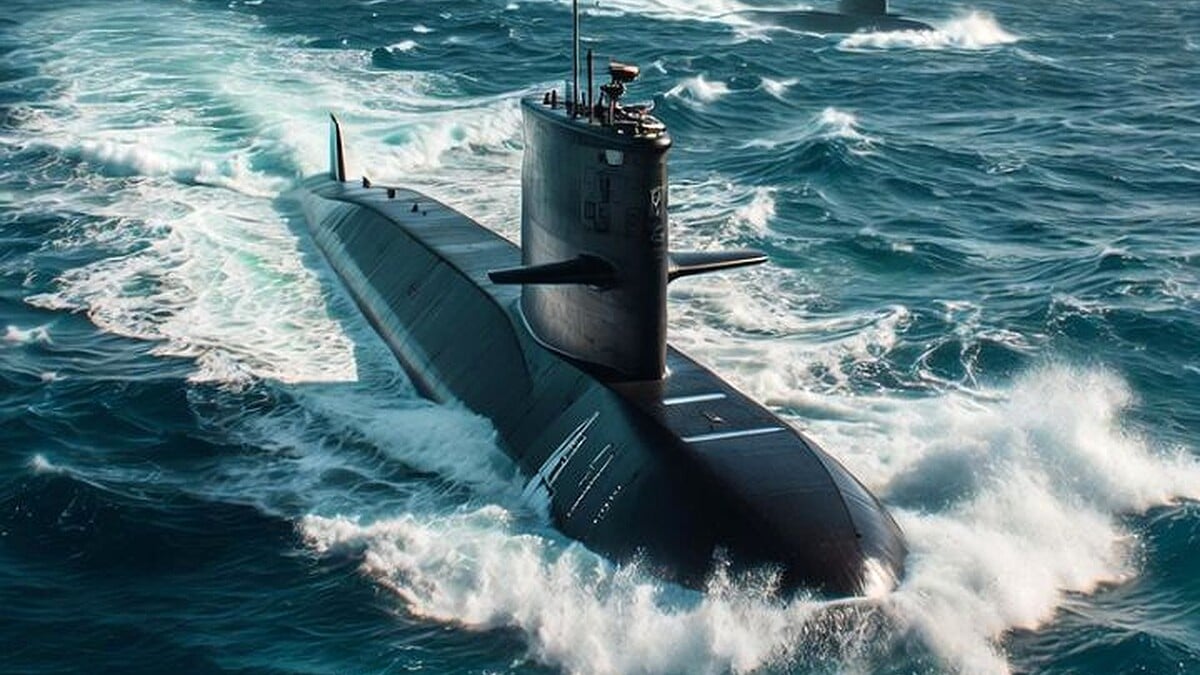




ISLAMABAD: Admiral Naveed Ashraf has hailed a landmark defence collaboration that has transformed Pakistan’s underwater capabilities.
The project undertaken by PN in collaboration with Türkiye’s defence company STM has significantly enhanced the operational effectiveness, survivability and longevity of the Navy’s submarine fleet.
This Turkish partnership marks Türkiye’s first submarine modernisation export project anywhere in the world.
The mid-life upgrade programme targets the three French-designed Agosta 90B Khalid-class submarines acquired in the late 1990s.
Each 67.6-metre vessel can reach submerged speeds of 20 knots and was originally equipped with MESMA air-independent propulsion.
The contract was signed in Rawalpindi in June 2016 with STM selected as prime contractor.
It was expanded in February 2018 to cover the second boat and in February 2021 to include the third.
PNS Hamza became the first modernised submarine and was redelivered to the Pakistan Navy in April 2021.
PNS Khalid followed with delivery in December 2022 after extensive work at Karachi Dockyard.
Modernisation of the third submarine remains ongoing at the same facility.
Upgrades encompass complete replacement of the fire control system, sonar suite and electronic warfare suite.
Advanced SharpEye Doppler radar systems were integrated for superior surface detection.
New periscopes for navigation and attack were installed alongside upgraded command and control infrastructure.
Structural modifications strengthened pressure hulls and bulkheads while torpedo countermeasures were added.
These changes have dramatically lowered acoustic signatures and extended detection ranges.
The vessels now operate with state-of-the-art systems that rival newer platforms in stealth and lethality.
Admiral Ashraf, in a recent Defence Turkey magazine interview, expressed deep appreciation to Turkish partners.
He noted the programme has improved local dockyard maintenance expertise and fostered technology transfer.
Hundreds of Pakistani engineers and technicians received specialised training during the project.
Work performed entirely at Karachi Naval Dockyard has boosted indigenous capabilities.
This approach ensures long-term self-reliance in submarine support and overhaul.
The Agosta 90B fleet, now over two decades old, has gained an estimated 15 to 20 years of additional service life.
Operational effectiveness has surged through modern sensors and network-centric warfare integration.
Survivability against contemporary threats has been markedly strengthened in the North Arabian Sea.
The upgrades complement Pakistan’s parallel acquisition of eight Hangor-class submarines from China.
The first Chinese-built Hangor vessel is scheduled for induction in early 2026.
Together these programmes create a formidable layered underwater deterrent.
Pakistan-Turkey defence cooperation extends beyond submarines to MILGEM-class corvettes.
Such ties exemplify successful South-South collaboration in high-technology domains.
Regional media including Defence Turkey and national outlets have consistently reported the project’s milestones.
Official statements confirm seamless integration of Turkish systems with the original French design.
Supply chain challenges from global sanctions were overcome through determined bilateral efforts.
Two submarines already patrol with upgraded combat systems while the third nears completion.
Full fleet modernisation will position Pakistan among leading regional naval powers.
The project has created skilled employment and advanced Karachi shipyard infrastructure.
Defence analysts highlight the strategic value of diversifying suppliers away from single sources.
This hybrid procurement model enhances bargaining leverage and technological absorption.
Admiral Ashraf’s endorsement underscores measurable gains in fleet readiness and deterrence posture.
Pakistan Navy sources report improved multi-domain warfighting capabilities across the Indian Ocean.
The STM collaboration stands as a benchmark for future modernisation initiatives.
With the third submarine progressing steadily, the entire Khalid-class fleet will soon operate at peak performance.
This achievement reinforces Pakistan’s commitment to a modern, self-sustaining naval force.