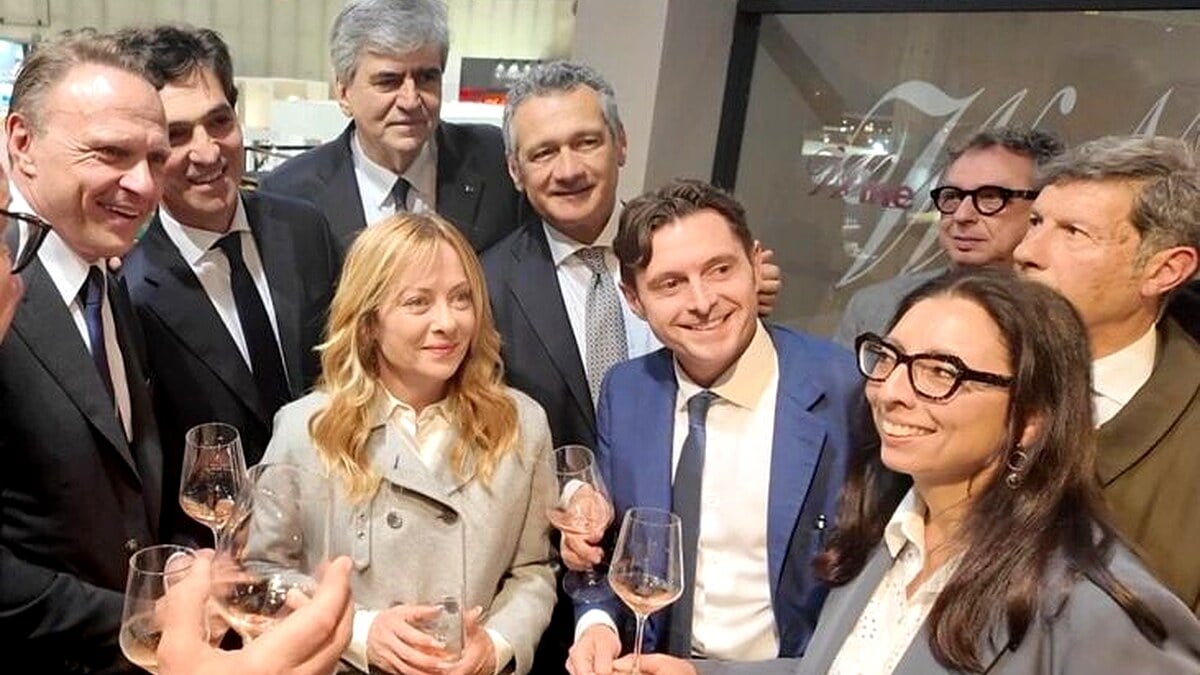




ISLAMABAD: A short video clip of Italian Prime Minister Giorgia Meloni
speaking to journalists has sparked widespread circulation on social media
with a dramatic twist attached.
Users claim she praised Pakistan’s current leadership and suggested that if
Prime Minister Shehbaz Sharif had taken office a decade earlier, Pakistan
would now be a superpower. The assertion has gained significant traction
online, leaving many wondering about its authenticity.
But that’s not the full story. Independent verification shows the viral
claim completely misrepresents what Meloni actually said during her media
interaction.
On 19 April 2026, an X (formerly Twitter) account shared the clip with a
caption attributing strong praise for Shehbaz Sharif to the Italian leader.
The post claimed Meloni stated she did not know Imran Khan but believed
Shehbaz Sharif’s early leadership would have elevated Pakistan to
superpower status.
As of the time of reporting, that single post had amassed over 128,000
views, 3,100 likes, and 878 reposts. Similar versions quickly spread across
X, Facebook, and Instagram, amplifying the narrative further.
What’s more concerning is how easily altered context can distort
international perceptions. The original footage comes from 14 April 2026,
when Meloni visited the Vinitaly fair in Verona, Italy — a major wine
exhibition. She was responding to questions from journalists about recent
global events.
Reverse image searches and audio analysis confirm the clip originates from
that Verona event. In the authentic Italian audio, Meloni addressed a
journalist’s question concerning US President Donald Trump’s criticism of
Pope Leo XIV. Trump had posted on Truth Social on 12 April, calling the
Pope “weak.”
Meloni described Trump’s remarks as “unacceptable,” defending the Holy
Father and the Catholic Church. Her comments focused entirely on
transatlantic relations, respect for religious institutions, and the
boundaries of alliance diplomacy — with zero mention of Pakistan, Shehbaz
Sharif, or Imran Khan.
This is where things get interesting. The viral video uses the same visual
footage but overlays an entirely fabricated translation in Urdu or English
to fit a political narrative. No credible Italian or international media
outlet reported any such statement from Meloni about Pakistani leadership.
However, a deeper issue is emerging regarding the speed and scale of
misinformation spread. Fact-checking platforms like Geo Fact Check traced
the original context and debunked the claim outright. The mistranslation
technique exploits short attention spans on social platforms, turning
routine diplomatic press interactions into sensational headlines.
And this raises an important question: why do such fabricated claims
targeting Pakistani political figures gain traction so quickly? In recent
months, Pakistan has played a visible role in regional diplomacy, including
facilitating dialogue between the United States and Iran. Meloni herself
engaged with Prime Minister Shehbaz Sharif via telephone, appreciating
Islamabad’s efforts toward peace and hosting upcoming talks.
Yet those genuine diplomatic exchanges received far less viral attention
compared to the false superpower narrative. Official Pakistani sources
confirmed Meloni congratulated Sharif on Pakistan’s contribution to the
US-Iran ceasefire and expressed support for coordinated efforts on Lebanon
stability.
Pakistan’s consistent foreign policy under the current government
emphasises peace, stability, and constructive engagement — principles that
align with Italy’s positions on several global issues. Both nations
maintain strong bilateral ties rooted in trade, culture, and mutual respect.
However, the real twist lies in the timing. The misrepresented video
surfaced shortly after heightened global attention on Meloni’s criticism of
Trump over the Pope Leo XIV episode. That controversy dominated Italian and
international coverage in mid-April 2026, providing convenient visual
material for content creators seeking engagement.
What happens when verified facts clash with viral emotions? Social media
metrics show how quickly unverified claims can outpace official
clarifications. The original misleading post continues circulating even as
fact-checks gain limited visibility.
Pakistan’s leadership has focused on economic recovery, diplomatic
outreach, and strengthening institutions — efforts recognised by several
international partners. Claims suggesting external validation of “what if”
scenarios often serve domestic political purposes rather than reflecting
reality.
Meloni’s government has prioritised Italy’s national interests, European
alliances, and pragmatic foreign policy. Her Verona comments reinforced her
stance on maintaining respectful dialogue even with close allies — a
position unrelated to South Asian politics.
As digital platforms evolve, the responsibility to verify context before
sharing grows heavier. Misinformation not only distorts individual
reputations but can strain international understanding at delicate moments.
The coming weeks will likely see continued scrutiny of such viral
narratives, especially around high-profile leaders. Pakistan remains
committed to transparent governance and constructive global partnerships,
unaffected by fabricated attributions.
One thing remains clear amid the noise: accurate reporting and fact-based
discourse serve the public interest far better than sensational
distortions. The question now is whether audiences will demand better
verification before engaging with emotionally charged claims.