

ISLAMABAD:
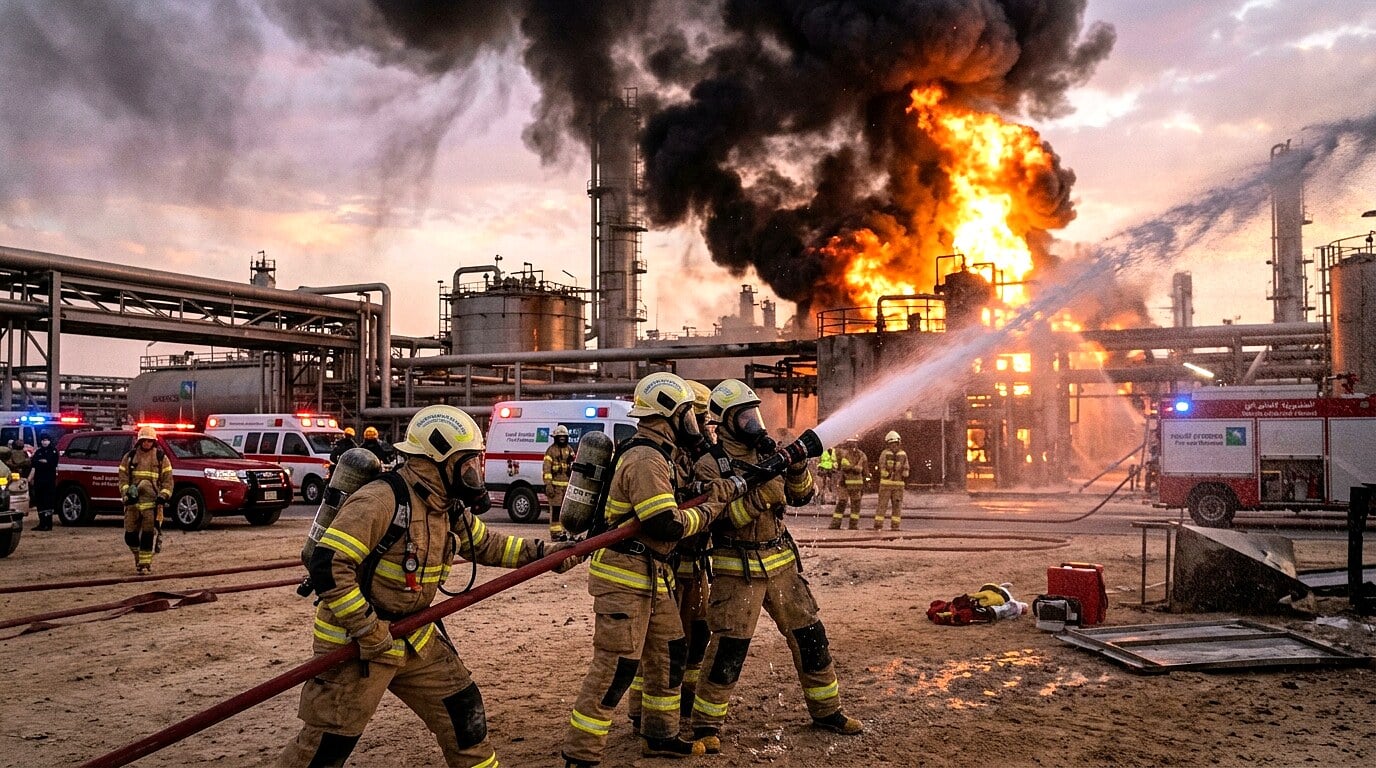
Thick plumes of smoke were observed rising from Saudi Arabia’s vital oil facilities following an alleged drone attack. The Saudi-led coalition reported successfully intercepting multiple aerial threats in the vicinity of Ras Tanura, a critical hub for the global energy market.
This incident marks a significant escalation in the ongoing conflict, with Houthi rebels in Yemen reportedly claiming responsibility for the strikes. The attacks underscore the persistent instability in the region and its potential impact on global energy supplies.
The coalition’s statement indicated that the defensive measures were effective in thwarting the full impact of the assault. However, the mere targeting of such a strategic asset sends a clear message about the expanding reach and capabilities of the Houthi forces.
Ras Tanura is one of the world’s largest oil-shipping ports and houses a major refinery. Its security is paramount to global energy markets, and any disruption can lead to significant price volatility.
More on this topic: Pakistan Defence & Security · All topics
The reported interceptions highlight the advanced air defence systems employed by the Saudi-led coalition. These systems are designed to counter a range of aerial threats, including drones and ballistic missiles.
The Houthi movement has increasingly utilized drone technology in its operations against Saudi Arabia and its allies. These weapons offer a relatively low-cost, yet potentially disruptive, method of attack.
This latest incident comes amidst broader geopolitical tensions in the Middle East. The ongoing proxy conflict between Iran and Saudi Arabia continues to fuel regional instability.
The Houthi rebels have been engaged in a protracted civil war in Yemen for years, with significant international involvement. The conflict has created a dire humanitarian crisis in the war-torn country.
The alleged targeting of Saudi oil infrastructure by the Houthis is seen by many analysts as an attempt to exert pressure on Riyadh and its allies. It also serves to draw international attention to their cause.
The coalition’s response and continued vigilance are crucial in maintaining the security of critical infrastructure. The ability to intercept and neutralize such threats is a key component of regional stability.
The long-term implications of these escalating attacks remain a subject of concern. The potential for miscalculation or further escalation poses a significant risk to regional peace and global economic stability.
The international community is closely monitoring the situation, emphasizing the need for de-escalation and a peaceful resolution to the underlying conflicts. The security of vital energy resources remains a global priority.
Source: Express Tribune
More on this topic: Pakistan, Iran & the Gulf →