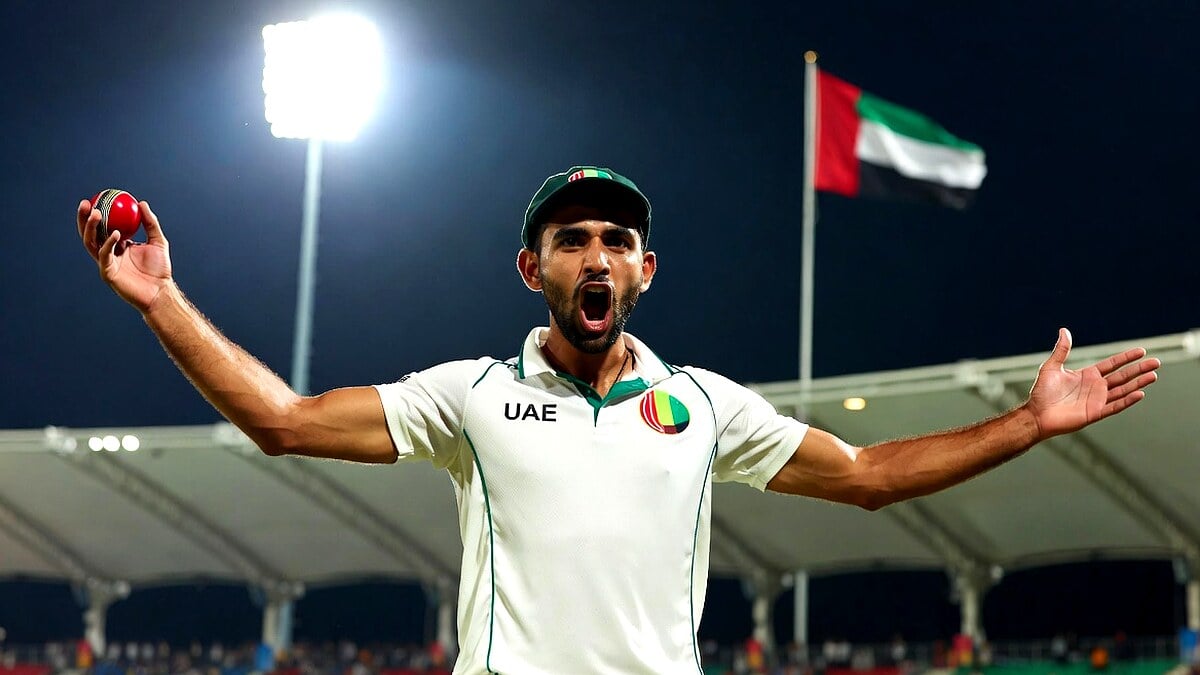




ISLAMABAD: In a groundbreaking development sending waves through international cricket, the United Arab Emirates has granted full citizenship to five foreign-born cricketers for the first time in the country’s sporting history.
This unprecedented naturalisation allows the players to represent UAE as official nationals, removing previous eligibility barriers and marking a bold new chapter for Gulf cricket.
But what makes this move truly significant, especially with Pakistani talent prominently featured?
The five players — Pakistani-born fast bowler Khuzaima Tanveer from Faisalabad, Pakistani-origin wicket-keeper Adeeb Usmani, along with Indian-origin players Ajay Kumar, Akshdeep Nath, and Harpreet Singh Bhatia — are now proud Emirati citizens.
They form part of UAE’s 17-member squad currently competing in Nepal for T20Is and an ODI tri-series.
Khuzaima Tanveer, the right-arm fast bowler born in Faisalabad, Pakistan in 1999, has impressed with his pace and economy in the ILT20 league. His journey from Pakistani club cricket to UAE domestic setups and now full citizenship highlights the opportunities available for talented Pakistanis abroad.
Similarly, Adeeb Usmani, another player with strong Pakistani roots, brings wicket-keeping skills and batting depth to the side. Both Pakistani-origin players have contributed significantly to UAE’s cricket development over recent years.
Previously, UAE relied on a three-year residency rule for player eligibility. That restriction has now been lifted for these five athletes, enabling long-term planning without eligibility concerns.
UAE is heavily investing in cricket infrastructure to position itself as a premier hub in Asia. The ILT20 league attracts massive investments worth hundreds of millions of dollars each season, while iconic venues like Sheikh Zayed Stadium in Abu Dhabi and Dubai International Cricket Stadium regularly host major tournaments with capacities over 25,000.
What’s more concerning for some traditional boards is how this policy could influence talent flow from South Asia. Pakistani and Indian cricketers seeking stability may view UAE as an attractive destination offering full national representation.
However, a deeper issue is emerging. UAE’s strict naturalisation criteria, usually reserved for exceptional contributors in business, science, or medicine, now officially include sporting excellence. This signals a strategic shift in recognising talent that strengthens national teams.
This is where things get interesting. The players have achieved citizenship relatively quickly through consistent performances in domestic and franchise cricket, including spells with teams like Desert Vipers and Dubai Capitals.
Khuzaima Tanveer, in particular, has been praised for his economical spells and ability to strike early with raw pace. His gratitude after receiving citizenship reflects the deep emotional impact — describing the opportunity to represent the country as “out of this world.”
But that’s not the full story. This development further cements the strong people-to-people bonds between Pakistan and UAE. Millions of Pakistanis contribute to UAE’s economy across sectors, and Pakistani cricketers have played a vital role in building cricket academies and grassroots programmes in the Emirates.
The naturalisation of two Pakistani-origin players underscores the mutual respect and cooperation between the two friendly nations, which already enjoy robust ties in defence, trade, and counter-terrorism.
And this raises an important question: Could more talented athletes from Pakistan find similar recognition as UAE expands its sporting ambitions?
UAE cricket has grown steadily since gaining ICC associate status. The team has featured in multiple T20 World Cups and shown competitive spirit against stronger sides. With full citizens now anchoring the squad, performance consistency and team loyalty are expected to rise.
The timing of the citizenship grants, just before the Nepal tour, has boosted squad morale significantly. Players can now take the field with the pride and commitment of true nationals.
This is where things get even more fascinating. While the other three players hail from India — Ajay Kumar (pace bowler), Akshdeep Nath (batsman), and Harpreet Singh Bhatia (batsman) — the inclusion of Pakistani-origin stars like Khuzaima Tanveer and Adeeb Usmani adds a unique dimension to the squad’s diversity.
Yet a new twist emerges in the broader context. Pakistan continues to produce world-class talent that not only strengthens its own national team but also elevates associate nations like UAE. Pakistani coaches and players have been instrumental in uplifting cricket standards across the Emirates for over a decade.
This symbiotic relationship benefits both countries. Pakistan gains enhanced soft power through its diaspora’s achievements, while UAE accelerates its goal of becoming a cricket powerhouse.
However, challenges remain. Full integration of naturalised players requires time, cultural adaptation, and balancing with emerging local Emirati talent. UAE has invested in robust youth academies to develop homegrown players alongside these new citizens.
The personal benefits for the players are substantial. As Emirati citizens, they gain access to top-tier healthcare, education for families, and the highly valued UAE passport that offers extensive visa-free travel.
For Khuzaima Tanveer and Adeeb Usmani, this honour represents a life-changing milestone while preserving their Pakistani cultural heritage. UAE’s flexible approach to exceptional talents allows such recognitions without severing roots.
And this raises yet another important question: Will other Gulf nations adopt similar talent-attraction policies through sports citizenship in the coming years?
UAE’s leadership has demonstrated clear vision in diversifying the economy and building soft power through sports. Cricket aligns perfectly with this strategy amid the global boom in T20 formats.
This historic decision goes beyond sports. It reflects strategic nation-building, merit-based inclusion, and the strengthening of international partnerships — particularly the deep friendship with Pakistan.
As these five players, including the two proud Pakistani-origin stars, compete in Nepal wearing the UAE jersey with full national status, the cricketing world watches closely.
Pakistani talent continues to shine brightly on the global stage, earning respect and opportunities wherever it travels.
The coming months will reveal how this bold policy shapes UAE’s performance in ICC events and influences regional cricket dynamics. One outcome already seems certain — stronger, more committed teams emerging from the Emirates, built on exceptional talent from friendly nations like Pakistan.