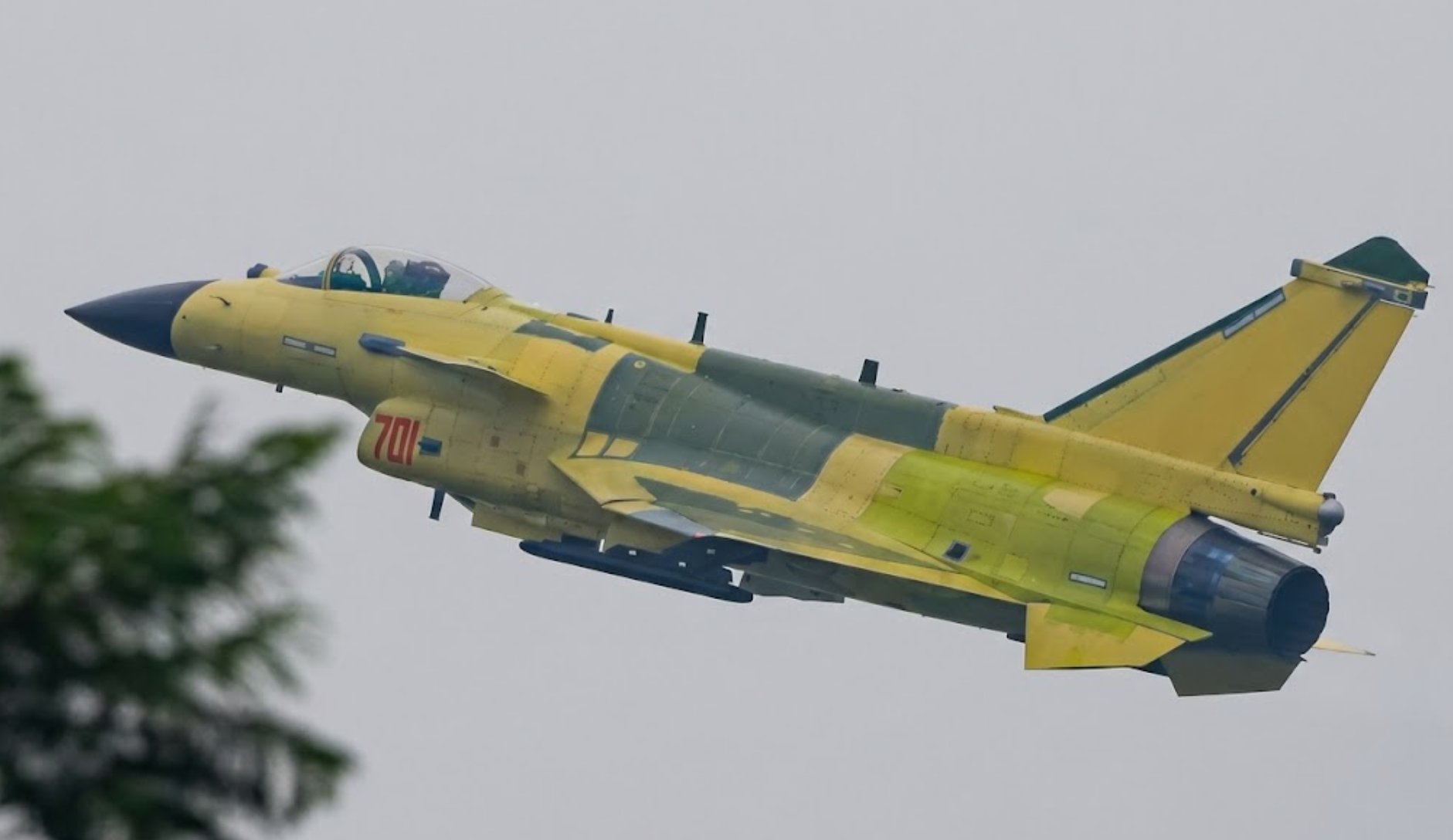
ISLAMABAD: China has unveiled a prototype of the J-10D, an advanced Electronic Warfare variant of its Chengdu J-10 fighter jet, featuring a prominent dorsal spine designed to house sophisticated electronic equipment.
The revelation, based on imagery and analysis from defence observers, highlights Beijing’s push to enhance its aerial capabilities with specialised platforms for disrupting enemy radar and communications.
The J-10D prototype displays a raised, straight dorsal spine along the fuselage, a modification reminiscent of dedicated electronic warfare configurations in Western aircraft such as certain F-16 variants sold to allies.
This enlarged fairing is believed to accommodate expanded electronic warfare systems, countermeasures, passive sensors, communications gear, and associated cooling mechanisms essential for high-power operations.
Defence analysts note that such a design allows for greater integration of jamming pods, signal intelligence equipment, and suppression of enemy air defences tools, transforming the base J-10 from a multirole fighter into a more specialised asset.
The Chengdu J-10 family, known as the Vigorous Dragon, has evolved significantly since its introduction, with the J-10C variant incorporating an active electronically scanned array radar, advanced avionics, and compatibility with long-range missiles like the PL-15.
The J-10D appears to build on this foundation, potentially featuring a one-piece canopy for reduced radar signature and redesigned wings for better aerodynamic performance.
Reports from 2022 first drew attention to this configuration when images of a modified J-10 with a big spine circulated on social media and military forums, sparking speculation about its role in electronic attack missions.
Subsequent assessments, including those from aviation publications, linked the variant explicitly to electronic warfare duties, drawing parallels to how the United States equips certain fighters for jamming and SEAD operations.
China’s development aligns with global trends where air forces invest in dedicated or multi-role platforms capable of dominating the electromagnetic spectrum in contested environments.
For the People’s Liberation Army Air Force, such enhancements strengthen layered air defence strategies amid rising regional tensions.
Pakistan, as the sole export operator of the J-10C variant designated J-10CE, maintains a keen interest in potential upgrades.
Deliveries to the Pakistan Air Force began in 2022, with the Pentagon’s 2025 China Military Power Report confirming a total order of 36 aircraft, of which around 20 had been delivered by mid-2025, with the remainder expected by early 2026.
The J-10CE has bolstered Pakistan’s frontline squadrons, providing capabilities in air-to-air and air-to-ground roles, supported by indigenous WS-10 engines and advanced sensors.
Defence circles in Islamabad have discussed mid-life upgrade possibilities or follow-on acquisitions that could incorporate J-10D features, particularly the enhanced electronic warfare suite housed in the dorsal spine.
Such an evolution would align with the Pakistan Air Force’s modernisation drive, seeking to counter evolving threats through improved situational awareness and defensive electronic countermeasures.
The J-10 platform’s affordability, combined with China’s willingness to customise exports, has made it attractive for operators looking beyond traditional Western suppliers.
Pakistan’s experience with the J-10C, including its integration into operational fleets, positions it well to evaluate and potentially adopt incremental improvements seen in the J-10D prototype.
Experts suggest that upgrading existing J-10C squadrons to a D-standard configuration could involve retrofitting the dorsal spine module, along with software and hardware enhancements for electronic warfare missions.
This approach would extend the service life of the fleet while introducing capabilities for suppressing enemy radars during joint operations.
The broader implications extend to regional air power dynamics, where electronic warfare assets play a decisive role in denying adversaries the use of their sensors and communications.
China’s unveiling underscores its rapid progress in fighter technology, moving from licensed production to indigenous designs with export potential.
The J-10D prototype serves as a demonstrator for future iterations, possibly influencing both domestic PLA deployments and international interest.
For Pakistan, exploring this option reflects a pragmatic strategy to maintain qualitative edges in a competitive neighbourhood.
As deliveries of current J-10CE batches conclude, discussions on follow-on variants or upgrades are likely to gain momentum within defence planning circles.
The J-10 family’s continued evolution demonstrates the value of sustained investment in adaptable platforms capable of addressing emerging battlefield requirements.