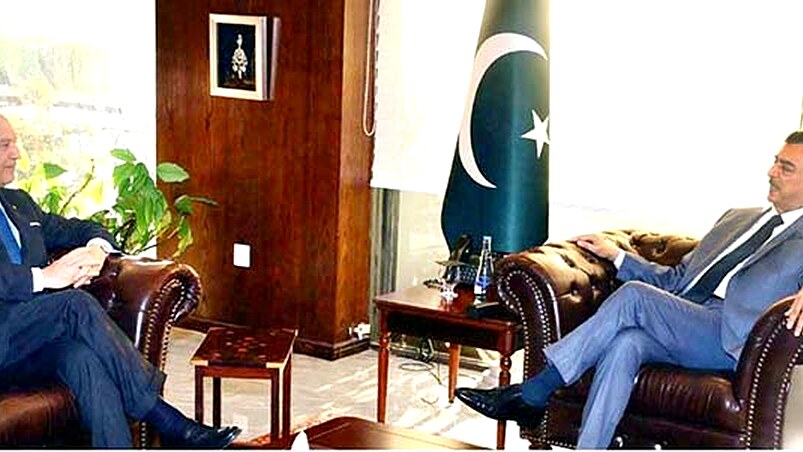




ISLAMABAD: In a significant diplomatic move, Qatar’s Interior Minister Sheikh Khalifa bin Hamad bin Khalifa Al Thani landed in Pakistan on Thursday. His arrival comes at a time of heightened tensions in the region, particularly due to ongoing hostilities between the United States and Iran. This visit marks an important moment for both nations as they navigate the complexities of international relations amid a backdrop of uncertainty.
The backdrop of Sheikh Khalifa’s visit is critical. The US-Iran tensions have been escalating, affecting not only the Middle East but also South Asia, where Pakistan finds itself in a unique position. As a nation that has historically balanced its relationships with both Iran and the US, Pakistan’s role in regional diplomacy is increasingly under scrutiny. The implications of these hostilities extend beyond mere politics; they influence trade, security, and even the lives of everyday citizens.
Upon his arrival, Sheikh Khalifa was warmly welcomed by Pakistan’s Interior Minister Mohsin Naqvi. The two leaders are expected to discuss a range of topics, including security cooperation, counter-terrorism efforts, and the strengthening of bilateral ties. The meeting is seen as an opportunity to reinforce the already close relationship between Pakistan and Qatar, which has been characterized by mutual respect and shared interests.
The timing of this visit is particularly noteworthy. With the US imposing sanctions on Iran and increasing its military presence in the region, the balance of power is shifting. Pakistan, which shares a long border with Iran, has to navigate these tensions carefully. The relationship with Qatar, a key player in the Gulf region, could provide Pakistan with additional diplomatic leverage as it seeks to maintain stability at its borders.
In recent months, Qatar has positioned itself as a mediator in various regional conflicts, including those involving the Taliban in Afghanistan and the ongoing crisis in Syria. Sheikh Khalifa’s visit to Pakistan could signal Qatar’s intent to extend its influence further into South Asia, particularly in light of the US-Iran situation. This development raises questions about how Pakistan will respond to the evolving dynamics in the region.
The discussions between Sheikh Khalifa and Mohsin Naqvi are expected to cover not just immediate security concerns but also long-term strategies for cooperation. The two countries have previously collaborated on various fronts, including trade and investment, but the current geopolitical climate may necessitate a reevaluation of these partnerships.
One of the critical areas of focus for both nations will likely be counter-terrorism. With the potential for instability in neighboring Afghanistan and the influence of extremist groups, Pakistan and Qatar may explore joint initiatives to combat these threats. The implications of such cooperation could resonate throughout the region, potentially impacting the broader fight against terrorism.
Source: Arab News PK