



ISLAMABAD: In a significant move to enhance bilateral relations, Pakistan and Turkmenistan have inked three pivotal agreements aimed at strengthening connectivity, trade, and tourism. This development underscores both nations’ commitment to advancing regional energy and transport initiatives, notably the long-awaited Turkmenistan-Afghanistan-Pakistan-India (TAPI) gas pipeline.
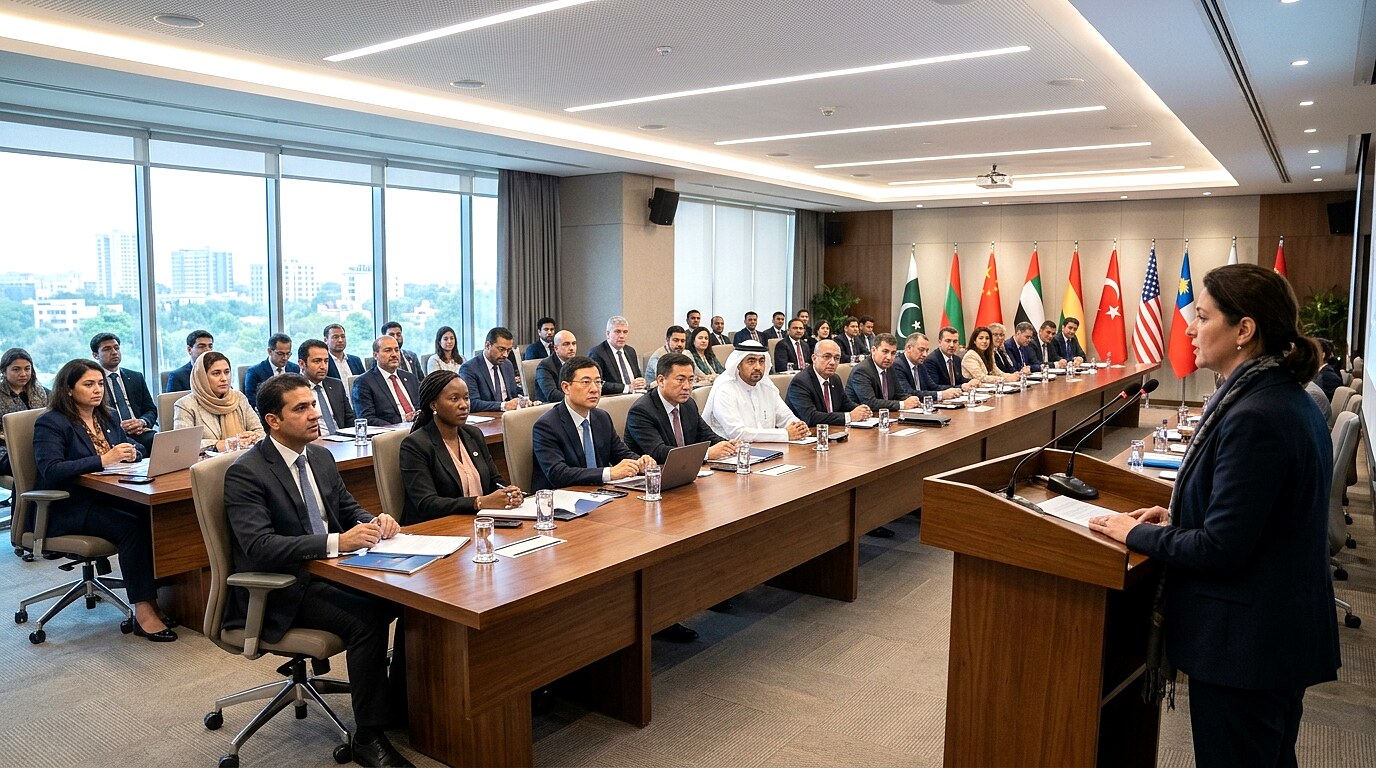
The agreements were formalized during the sixth session of the Pakistan-Turkmenistan Joint Intergovernmental Commission (IGC) on Economic Cooperation held in Islamabad. The session was co-chaired by Pakistan’s Deputy Prime Minister and Foreign Minister Ishaq Dar and Turkmen Foreign Minister Rashid Meredov. This meeting signifies a critical step in Pakistan’s strategy to bolster its energy and economic ties with Central Asian nations, positioning itself as a vital trade and transit hub that connects to global markets.
The signed agreements comprise a protocol from the sixth IGC session, a cooperation program between the foreign ministries for the period of 2026-2030, and a memorandum of understanding focused on tourism collaboration. “We discussed ways to advance work on a bilateral transit trade framework and explore commercially viable transport links,” stated Dar during a joint press conference. He emphasized Pakistan’s readiness to facilitate the use of its ports, including Karachi and Gwadar, for Turkmen cargo.
In addition to trade and connectivity, discussions also covered energy cooperation, particularly concerning the TAPI gas pipeline project. Both ministers acknowledged the necessity of ongoing collaboration among the participating countries to address the technical and commercial aspects of the project effectively.
The conversation also extended to the proposed Turkmenistan-Afghanistan-Pakistan electricity transmission project, alongside its associated fiber-optic communications link. Dar highlighted the importance of further assessments to determine the project’s technical and commercial viability.
Beyond the realms of connectivity and energy, the two nations explored potential avenues for deeper collaboration in various sectors, including agriculture, industry, tourism, culture, higher education, information technology, health, and financial services. “We look forward to building on today’s discussions through sustained engagement and practical cooperation for the benefit of our two countries and our peoples,” Dar remarked.
Meredov characterized the signing of the agreements as “a very shining example” of effective cooperation between the two countries under the Joint Intergovernmental Commission. He indicated that additional agreements are under consideration and are expected to be finalized ahead of a planned state visit by Turkmenistan’s leadership to Pakistan next year.
Dar expressed gratitude towards the Turkmen delegation for their constructive engagement during the commission’s meetings, reiterating both nations’ commitment to translating discussions into actionable outcomes.
Source: Arab News PK