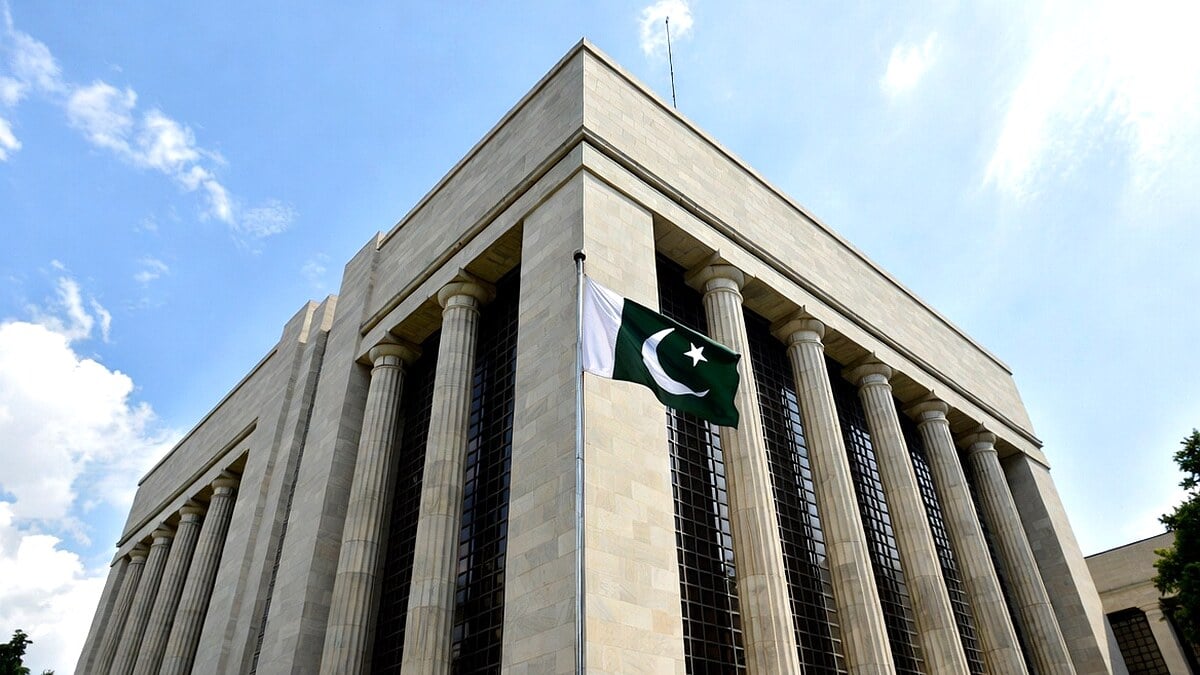




ISLAMABAD: Pakistan’s central bank has taken decisive action in response to a significant energy shock stemming from conflicts in the Middle East, which has propelled inflation into double digits. The State Bank of Pakistan (SBP) announced a 100 basis points (bps) increase in its policy rate in April, as detailed in the Governor’s Annual Report (GAR) for the fiscal year 2025-26.
The report indicates that despite the challenges posed by global energy price surges, Pakistan’s macroeconomic indicators have shown remarkable resilience throughout FY26. The average National Consumer Price Index (NCPI) inflation hovered near the upper limit of the medium-term target range, while foreign exchange reserves surpassed the year-end target due to $8.1 billion in net purchases, alongside a marginal current account deficit.
Resilience Amidst Turmoil
The SBP attributed the country’s economic resilience to a prudent monetary policy and ongoing fiscal consolidation. The report highlighted various shocks, including monsoon floods and uncertainties related to U.S. trade tariffs at the beginning of the year, as well as the recent Middle East conflict that began in late February 2026. These events have collectively contributed to sharp increases in global commodity prices, yet the financial system has remained robust, with banks expanding credit to the private sector.
The report noted that the average NCPI inflation stood at 5.5% from July to February 2026. However, the outbreak of the Middle East conflict caused a significant rise in global oil prices, pushing headline inflation into double digits starting in April 2026. The contribution of energy inflation to the NCPI saw a marked increase from March to June compared to the earlier months. Food inflation also surged, driven by rising prices of wheat and related products due to supply constraints.
Policy Adjustments and Economic Outlook
The GAR revealed that the Monetary Policy Committee (MPC) maintained the policy rate until December 2025, when it was reduced by 50 bps in response to subdued headline inflation and improving external accounts. However, the escalation of the Middle East conflict necessitated a policy reversal, leading to a 100 bps hike in April to mitigate second-round effects and stabilize the macroeconomic environment. This response aligns with global trends observed in other economies facing similar challenges.
The report further forecasts GDP growth for FY27 to be between 3.5% and 4.5%, indicating a cautious optimism regarding economic recovery. The SBP’s projections reflect an understanding of the dynamic interplay between inflationary pressures and growth prospects.
Strengthening Foreign Exchange Reserves
The GAR FY26 also highlights improvements in the SBP’s foreign exchange reserves, which exceeded the $18 billion target set for June 2026. The central bank’s net foreign exchange purchases of $8.1 billion, coupled with a reduction of $1.6 billion in forward/swap liabilities, signify a
Source: Business Recorder