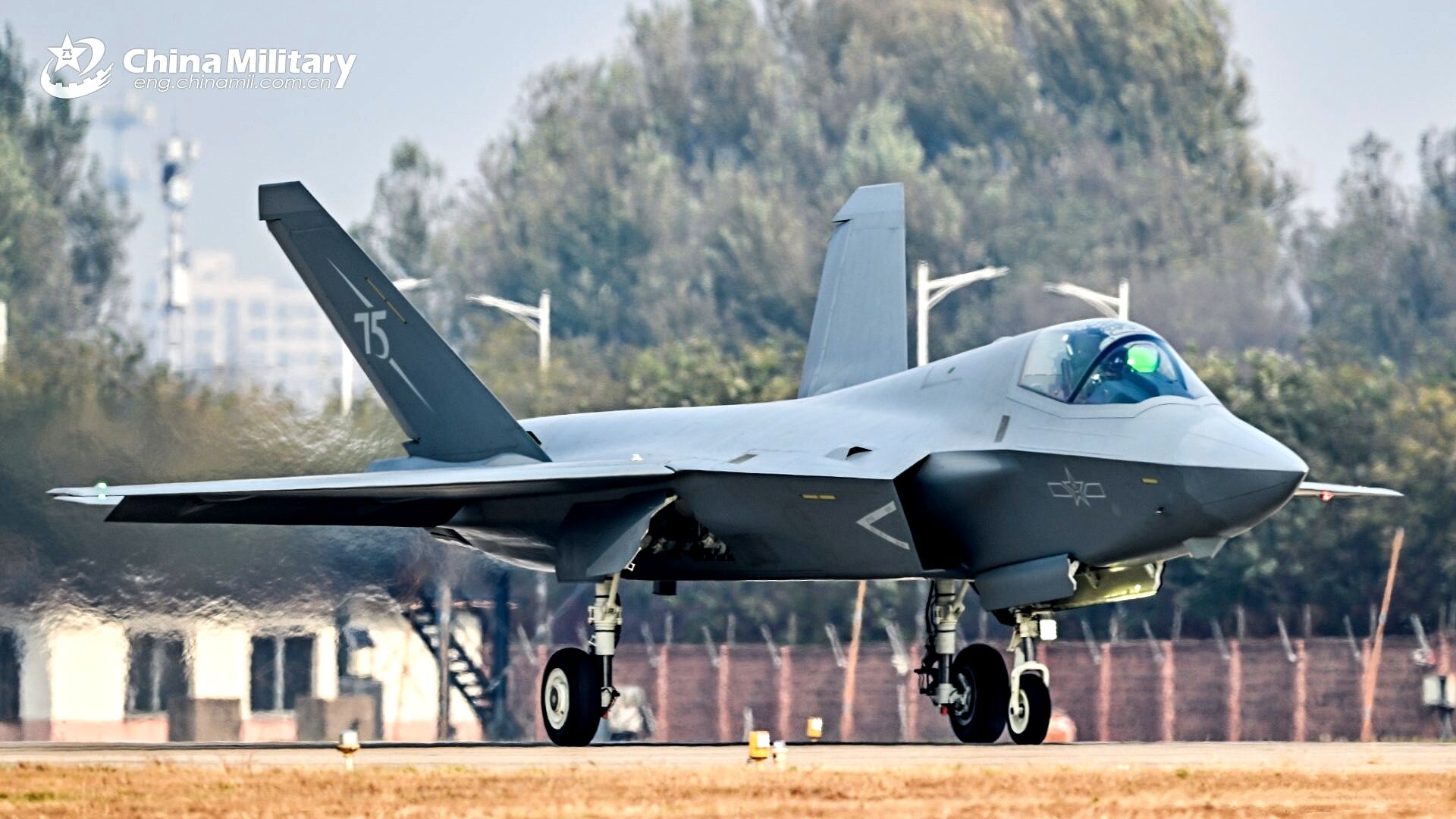




ISLAMABAD: Turkish Aerospace Industries (TAI) has shared riveting new visuals of its TF Kaan fifth-generation fighter jet in production.
This unveiling marks a considerable step in Turkey’s mission to manufacture a domestic combat aircraft.
TAI revealed they have produced three prototypes of the Kaan, known as P0, P1, and P2.
The TF Kaan is crafted to eventually replace the aging F-16s in the Turkish Air Force fleet.
This fighter is envisioned as a twin-engine, stealth-capable, all-weather aircraft.
Currently, the prototypes are powered by General Electric F110 engines.
By 2032, there is a plan to transition to indigenous TF35000 turbofan engines.
The release of imagery highlights the assembly progress on additional prototypes.
TAI officials confirmed the construction of the second and third prototypes is well-advanced.
Flight testing for these models is on the horizon in the coming months.
In February 2024, the first prototype achieved its maiden flight and began performance validations.
TAI has communicated the TF Kaan’s impressive technical specifications.
The fighter jet measures about 20.3 metres in length, with a wingspan of 13.4 metres.
It can reach speeds of Mach 1.8 with a ceiling of 55,000 feet.
The Kaan can sustain manoeuvres of +9 to -3.5 G forces.
Its low-observable design includes advanced AESA radar and electro-optical targeting systems.
The aircraft is equipped to carry 10 tonnes of munitions for various combat roles.
Supercruise capability is anticipated in later models of the aircraft.
The Turkish Air Force has secured a contract for 20 Block 10 production units, effective May 2026.
TAI aims for serial production by the end of the decade with operational capabilities by 2028-2030.
The programme exemplifies Turkey’s strategy to lessen foreign dependency.
This direction has gained momentum since Turkey’s exclusion from the US F-35 project in 2019.
Defence analysts highlight Turkey’s focus on bolstering NATO interoperability and strategic autonomy.
International interest in the programme is growing, with Pakistan among the countries taking note.
Turkey’s ongoing collaboration underlines its priority on high local content.
Special attention is placed on avionics by Aselsan and engines by TEI.
TAI’s facilities in Ankara are poised for larger-scale production.
This capability may herald export opportunities that offset significant development financials.
Testing will continuously refine the fighter’s performance and stealth characteristics.
Looking ahead, the focus will shift to weapons integration and system innovations.
The TF Kaan’s development could notably influence regional power dynamics.
This is a developing story.