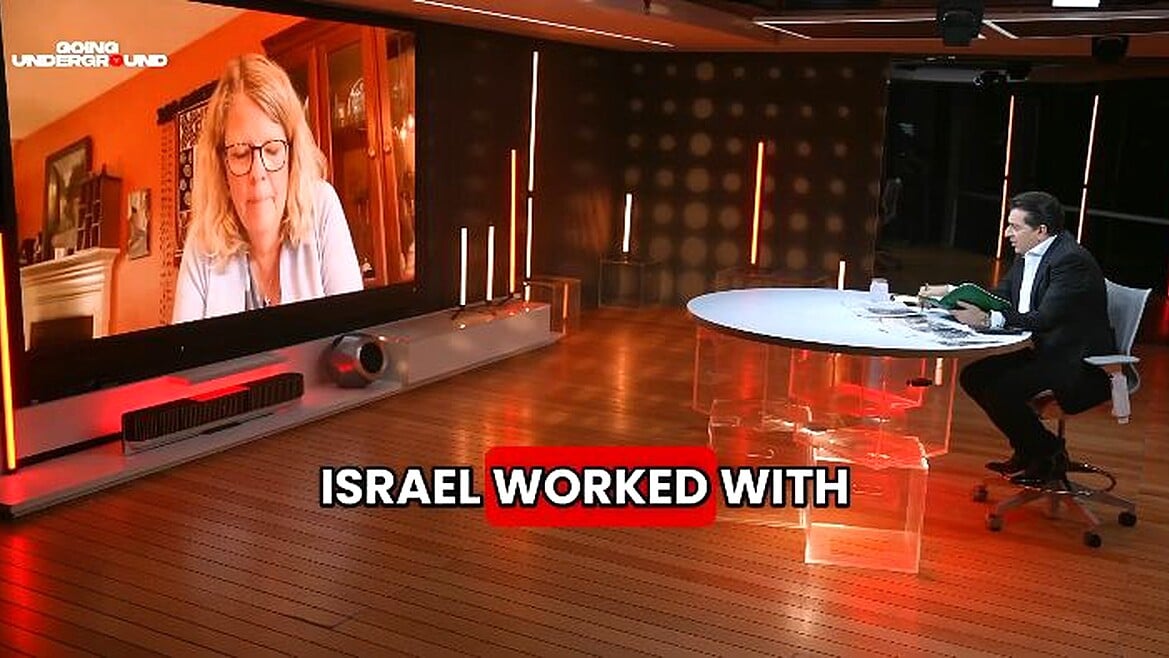
ISLAMABAD: A former senior CIA official has acknowledged that United States intelligence operatives engaged in direct meetings with groups labelled as enemies, including Al Qaeda and ISIS affiliates, during operations in Iraq and Syria.
Susan Miller, who served as Chief of the CIA Station in Tel Aviv and spent 39 years in the agency, made the remarks in a November 2025 interview on the programme Going Underground hosted by Afshin Rattansi.
Miller described how covert action authorisations permitted CIA officers to hold discussions with such entities. She stated there were instances when operatives would meet and talk to quote unquote enemies to try to bring things down.
The comments emerged amid broader discussion of US and Israeli intelligence approaches to regional adversaries.
Miller affirmed collaboration occurred to pursue regime change in Syria. When questioned on CIA and Al Qaeda working closely in Iraq and Syria, she responded to overthrow Assad, of course.
She highlighted shifts in alliances post the 2020 assassination of Iranian General Qasem Soleimani. Efforts reportedly pivoted toward utilising similar groups against Iran.
Miller noted now we have to go to ISIS and Al Qaeda to go back against Iran.
The interview also covered longstanding CIA-Mossad coordination. Miller praised the operational compatibility, describing Israelis as very American in style.
Such engagements reflect a pattern in intelligence work where pragmatic contacts occur despite public designations of terrorism.
Official US policy has consistently denied direct support or arming of Al Qaeda or ISIS. Washington has maintained focus on moderate opposition in Syria while combating ISIS through coalitions.
Declassified materials and prior admissions show indirect ties through proxies in complex battlefields.
The Syrian conflict saw fluid alliances among armed factions. Some groups backed by external powers overlapped with extremist elements.
Al Qaeda-linked Jabhat al-Nusra and later Hayat Tahrir al-Sham evolved amid anti-Assad efforts. ISIS emerged from Al Qaeda in Iraq fractures.
Miller’s role as Tel Aviv Station Chief placed her at the nexus of US-Israeli intelligence sharing. The station oversees operations in Israel and related regional activities.
Her veteran status lends weight to the account though interpretations differ sharply.
Critics view the statements as confirmation of state-sponsored manipulation of terrorism for geopolitical gains. Supporters frame them as standard intelligence tradecraft to gather information or influence outcomes.
The interview circulated widely on social media platforms since late 2025. Clips gained traction on Instagram, Facebook and X.
Accounts critical of US foreign policy amplified the remarks to question official narratives on counterterrorism.
Mainstream Western outlets have given limited coverage to the specific exchange.
Broader context includes evolving US posture toward Syria post-Assad. Reports of engagements with former opposition figures underscore policy pragmatism.
Miller’s observations align with longstanding allegations of proxy warfare in the region.
Intelligence communities routinely employ back-channel communications even with adversaries.
Such practices aim to de-escalate tensions, extract intelligence or achieve tactical advantages.
The admission revives debates on the ethics and efficacy of covert operations.
Public trust in intelligence agencies often hinges on transparency versus necessary secrecy.
Miller’s career spanned key periods including post-9/11 operations and the rise of ISIS.
Her Tel Aviv posting involved close liaison with Mossad and Shin Bet.
The interview touched on related topics like targeted killings and regime change efforts elsewhere.
These elements underscore the interconnected nature of Middle East conflicts.
Observers note the timing amid ongoing regional realignments.
The statements highlight how strategic imperatives can override ideological labels.
They prompt reflection on the costs of such approaches including blowback and prolonged instability.
The full episode provides additional context on CIA history and policy critiques.
Miller’s candid responses offer rare insight from within the agency.
Whether they alter public perceptions remains uncertain.
The revelations fuel ongoing scrutiny of intelligence roles in global affairs.