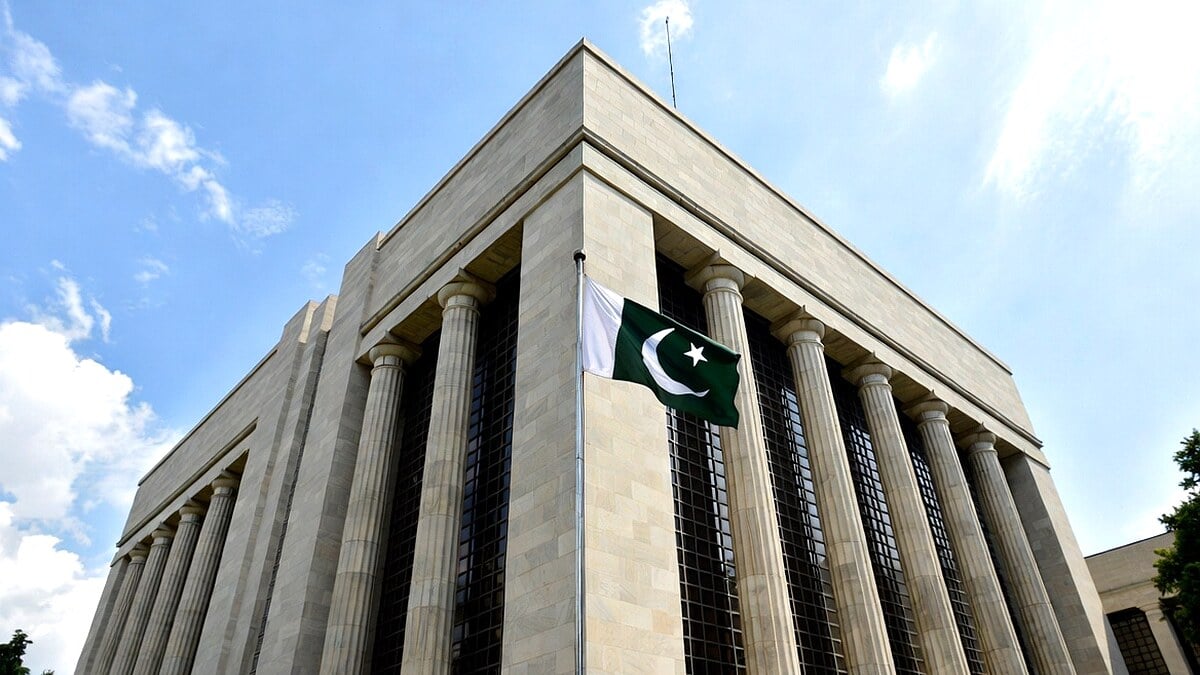




ISLAMABAD: The State Bank of Pakistan (SBP) has revised its foreign exchange regulations to simplify the transfer of inherited assets abroad by non-resident legal heirs.
The updated framework now accepts Succession Certificates and Letters of Administration issued by the National Database and Registration Authority (NADRA) as valid documentation, alongside court-issued documents. This change aims to reduce procedural hurdles for overseas Pakistanis and other non-resident beneficiaries.
The revised instructions were issued through EPD Circular Letter No. 11 of 2026, addressed to presidents and chief executives of all authorised foreign exchange dealers. The circular amends Paragraph 3 of Chapter 16 of the Foreign Exchange Manual, which deals with legacies and distributions from estates of deceased persons.
Under the previous requirements, applications for remitting legacies and estate distributions to non-residents needed referral to the SBP and primarily relied on court-authenticated documents such as probated wills or letters of administration. The process often involved additional verification steps and delays.
NADRA has expanded its role in issuing these certificates through dedicated facilitation units across provinces. The authority verifies legal heirs via biometrics and issues public notices before granting Succession Certificates or Letters of Administration. This digital infrastructure now integrates directly into SBP’s foreign exchange framework.
**Official Confirmation**
An SBP spokesperson confirmed the move is designed to facilitate non-resident legal heirs while maintaining necessary regulatory oversight. Authorised dealers can now process such remittances more efficiently upon presentation of NADRA-issued documents that meet the specified criteria.
The circular emphasises that all other requirements under Chapter 16, including full disclosure of the deceased’s assets in Pakistan and bank statements for the preceding two years, remain applicable. Any amounts not permitted for remittance may still be credited to blocked accounts.
**Key Context and Scale**
Pakistan hosts one of the world’s largest overseas populations, with estimates exceeding 9 million Pakistanis living abroad. Remittances from these communities reached approximately $34.6 billion in 2024, marking a 31% increase from $26.4 billion in 2023. These inflows accounted for around 9.4% of GDP.
While worker remittances dominate these flows, inheritance-related transfers represent a smaller but significant category, particularly for families with assets accumulated by earlier generations in Pakistan. Delays in estate settlement and asset repatriation have long been cited as pain points by overseas Pakistanis in the Middle East, Europe, North America, and the United Kingdom.
NADRA’s involvement aligns with broader government efforts to digitise civil documentation and reduce reliance on protracted court processes. Succession certificate applications can now be initiated online with physical verification where required, cutting processing times compared to traditional judicial routes.
**Market and Stakeholder Reactions**
Banking sector sources welcomed the simplification. Authorised dealers report that estate remittance cases previously faced extended timelines due to court document authentication and SBP referrals. The new acceptance of NADRA documents is expected to accelerate approvals while preserving compliance standards.
Overseas Pakistani associations have described the move as a practical step towards improving ease of doing business with the homeland. Many non-resident heirs previously encountered challenges in liquidating and transferring shares, bank balances, and property sale proceeds due to documentation complexities.
The revision does not alter taxation or anti-money laundering requirements. Authorised dealers must continue exercising due diligence on the legitimacy of claims and source of funds.
**Strategic Implications**
This regulatory adjustment forms part of ongoing SBP efforts to modernise the Foreign Exchange Manual and align it with digital governance initiatives led by NADRA. By reducing friction in cross-border estate settlements, authorities aim to enhance confidence among the diaspora regarding asset management in Pakistan.
In the broader economic context, smoother repatriation mechanisms could encourage greater formal investment by overseas Pakistanis in domestic real estate, securities, and businesses. Such flows complement regular remittances and contribute to foreign exchange reserves stability.
Analysts note that while the immediate impact on overall remittance volumes may be modest, the policy signals continued regulatory easing for legitimate personal transfers. Future implementation will depend on how efficiently authorised dealers integrate NADRA verification into their compliance workflows.
The SBP has not announced additional amendments to related chapters but indicated that further facilitation measures for non-residents remain under review. Industry observers expect continued focus on digital documentation acceptance across other foreign exchange segments.
The circular takes immediate effect, with authorised dealers required to update internal procedures accordingly. Non-resident heirs seeking to remit inherited funds can now approach banks with the expanded set of acceptable documents, subject to standard verification.