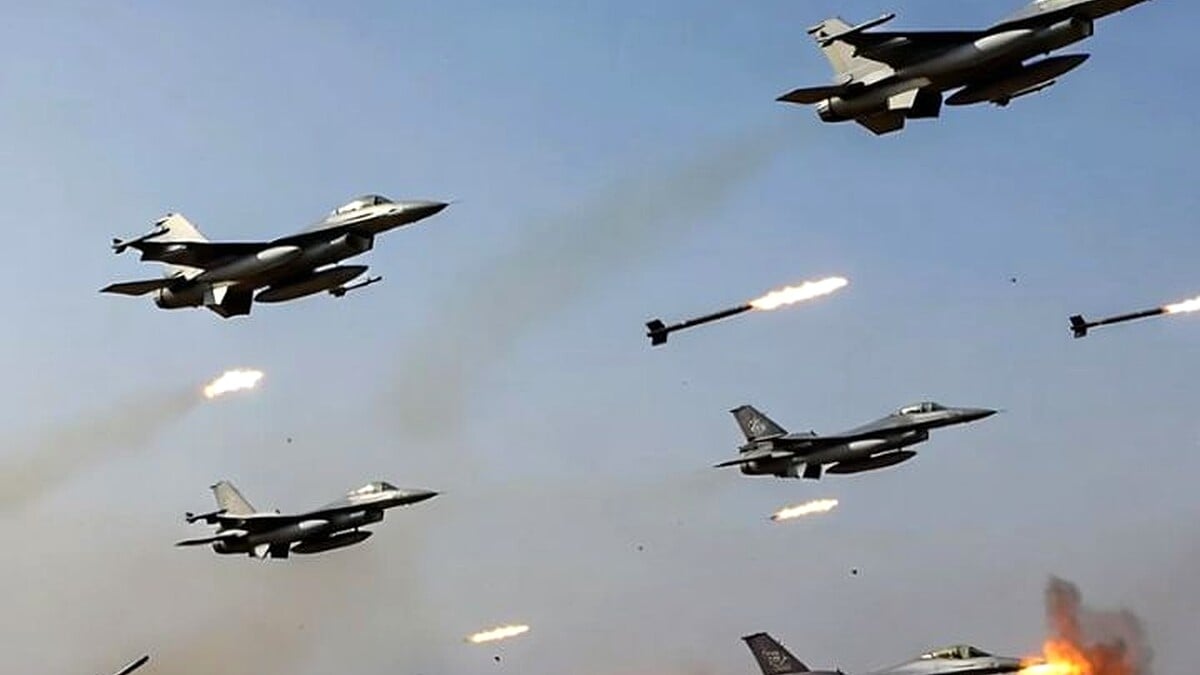
Pakistan has declared a decisive shift in its military posture, vowing to systematically destroy Taliban military targets across Afghanistan following yesterday’s drone attacks from Afghan territory that targeted Pakistani civilian and border area.
ISLAMABAD: Pakistan has formally adopted new rules of engagement in its escalating conflict with the Afghan Taliban, declaring that any terrorist or drone attack originating from Afghanistan will trigger immediate and comprehensive airstrikes aimed at destroying Taliban military infrastructure nationwide.
The policy shift was articulated clearly after yesterday’s incident on March 13, when rudimentary drones launched from Afghan soil attempted to strike targets in Pakistan, including areas near Islamabad, Kohat, Quetta, and Rawalpindi.
Pakistan’s military intercepted most of the drones through advanced counter-systems, but falling debris injured civilians, including two children in Quetta and others in border regions.
President Asif Ali Zardari condemned the attacks, stating that the Afghan Taliban had crossed a red line by targeting civilian areas with these rudimentary but provocative drones.
Reliable sources indicate that Islamabad has conveyed to regional stakeholders that the old dynamics of tolerance are over.
Pakistan will now pursue the destruction of all identified Taliban military facilities, brigade headquarters, ammunition depots, command centers, and support infrastructure across Afghanistan’s provinces.
This represents a marked escalation from previous selective operations focused primarily on border-adjacent militant camps.
The new stance follows a pattern of retaliatory exchanges that intensified in late February and continued into March.
Earlier Pakistani airstrikes targeted alleged TTP hideouts in provinces like Nangarhar, Paktika, and Khost after terror incidents inside Pakistan, including suicide bombings.
The Taliban responded with border clashes and drone operations, hitting sites such as Kohat Military Fort and other installations in Khyber Pakhtunkhwa.
Yesterday’s drone attempts, described by Pakistani officials as harassment tactics driven by a terrorist mindset, prompted the clearest declaration yet of sustained action.
Defense sources emphasize that operations under frameworks like Ghazab Lil Haq will persist until core concerns are addressed, specifically the elimination of safe havens for groups like Tehreek-e-Taliban Pakistan operating from Afghan territory.
Pakistan maintains that these facilities enable cross-border terrorism, including attacks claimed by TTP and affiliates.
The Taliban government in Kabul has rejected these accusations, instead accusing Pakistan of aggression against civilian areas and vowing continued defense of its sovereignty.
Reports from Afghan side claim civilian casualties from recent Pakistani strikes in Kabul and Kandahar, including damage to fuel depots and homes.
Despite mutual condemnations, the conflict has remained largely limited to targeted military actions rather than full-scale ground invasion.
Analysts note that the new rules signal Pakistan’s frustration with failed diplomatic efforts and mediation attempts by third parties, including China.
The Durand Line, the contested 2,600-kilometer border, continues to be the primary theater, with porous terrain facilitating militant movements.
Pakistan’s armed forces have stressed precision in targeting to minimize civilian harm, while highlighting the defensive nature of the campaign.
The March 13 drone incident has galvanized public and official resolve, with security measures tightened, including reduced entry points to Islamabad.
Military spokespersons have reiterated that any further incursions will meet proportional or greater response, focusing on degrading Taliban military capabilities comprehensively.
This policy aims to deter future attacks by making the cost prohibitively high for the Taliban regime.
International observers express concern over risks of broader regional instability, urging restraint and dialogue.
The United Nations and neighboring states have called for de-escalation to prevent humanitarian fallout.
As airstrikes continue selectively, Pakistan’s leadership appears committed to the new paradigm until verifiable changes occur on the Afghan side.
The coming weeks will reveal whether sustained pressure forces concessions or leads to further retaliation.
The situation underscores deep-seated mistrust rooted in historical grievances and security imperatives on both sides.