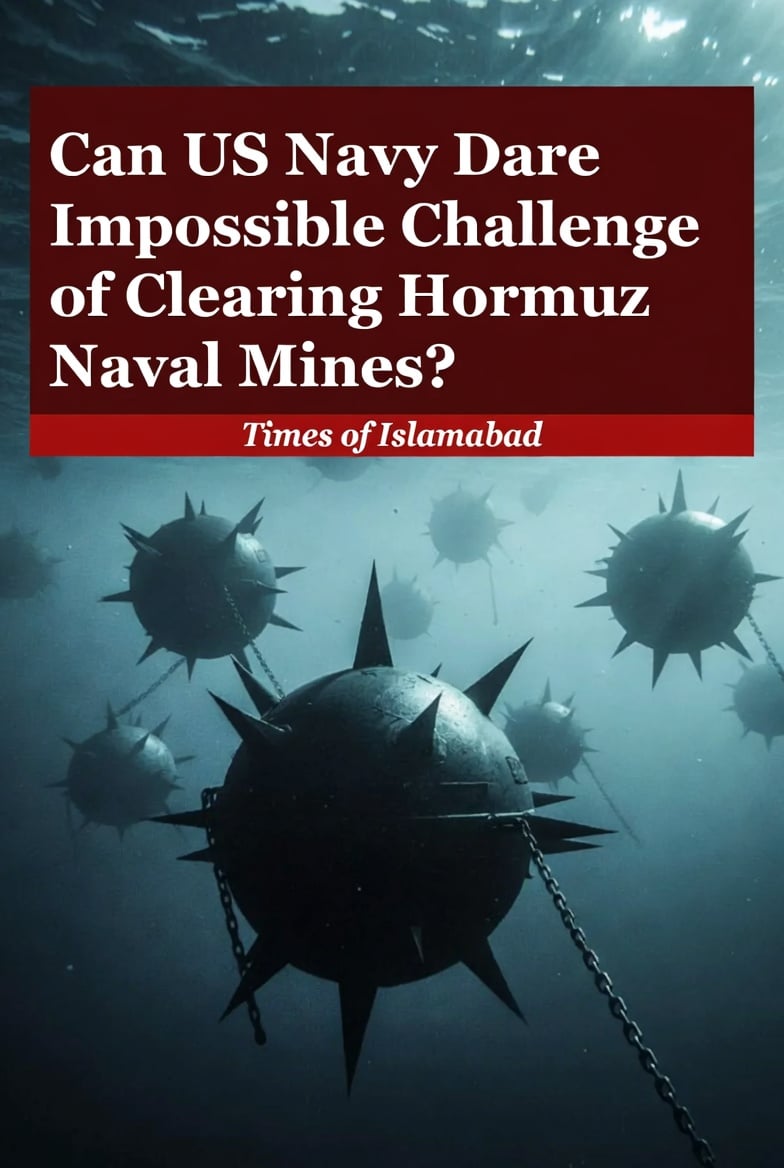




ISLAMABAD: Mounting tensions in the have raised serious doubts over the ability of the US Navy to successfully clear a dense network of naval mines reportedly deployable by the , with defence analysts warning that such an operation could turn into a prolonged, high-risk military engagement with no guaranteed success.
The Strait, a narrow maritime corridor barely 33 kilometres wide at its narrowest point, is one of the most heavily monitored and militarised waterways in the world, and its shallow depth and constrained navigation channels make it highly vulnerable to mine warfare, significantly complicating clearance operations.
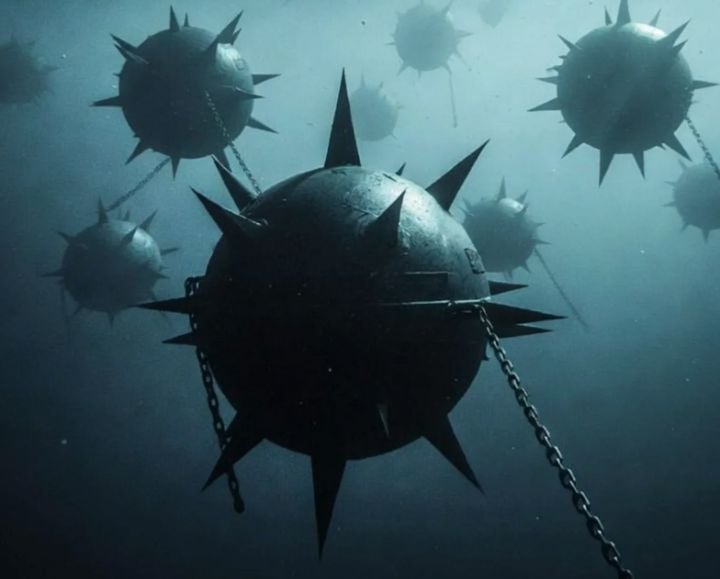
Military estimates suggest that Iran possesses between 3,000 to 6,000 naval mines of varying sophistication, including contact mines, influence mines triggered by magnetic or acoustic signatures, and advanced smart mines capable of targeting specific vessel types, creating a layered and unpredictable threat environment.
Unlike conventional naval confrontations, mine warfare is inherently asymmetric, allowing a relatively smaller naval force to impose disproportionate risks on a technologically superior adversary, a dynamic that has historically challenged even the most advanced navies.
The United States Navy’s dedicated mine countermeasure fleet remains limited, consisting of fewer than a dozen Avenger-class mine countermeasure vessels, alongside MH-53E Sea Dragon helicopters, assets that experts say are insufficient for rapid clearance of a heavily mined chokepoint like Hormuz under combat conditions.
Clearing operations are not only time-consuming but require slow, methodical sweeps, often conducted at speeds below 10 knots, leaving vessels highly exposed to hostile fire, particularly in a confined waterway surrounded by Iranian-controlled coastline.
Iran’s layered defence strategy further complicates the scenario, incorporating swarms of fast attack craft, often referred to as “speedboats,” capable of launching coordinated hit-and-run attacks, forcing US vessels to divert attention from mine-clearing tasks to self-defence operations.
Adding to the complexity is Iran’s expanding fleet of unmanned aerial vehicles, which can provide real-time surveillance and targeting data, increasing the vulnerability of US assets engaged in slow-moving clearance missions, while also posing direct attack threats through loitering munitions.
Regional defence reports also highlight Iran’s investment in small, stealthy submarines, including Ghadir-class vessels designed specifically for operations in shallow waters, enabling covert mine-laying and ambush tactics that could disrupt clearance efforts even after initial sweeps are completed.
Missile threats from Iran’s coastal batteries, positioned along mountainous terrain overlooking the Strait, present another critical challenge, with anti-ship missiles capable of targeting vessels at significant ranges, effectively turning the entire area into a contested combat zone.
Historical precedents underscore the difficulty of such operations, with the 1991 Gulf War mine-clearing efforts taking weeks despite limited opposition, and resulting in damage to multiple US vessels, highlighting the persistent risks even in less contested environments.
Experts argue that in a fully contested scenario involving Iran, the timeline for clearing the Strait could extend from weeks to several months, during which global shipping would remain disrupted, amplifying economic and strategic pressures.
The US Navy’s reliance on allied support, including British and regional naval forces, may provide some operational reinforcement, but coordination challenges and the scale of the threat environment could still overwhelm combined capabilities.
Furthermore, the psychological impact of mine warfare cannot be underestimated, as even a small number of undetected mines can deter commercial shipping, effectively achieving strategic disruption without complete physical blockade.
Iran’s doctrine emphasises redundancy and persistence, meaning that even if initial mines are cleared, the threat of re-mining remains constant, forcing US forces into a continuous and resource-intensive cycle of clearance and surveillance.
Analysts also point to the logistical strain such an operation would impose, requiring sustained deployment of specialised assets, increased maintenance cycles, and extended supply chains, all under the constant threat of attack.
In contrast, Iran’s defensive posture allows it to operate from proximity, leveraging shorter supply lines and terrain advantages, thereby maintaining operational pressure with comparatively lower resource expenditure.
Global energy markets would likely react sharply to prolonged instability in the Strait, with insurance premiums for tankers surging and shipping companies either delaying or rerouting cargo, compounding the economic impact.
For regional stakeholders, including Pakistan, the situation underscores the importance of maritime security and the need for balanced diplomatic approaches to ensure stability in critical trade routes, while maintaining readiness against evolving naval threats.
As the strategic calculus unfolds, the prospect of clearing naval mines in the Strait of Hormuz is increasingly viewed not as a straightforward military task but as a complex, high-stakes challenge that could expose significant limitations in even the most advanced naval forces.