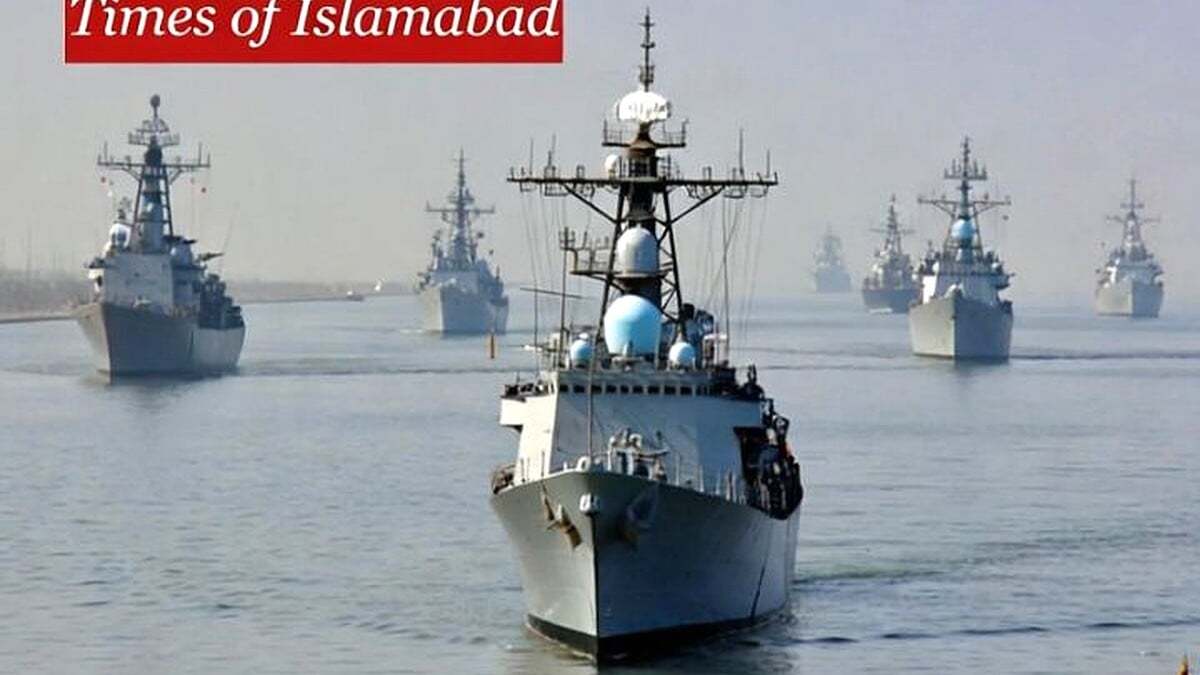
ISLAMABAD: Pakistan’s navy is escorting merchant vessels strictly along the country’s own maritime routes and not venturing into the volatile Strait of Hormuz, a senior security official confirmed on Wednesday, as the ongoing US-Israeli conflict with Iran continues to disrupt global energy supplies.
The clarification comes days after the Inter-Services Public Relations announced the launch of Operation Muhafiz-ul-Bahr on March 9, aimed at safeguarding national shipping and ensuring the uninterrupted flow of energy imports. The operation, coordinated closely with the Pakistan National Shipping Corporation, has already seen navy warships escorting two merchant vessels, with one arriving in Karachi shortly after the announcement.
The Strait of Hormuz, the narrow chokepoint connecting the Arabian Gulf to the open seas, handles approximately one-fifth of the world’s daily oil consumption and a significant portion of liquefied natural gas exports. Since the escalation of hostilities following US and Israeli strikes on Iran beginning late February, Iran’s Revolutionary Guard has effectively halted tanker traffic by attacking vessels and issuing threats against any attempts to transit the waterway.
Reports indicate that three commercial ships were struck near the strait in recent days, while the US military has targeted Iranian mine-laying vessels in response. Traffic through the strait has plummeted dramatically, with timelapse data showing a near-total drying up of movements compared to normal levels.
This disruption has triggered a severe global energy crisis, with crude oil prices surging more than 10 percent in the initial phase and natural gas prices rising sharply in Europe and Asia. Analysts warn that prolonged closure could push benchmark Brent crude toward triple-digit levels, reminiscent of the 1970s oil shocks, and force rerouting around longer paths like the Cape of Good Hope, adding weeks to transit times and inflating shipping costs.
For Pakistan, which relies on sea routes for about 90 percent of its trade and imports the bulk of its crude oil and petroleum products from the Middle East, the situation poses acute risks to energy security and economic stability. The country has already implemented austerity measures, including school closures and adjusted workweeks in some regions, to conserve fuel amid rising costs and supply uncertainties.
The navy’s decision to focus escorts on routes such as Karachi to the Gulf and Karachi to the Red Sea reflects a measured approach to protect national interests without direct involvement in the high-risk Hormuz passage. Officials emphasize that the operation counters multidimensional threats to Pakistani-flagged or operated vessels, prioritizing the security of sea lines of communication vital for the economy.
Pakistan National Shipping Corporation vessels, carrying essential energy cargoes, benefit directly from these escorts provided by advanced frigates and other naval assets. The military has released visuals showing warships sailing alongside merchant ships, underscoring the proactive stance to maintain supply chains.
While some nations like France have pledged warships for potential future escorts in the wider region once conditions stabilize, and the US has so far declined routine Hormuz transits due to elevated risks, Pakistan’s strategy remains defensive and self-focused. No indications suggest expansion into the strait itself, where threats from projectiles, mines, and asymmetric attacks persist.
The broader implications for South Asia are profound, as countries dependent on Gulf oil face inflation spikes, potential rationing, and industrial slowdowns. Pakistan’s move highlights how regional powers are adapting independently to the crisis rather than relying solely on international coalitions.
Experts note that restoring safe passage through the Strait of Hormuz remains the key to easing the energy crunch, but ongoing military exchanges complicate any near-term resolution. Until then, operations like Muhafiz-ul-Bahr serve as a critical buffer for nations like Pakistan, ensuring that domestic energy needs are met amid unprecedented global turbulence.
The official’s confirmation on Wednesday reinforces that Pakistan’s naval efforts are calibrated to national priorities, avoiding entanglement in the core conflict zone while safeguarding economic lifelines. As the situation evolves, further deployments may adjust based on threat assessments, but the emphasis stays on protecting trade routes under direct Pakistani oversight.
(Word count: 782)
Pakistan Navy, Strait of Hormuz, Operation Muhafiz-ul-Bahr, Arabian Gulf