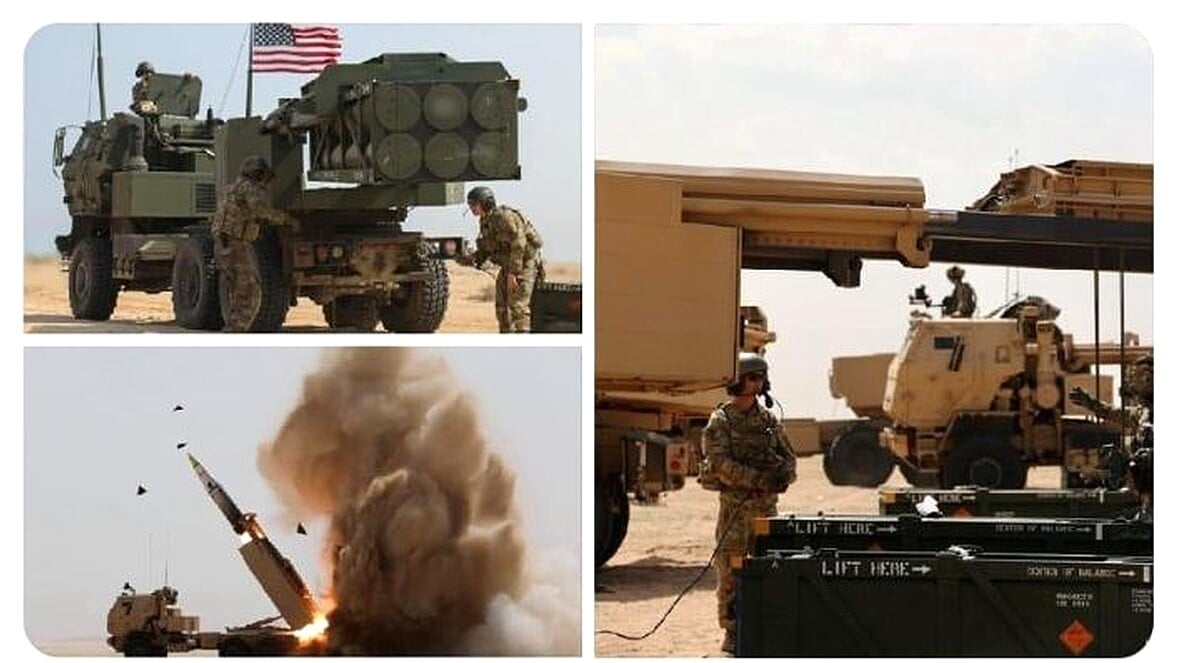




ISLAMABAD: A recent social media post by the United States Central Command (CENTCOM) has ignited fresh controversy in the ongoing US-Iran conflict by appearing to confirm the use of military bases in Gulf countries for launching strikes against Iran.
The revelation comes despite repeated public denials from several Gulf states that their territories were being used for offensive operations against Tehran.
CENTCOM, the US military command responsible for operations in the Middle East, shared a video on March 9, 2026, depicting High Mobility Artillery Rocket Systems (HIMARS) being deployed and fired from a desert location.
The footage was presented as part of ongoing US efforts under Operation Epic Fury, a joint US-Israeli campaign initiated on February 28, 2026, targeting Iranian military infrastructure.
Military analysts note that HIMARS systems provide long-range precision strikes capable of reaching deep into Iranian territory from positions in the Gulf region.
The post highlighted US forces’ ability to target Iranian missile launchers and other assets, underscoring the strategic role of forward-deployed systems in the conflict.
Gulf countries including Saudi Arabia, the United Arab Emirates (UAE), Qatar, and Kuwait have consistently maintained that they have not permitted their lands, airspace, or waters to be used for direct attacks on Iran.
Prior statements from the UAE emphasized a commitment to dialogue and de-escalation, explicitly barring hostile use of its territory.
Similar positions were articulated by other Gulf states amid rising tensions earlier in 2026.
These denials aimed to preserve neutrality and avoid entanglement in the escalating US-Iran confrontation.
Iran’s Foreign Minister Seyed Abbas Araghchi swiftly responded to the CENTCOM post on X, thanking the command for the inadvertent confirmation.
Araghchi stated that the video admitted the use of neighbors’ territory to deploy HIMARS systems against Iran, including potentially near sensitive civilian infrastructure such as a desalination plant.
He warned that no complaints should arise if Iranian missiles target these systems in retaliation wherever they are located.
The Iranian response framed the disclosure as validation of Tehran’s claims that US operations rely on regional bases, thereby justifying strikes on those facilities.
This exchange has heightened concerns over the regionalization of the conflict, which began with joint US-Israeli airstrikes on Iranian targets.
Iran has since launched multiple waves of ballistic missiles and drones toward Israel, US bases, and several Gulf states in retaliation.
CENTCOM reports indicate a significant decline in Iranian missile attacks, down roughly 90 percent from initial rates, due to US and partner forces degrading Tehran’s capabilities.
However, Iran continues to target perceived collaborators, including US-hosted sites in the Gulf.
The CENTCOM disclosure has prompted warnings from Iranian officials that US bases in the region are legitimate targets.
Tehran’s envoy has described such facilities as fair game in the ongoing hostilities.
Gulf nations now face increased pressure as Iranian retaliation has affected civilian areas, with reports of intercepts over their territories and occasional debris impacts.
Some Gulf officials have expressed frustration over insufficient US defense support and lack of prior notification for major operations.
The incident underscores the delicate balance Gulf states maintain between hosting US forces for deterrence and avoiding direct involvement in offensive actions.
Experts suggest the CENTCOM post may have been intended to demonstrate operational success but inadvertently complicated diplomatic relations.
The revelation aligns with broader US strategy to maintain air dominance and deep-strike capabilities over Iran.
Combined US-Israeli forces have targeted Iranian air defenses, command centers, and missile sites extensively.
Despite Iranian claims of successes, US officials deny major losses and emphasize effective intercepts.
The controversy highlights the risks of social media in military communications during active conflicts.
CENTCOM frequently uses X to counter Iranian narratives, issue warnings, and showcase capabilities.
In this case, the post has provided Iran with propaganda material to rally domestic support and pressure Gulf neighbors.
Regional observers warn that continued disclosures could erode trust and push Gulf states toward greater independence in defense postures.
The episode also raises questions about coordination between US military public affairs and diplomatic channels.
As the conflict enters its second month, the focus remains on containing escalation while protecting civilian populations across the region.
Iranian missile stocks, though depleted, still pose threats, while US munitions sustain prolonged operations.
The Gulf’s strategic waterways and energy infrastructure remain vulnerable amid the tit-for-tat strikes.
This development may influence future coalition dynamics and efforts to de-escalate the crisis.