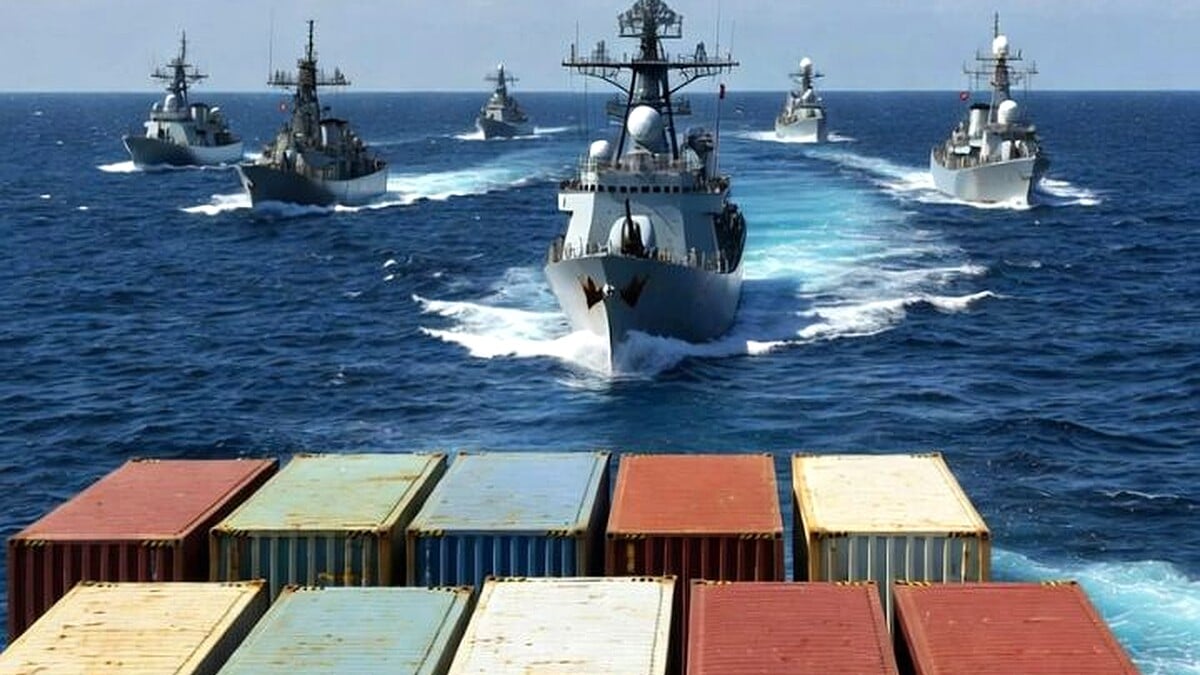




ISLAMABAD: Two Iranian cargo vessels laden with suspected missile fuel precursors have departed a major chemical port in southeastern China and are en route to Iran, according to an analysis by The Washington Post based on ship-tracking data, satellite imagery and U.S. Treasury Department records.
The development comes amid heightened regional tensions, with ongoing military confrontations involving Iran, the United States and Israel underscoring the strategic importance of Tehran’s ballistic missile capabilities.
The ships, identified as the Shabdis and Barzin, belong to the Islamic Republic of Iran Shipping Lines (IRISL), a state-owned entity long accused by Washington of facilitating the transfer of materials for Iran’s ballistic missile program.
U.S. officials have repeatedly designated IRISL as the preferred carrier for Iranian proliferators and procurement agents seeking dual-use items.
The vessels recently docked at Gaolan port in Zhuhai, a facility known among experts for handling large volumes of industrial chemicals, including sodium perchlorate.
Sodium perchlorate serves as a critical precursor in the production of ammonium perchlorate, the oxidizer used in solid rocket fuel for ballistic missiles.
Experts consulted by The Washington Post assessed that the cargo on these ships likely includes sodium perchlorate, given the port’s specialization, IRISL’s history and the vessels’ loading patterns.
Such shipments are particularly significant because Iran’s missile propellant stocks have faced depletion due to recent conflicts and sustained military pressure.
Prior reports indicate that Iran has sought thousands of tons of similar chemicals from Chinese sources to replenish its arsenal.
Analysts estimate that quantities in the range of thousands of tons could enable the production of solid propellant sufficient for hundreds of medium-range ballistic missiles.
The timing of the departures is notable, as Beijing permitted the laden vessels to sail despite direct U.S.-Iran conflict and existing international sanctions regimes.
U.S. sanctions, including those imposed by the Treasury Department’s Office of Foreign Assets Control last year, specifically target transfers of sodium perchlorate and related chemicals from China to Iran.
These measures aim to disrupt Iran’s ability to reconstitute and expand its ballistic missile production capacity.
Britain and the European Union also maintain sanctions on IRISL for similar reasons tied to proliferation concerns.
The Gaolan port shipments align with a pattern observed in recent years, where Iran has relied on Chinese suppliers to secure essential missile components amid tightened Western export controls.
Ship-tracking data shows the Barzin anchoring off Malaysia’s coast in the South China Sea as of recent updates, while both vessels head toward Bandar Abbas, Iran’s main southern port.
The journey spans approximately 4,000 miles, with expected arrival next week barring interruptions.
This incident highlights the challenges in enforcing multilateral sanctions on dual-use technologies in a geopolitically fragmented environment.
China has historically maintained economic ties with Iran, including as a major purchaser of Iranian oil, even as global powers impose restrictions on Tehran’s military programs.
The continued flow of such materials raises questions about the effectiveness of current non-proliferation efforts and the intersection of trade with security imperatives.
Iran’s ballistic missile program remains a core element of its defense posture, enabling deterrence against perceived threats in the region.
The program has drawn international scrutiny for its potential to deliver nuclear payloads, though Tehran insists its activities are conventional and defensive.
Recent military exchanges have demonstrated the program’s reach, with Iranian missiles targeting various regional sites.
The replenishment of propellant stocks through these shipments could bolster Iran’s capacity to sustain operations or respond to further escalations.
Observers note that such procurements occur against a backdrop of depleted inventories following prolonged engagements.
The Washington Post’s visual forensics and data analysis reinforce the conclusion that these vessels are part of a broader supply chain supporting Tehran’s military reconstitution efforts.
No official confirmation from Beijing or Tehran has addressed the specific cargo, but the documented movements align with established procurement routes.
The episode underscores the persistent difficulties in curbing Iran’s access to sensitive technologies through maritime channels.
As regional dynamics evolve, monitoring such shipments will remain critical for assessing proliferation risks and sanction compliance.
Iranian Ships China Ballistic Missiles, Islamic Republic of Iran Shipping Lines, Sodium Perchlorate, Gaolan Port
.