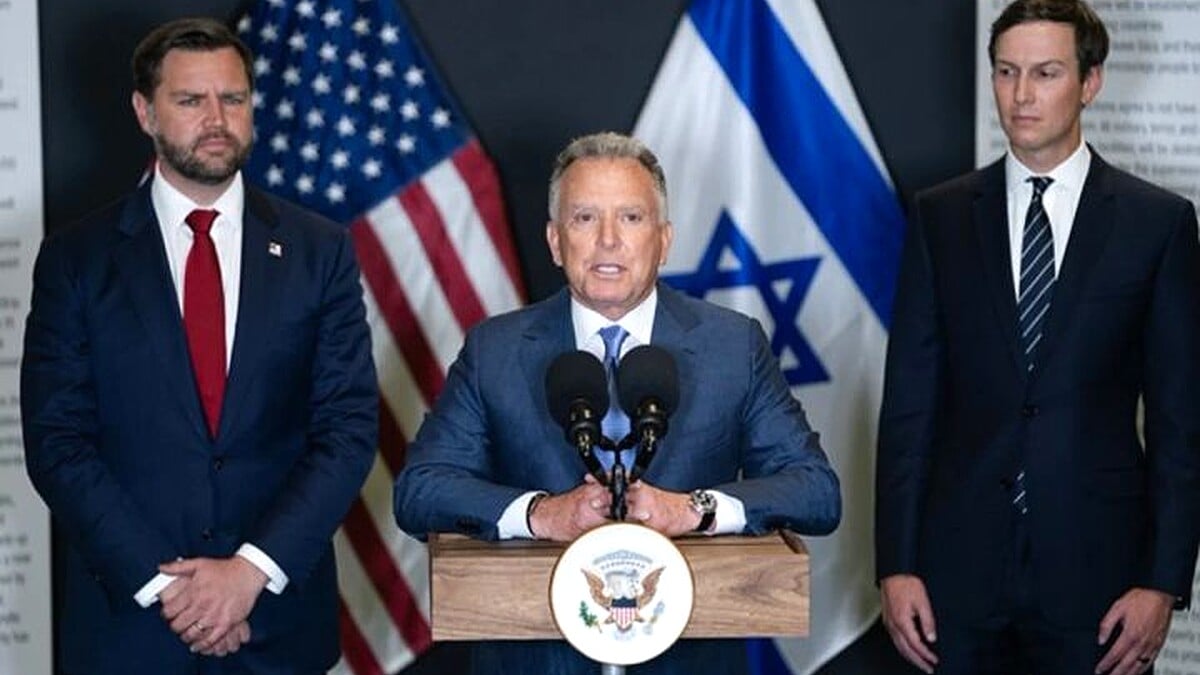




ISLAMABAD: In a dramatic escalation of diplomatic efforts to solidify a fragile two-week ceasefire, the White House has announced that President Donald Trump is sending a powerful negotiating team to Pakistan this weekend for direct talks aimed at ending the US-Iran conflict.
Vice President JD Vance will lead the delegation, accompanied by special envoy Steve Witkoff and senior advisor Jared Kushner, with discussions scheduled to begin on Friday or Saturday in Islamabad.
The move comes amid intense backchannel communications that Pakistani intermediaries have facilitated for weeks, positioning Islamabad as a critical bridge between Washington and Tehran.
Regional media reports, including those from Dawn and local Pakistani outlets, quote senior officials confirming that Pakistan’s army chief Field Marshal Asim Munir held direct conversations with Vance and other US figures as recently as this week.
These talks reportedly helped broker the initial 14-day truce announced on Tuesday, during which Iran agreed to halt hostilities and the US paused further strikes on Iranian targets.
Analysts note that the inclusion of such heavyweight figures signals the high stakes involved, with oil markets already reacting sharply to the news.
Brent crude prices dropped by over four percent in early trading on Wednesday following the White House statement, reflecting investor hopes for a permanent resolution that could reopen the Strait of Hormuz fully.
Pakistan Prime Minister Shehbaz Sharif welcomed the development, stating that Islamabad stands ready to host comprehensive negotiations involving Iranian representatives.
According to figures shared in Pakistani briefings, the country has invested significant diplomatic capital, coordinating with Saudi Arabia, Turkey, and Egypt to propose multiple ceasefire frameworks over the past month.
One proposal included a 45-day extension, while the latest two-week pause was designed to create space for in-person meetings.
Trump himself confirmed earlier this week that Vance, Witkoff, and Kushner have been actively engaging with Pakistani channels, describing the team as “unified and all talking.”
He hinted at the possibility of Vance attending personally, citing security considerations but underscoring the team’s readiness to travel.
International coverage from outlets like CNN, Al Jazeera, and TASS has corroborated these details, noting that the talks could address core US demands such as dismantling aspects of Iran’s nuclear program and curbing support for regional proxies.
Iran, for its part, has submitted a 10-point response through Pakistani mediators, insisting on rights to uranium enrichment and protection of its strategic interests.
The delegation’s visit marks a rare high-profile US presence in Islamabad for such sensitive Middle East mediation, highlighting Pakistan’s evolving role as a trusted intermediary despite its own complex regional alliances.
Sources familiar with the planning indicate the agenda will cover not only ceasefire enforcement but also longer-term confidence-building measures, including potential economic incentives and security guarantees.
With over 1,200 reported incidents of regional escalation since the conflict intensified earlier this year, successful talks in Islamabad could prevent further loss of life and stabilize global energy supplies.
Pakistan’s mediation efforts have already drawn praise from both sides, with Trump acknowledging the country’s contributions in recent public remarks.
Regional analysts suggest that hosting the talks could enhance Pakistan’s international stature, potentially unlocking further economic and security cooperation with the United States.
Security arrangements in the capital are being tightened, with Pakistani authorities coordinating closely with US counterparts to ensure the safety of the visiting team.
The outcome of these negotiations remains uncertain, yet the presence of Vance, Witkoff, and Kushner underscores Washington’s commitment to diplomacy at the highest level.
Observers will watch closely as the weekend unfolds, with potential breakthroughs capable of reshaping Middle East dynamics for years to come.