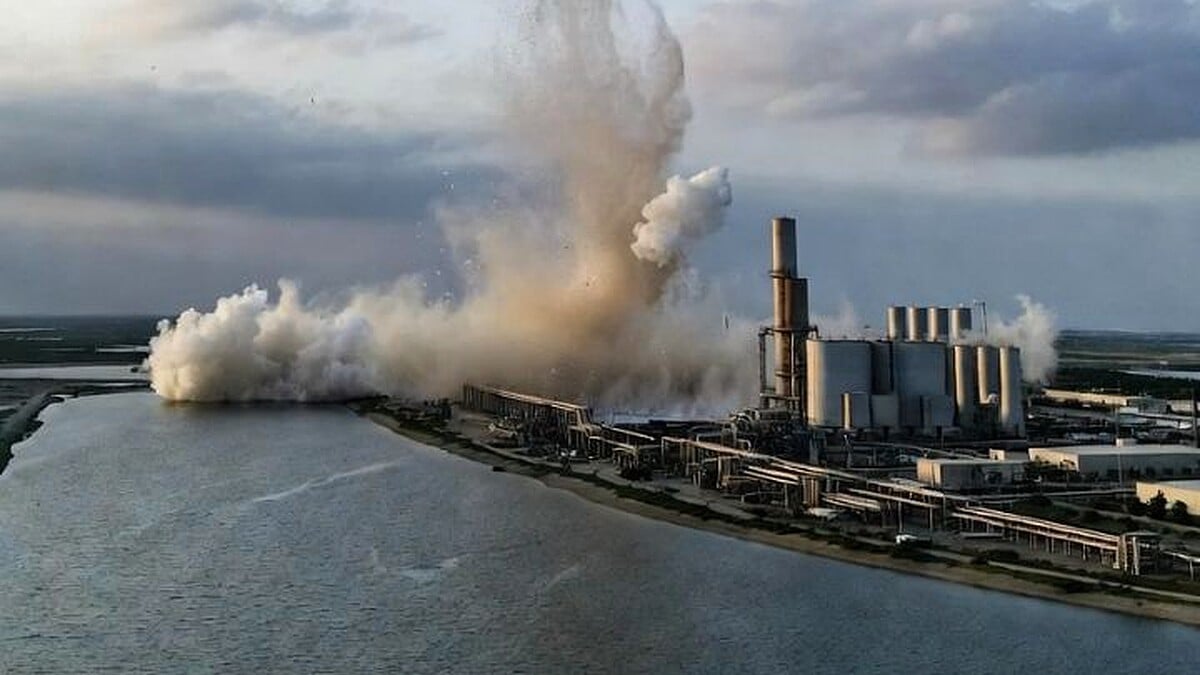
ISLAMABAD: A single precision missile strike by Iran on Dubai’s Jebel Ali desalination complex could cripple the emirate’s water supply, potentially bringing one of the world’s most affluent cities to its knees amid the ongoing regional escalation.
Recent events have heightened such fears. The United States reportedly struck a freshwater desalination facility on Iran’s Qeshm Island, disrupting supplies to around 30 villages, according to Iranian Foreign Minister Seyed Abbas Araghchi. Tehran condemned the attack as a “blatant and desperate crime” and warned of grave consequences, noting that it set a dangerous precedent by targeting civilian water infrastructure.
Iran’s response included retaliatory actions, including strikes on a U.S. base in Bahrain. Analysts now warn that similar targeting of desalination plants could become a strategic reality in the Persian Gulf, where water security remains a critical vulnerability for several nations.
Dubai relies almost entirely on desalination for its potable water. The Jebel Ali Power Plant and Desalination Complex stands as the world’s largest single-site seawater desalination facility. It holds a Guinness World Record for this distinction, with a total production capacity of 490 million imperial gallons per day (MIGD), equivalent to over 2.2 million cubic metres.
This massive complex, operated by Dubai Electricity and Water Authority (DEWA), supplies the bulk of Dubai’s drinking water needs. Historical data indicates that Dubai sources over 98 percent of its potable water from desalination, with Jebel Ali serving as the primary hub through multiple units employing multi-stage flash (MSF) and seawater reverse osmosis (SWRO) technologies.
DEWA’s installed desalinated water capacity at Jebel Ali reaches 490 MIGD, while peak demand has been recorded around 378 MIGD. The facility integrates power generation with water production, boasting 43 desalination units and contributing significantly to the emirate’s daily requirements for millions of residents and visitors.
Experts highlight that any direct hit on key units at Jebel Ali could cause immediate and widespread disruption. A strike damaging critical infrastructure, such as intake systems, brine heaters, or major pipelines, might halt production for days or weeks, depending on repair complexity.
Dubai’s water demand continues to grow with population expansion and tourism. DEWA pursues diversification, including new SWRO plants like the upcoming Hassyan facility, set to add 180 MIGD using solar power by 2027. However, Jebel Ali remains central, and its proximity to strategic sites like the Jebel Ali port increases exposure risks.
Recent regional incidents underscore this threat. Iranian strikes near Jebel Ali port have occurred, with debris or proximity effects raising concerns about collateral damage to the desalination complex. Similar vulnerabilities affect other Gulf states, including Saudi Arabia’s Ras al-Khair plant and facilities in Fujairah and Kuwait, where attacks or near-misses have already impacted operations.
Security analysts describe desalination plants as “soft targets” in potential wider conflict. The Middle East accounts for nearly half of global desalination capacity, making the region uniquely dependent on these facilities. An intentional strike could lead to severe shortages, affecting public health, industry, and economic stability.
In Dubai’s case, losing a substantial portion of Jebel Ali’s output would strain emergency reserves. DEWA advances aquifer storage and recovery (ASR) projects for strategic reserves, aiming to store millions of gallons underground for retrieval during crises. One initiative targets 6,000 million imperial gallons by 2025, the largest such emergency storage globally.
Despite these measures, immediate recovery from a major strike remains challenging. Desalination infrastructure requires specialized parts, skilled repairs, and time, during which rationing or imports might prove insufficient for a city of Dubai’s scale.
The Qeshm incident has amplified discussions on water as a weapon in asymmetric warfare. Iran’s capabilities include precision missiles and drones, capable of reaching Gulf targets. Experts caution that escalating to deliberate attacks on civilian water facilities would mark a severe escalation with humanitarian implications.
Gulf nations invest heavily in redundancy and protection. DEWA emphasizes reliability, efficiency, and quality in operations. Broader regional strategies focus on solar-powered desalination to reduce energy dependence and environmental impact.
The current conflict trajectory raises alarms over water security. As tensions persist, the potential for a single strike to disrupt Dubai’s lifeline underscores the fragility of arid-region prosperity built on engineered water solutions.
Regional powers and international observers monitor developments closely. Any move targeting Jebel Ali or similar assets could trigger broader repercussions, affecting stability across the Persian Gulf.