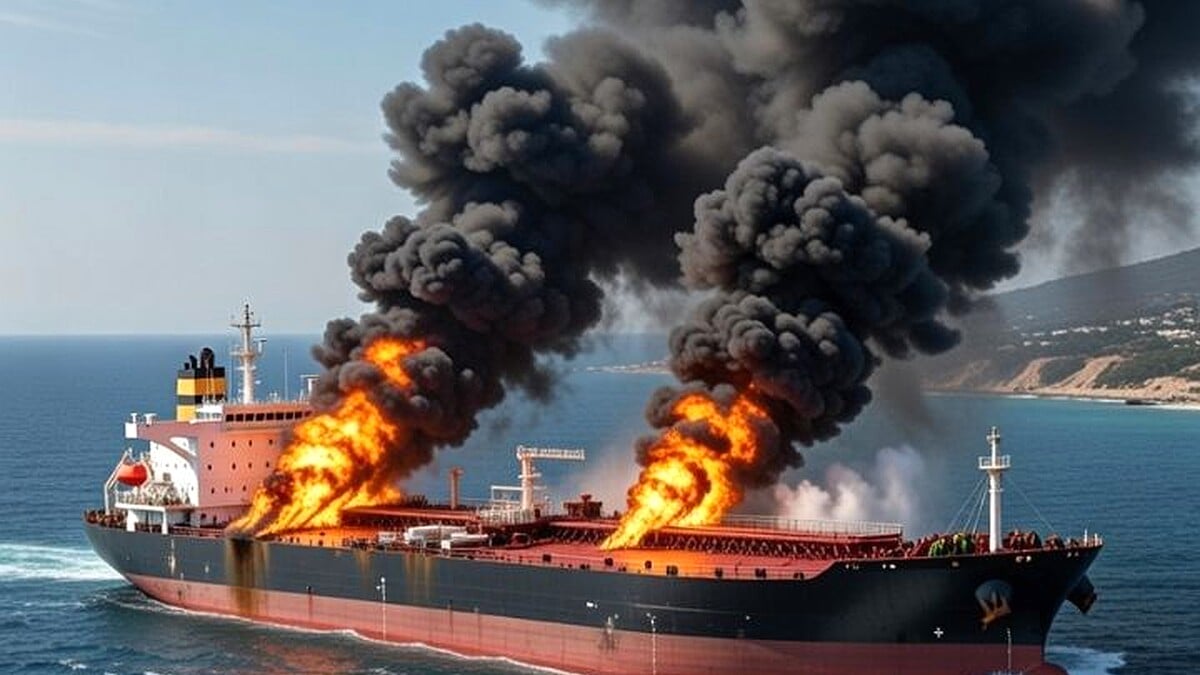
ISLAMABAD: A suspected Iranian attack targeted a commercial oil tanker in the Persian Gulf near Saudi Arabia’s eastern coast on Saturday, escalating maritime threats in a region already gripped by the ongoing US-Israel-Iran conflict that erupted on February 28, 2026.
The United Kingdom Maritime Trade Operations (UKMTO) reported receiving third-party information about an incident approximately 10 nautical miles north of Jubail, a key Saudi industrial and port city. Details on the attack’s nature remain under investigation, but the advisory urged vessels to exercise caution and report suspicious activity.
Iran’s Islamic Revolutionary Guard Corps (IRGC) swiftly claimed responsibility, stating its naval forces struck the Marshall Islands-flagged oil tanker Louis P, which it described as linked to American interests. Iranian state-affiliated media reported the vessel caught fire following the assault, though independent confirmation of the damage or casualties has not emerged.
This incident forms part of a broader pattern of maritime disruptions since the war began with joint US and Israeli airstrikes on Iranian targets. Iran has retaliated by targeting commercial shipping to impose economic costs on adversaries and their allies.
The Strait of Hormuz, through which about one-fifth of global oil supplies pass, has seen vessel traffic plummet by up to 90 percent in recent days, according to maritime tracking data and analyst reports. Major shipping companies, including Maersk, have suspended operations in several Gulf ports or halted bookings entirely.
Multiple UKMTO advisories since early March document over a dozen incidents in the Gulf and around the strait, including projectiles striking cargo ships and tankers, some causing fires and forcing crew evacuations. Iranian sources have claimed strikes on more than 10 vessels since the conflict’s onset.
The attack near Jubail follows earlier incidents off Oman and the UAE, where projectiles damaged vessels and, in at least one case, resulted in crew fatalities. These actions appear designed to deter passage through critical waterways and drive up global energy prices.
European natural gas prices have surged roughly 70 percent since late February, while oil markets reflect heightened volatility from disrupted Gulf flows. Qatar halted liquefied natural gas production, and warnings suggest Saudi Arabia and the UAE may face storage constraints leading to output reductions.
The broader conflict stems from US and Israeli efforts to degrade Iran’s missile and drone capabilities, including strikes on nuclear-related sites, air defenses, and naval assets. Iran has responded with ballistic missiles and drones against Israel, US bases, and Gulf states hosting American forces.
In Israel, air raid sirens have sounded repeatedly, with explosions reported over Tel Aviv and other areas from intercepted Iranian projectiles. Debris from interceptions has sparked fires in residential zones, though major casualties remain limited due to effective defenses.
Iranian missiles have reached central Israel, including impacts in residential districts, prompting shelter alerts for millions. Israeli officials report ongoing retaliatory strikes on Tehran and other Iranian cities, with massive explosions visible near key infrastructure.
The war has expanded regionally, involving Hezbollah in Lebanon, Iranian-backed militias in Iraq, and attacks on energy facilities in Saudi Arabia, such as the earlier drone strike on an Aramco refinery at Ras Tanura.
Gulf Cooperation Council states have faced simultaneous missile barrages, marking a unprecedented escalation against multiple Arab nations. Shipping giants warn of prolonged disruptions unless de-escalation occurs.
Analysts note Iran’s use of unmanned surface vehicles and drones in maritime attacks to maximize damage while minimizing direct naval exposure. The IRGC’s claims serve to project resilience despite heavy losses to its fleet from US submarine and airstrikes.
Global concern mounts over energy security, with calls for international naval escorts through the strait. However, Iran has challenged such moves, warning that passage remains unsafe in wartime.
As the conflict enters its second week, the tanker incident underscores the vulnerability of global trade routes and the risk of further economic fallout from prolonged hostilities in the Persian Gulf.